JEA, OUC & TECO Collections: Remove Florida Utility Bills from Credit

What You'll Learn
- Why that $187 OUC bill from 2022 is doing more damage than you think — and how utility companies sell your debt to third-party collectors who mark up your report
- The exact scenario where a Florida utility collection can be removed for free — and the one piece of documentation that makes it possible
- A negotiation tactic that can slash what you actually owe — because most utility collections are smaller than people realize
- The federal law that forces collectors to prove you owe what they claim — and what happens when they can't
That Old Utility Bill Is Wrecking Your Credit Right Now
You moved out of your apartment on Semoran. You called OUC and told them to shut it off. You figured it was done.
It wasn't done.
![[IMAGE:2] Instructional Visual — Overhead flat-lay shot of a clean white desk surface showing a simple visual timeline made f](/_next/image?url=https%3A%2F%2Ftyyvgkzyojviljefkhzv.supabase.co%2Fstorage%2Fv1%2Fobject%2Fpublic%2Fimages%2Fblog%2Fjea-ouc-teco-collections-remove-florida-utility-bills-from-credit%2Fbody-1.jpg&w=3840&q=75)
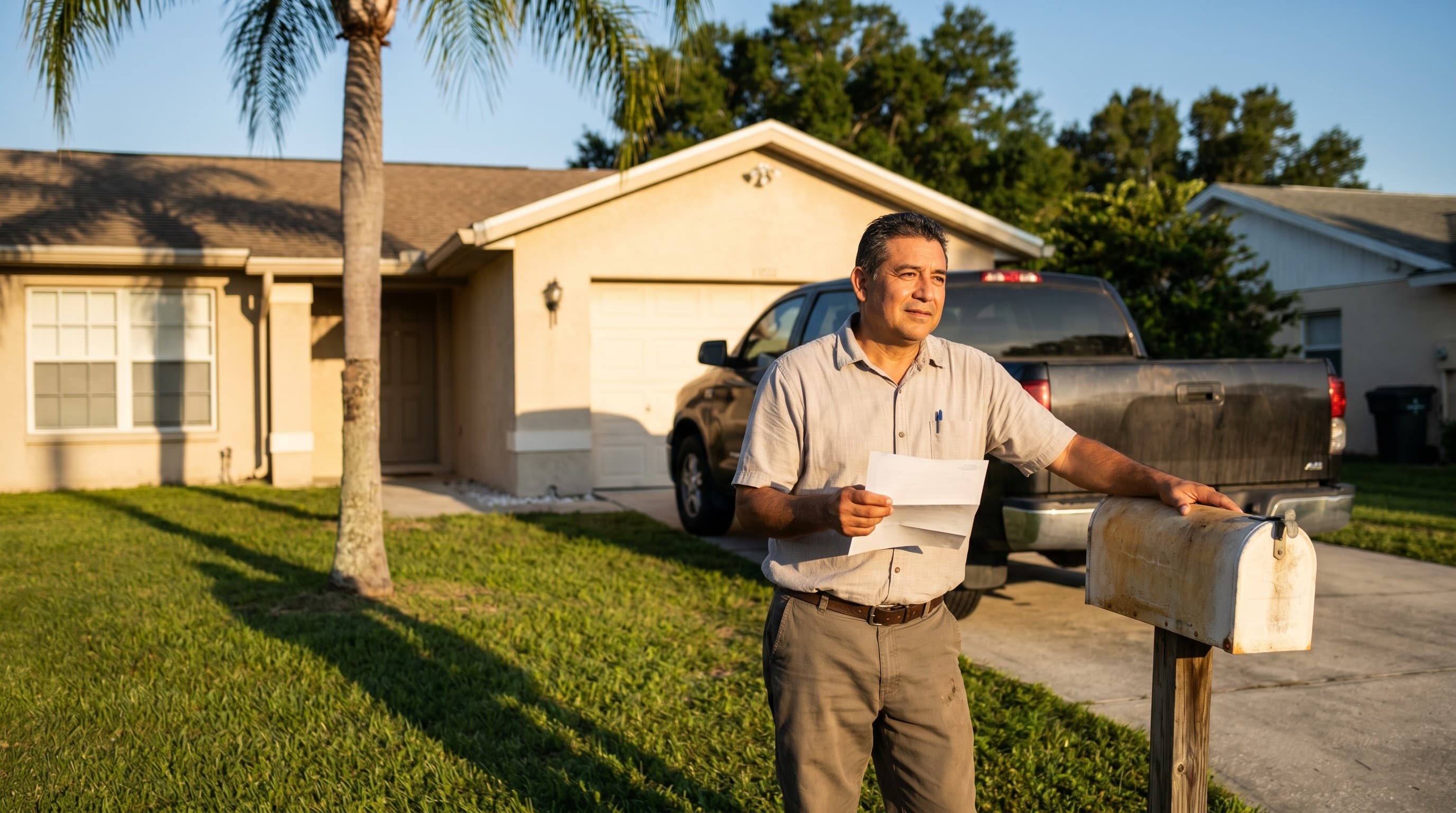
Six months later, you're applying for a lease at one of those new complexes off Narcoossee Road, and the property manager hits you with: "Sorry, we're seeing a collection account." You pull your report and there it is — a $214 balance from Orlando Utilities Commission, now owned by some company you've never heard of, sitting in collections like a grenade on your credit file.
I see this constantly. At Freedom Credit Repair, utility bill collections on credit reports are one of the top five reasons people walk through my door. JEA up in Jacksonville, TECO over in Tampa, OUC right here in Orlando — it doesn't matter which utility. The pattern is always the same. Someone moves, thinks the account is closed, and then gets blindsided months or even years later.
Here's what drives me crazy about it: most people don't owe more than a few hundred dollars on utilities (unless you're running a business). We're talking $150, $230, maybe $400 on the high end. And that tiny balance is sitting on your report doing the same damage as a $5,000 credit card charge-off.
Sound familiar? Good. Let's fix it.
What Happens If You Ignore It
Let me be blunt. That utility collection isn't going anywhere on its own.
A lot of people in Orlando operate under this idea that collections "fall off" after a while. And technically, yes — after 7 years from the date of first delinquency, the reporting window expires under the FCRA. But do you really want to wait 7 years to buy a house? To lease a decent apartment? To stop getting denied for basic credit cards?
Here's the damage a single utility collection does:
- Drops your credit score 50-100+ points depending on the rest of your profile
- Auto-denies you at most apartment complexes — especially the newer ones in Lake Nona, Waterford Lakes, and Dr. Phillips that run hard credit checks
- Kills your mortgage pre-approval — I don't care if you make $80K a year, that $200 OUC collection will hold up your closing
- Triggers higher deposits everywhere — Florida utility companies and landlords both use credit checks to set deposit amounts, so ironically, a utility collection makes your NEXT utility account more expensive
I had a client in Altamonte Springs last year — different type of situation, but it shows how one thing snowballs. His car got totaled in an accident. Insurance paid out, but his GAP coverage company dragged their feet for four months before sending payment to the lender. During those four months? The lender reported the auto loan as 30, 60, 90, and 120 days late. None of that was his fault. The GAP claim was literally in process the entire time.
But guess what happened. He tried to refinance his wife's car to lower their monthly payment, and the lender said no — those four consecutive late marks made him look like a deadbeat on paper. One delayed process, four late marks, and suddenly he can't qualify for anything. That's how fast things spiral.
(I'll tell you how we fixed that in a minute.)
The point is: ignoring a utility collection — even a small one — creates a chain reaction. Don't let a $200 bill from OUC cost you a $250,000 mortgage.
![[IMAGE:3] Local Proof — A quiet residential street in the Altamonte Springs area at golden hour, shot from sidewalk level loo](/_next/image?url=https%3A%2F%2Ftyyvgkzyojviljefkhzv.supabase.co%2Fstorage%2Fv1%2Fobject%2Fpublic%2Fimages%2Fblog%2Fjea-ouc-teco-collections-remove-florida-utility-bills-from-credit%2Fbody-2.jpg&w=3840&q=75)
How Florida Utility Bills Actually End Up on Your Report
Let me walk you through the lifecycle of a utility collection in Florida, because understanding this process is half the battle.
Step 1: You Leave a Balance
You move out. Maybe you called to cancel, maybe you didn't. Either way, there's a final bill — could be a partial month, a deposit that didn't cover the balance, or charges that posted after your cancellation date.
OUC, JEA, and TECO all handle this slightly differently, but the result is the same: they send you a final bill to whatever address they have on file. If you've already moved (which... you have), you probably never see it.
Step 2: The Utility Company Tries to Collect (Briefly)
They'll send a couple of letters. Maybe make a phone call. This window is usually 30-90 days. If you don't respond — and most people don't because they never got the mail — they write it off internally.
Step 3: They Sell It to a Third-Party Collector
This is where it gets ugly. OUC doesn't report directly to the credit bureaus. Neither does JEA or TECO in most cases. What they do is sell your debt to a third-party collection agency — companies like IC System, Credit Collection Services, or Enhanced Recovery Company.
These collectors buy your $200 debt for pennies on the dollar. Then THEY report it to the credit bureaus. And now instead of owing money to your local utility, you've got "ERC" or "IC System" on your credit report and you have no idea who they are or why they're there.
The kicker: once it's in a third-party collector's hands, it's actually easier to negotiate. More on that in a sec.
Step 4: It Sits on Your Report for Up to 7 Years
Unless you do something about it, that collection just sits there. Scoring models like FICO 8 weigh it heavily regardless of the balance amount. A $150 collection hits almost as hard as a $1,500 one.
The Loophole: When a Utility Collection Can Be Removed Entirely
OK so here's where I earn my keep.
There are two paths to removing a utility bill collection from your credit report in Florida. Which path you take depends on one question: Do you have proof you cancelled the account properly?
Path 1: You Have the Cancellation Proof (Wrongful Collection)
If you called OUC, JEA, or TECO and cancelled your service — and you can prove it — and they still charged you after your confirmed cancellation date, you've got a strong basis to challenge that collection and get it removed.
The proof I'm talking about is:
- A confirmation email or letter showing your cancellation date
- A record of when your last payment was scheduled
- Any written communication from the utility confirming service termination
This is a wrongful collection. You don't owe it. And under the Fair Debt Collection Practices Act (FDCPA) Section 809, you have the right to demand the collector validate the debt. If the charges were applied after your confirmed cancellation, the collector will have a very hard time substantiating those post-cancellation charges — and if they can't back it up during validation or the bureau's dispute investigation, the item gets deleted or corrected. I've seen it happen dozens of times.
I've watched this play out with people who move out of a place in Pine Hills or Kissimmee, call OUC to cancel, confirm a shutoff date, and then OUC bills them for two more weeks of service after that date. That's their error, not yours.
Real talk — here's the problem. Most people don't keep that cancellation letter. They don't screenshot the confirmation. They don't save the email. And if you don't have that documentation, Path 1 doesn't work.
So save your cancellation confirmations, people. Every single time you close a utility account, get it in writing and keep it.
Path 2: You Don't Have the Proof (or You Legit Owe It)
If you don't have that cancellation letter — or if you're being honest with yourself and you know you left a balance — then the collection is likely valid. And a valid collection needs a different strategy.
You've got two options here:
Option A: Dispute It Off
Under the Fair Credit Reporting Act (FCRA) Section 611, you can dispute any item on your credit report that you believe is inaccurate, incomplete, or unverifiable. The bureau has 30 days to investigate.
Here's what I've seen work: when these utility debts get sold to third-party collectors, the documentation trail gets sloppy. The collector might not have your original account agreement, might have the wrong balance, or might have incorrect dates. If they can't verify the details with the credit bureau during the dispute investigation, the item gets deleted.
This doesn't work every time. But it works more often than you'd expect — especially when the debt has been resold multiple times.
Option B: Pay It Off (But Read This First If You're Buying a Home)
Honestly? If the utility collection is the only negative thing on your credit report and you owe a couple hundred bucks, paying it off can be the fastest solution to this problem.
I know that's not the sexy answer. Nobody wants to hear "just pay it." But think about the math. You owe $230 to a collector who bought your debt for maybe $30. They'll negotiate. You can probably settle it for 40-60% of the balance — so you're paying $90-$140 to make the problem disappear.
With newer FICO scoring models (FICO 9 and FICO 10), paid collections are weighted significantly less than unpaid ones. And VantageScore 3.0 (which many landlords use) ignores paid collections entirely. So paying it off can give you an immediate boost for apartment applications and credit cards.
But here's the catch if you're trying to buy a house. Almost all mortgage lenders still use the older Classic FICO scores (FICO 2, 4, and 5) — and those models do NOT give you a break for paid collections. A paid collection still hurts you on a mortgage application almost as much as an unpaid one. So if homeownership is the goal, don't just pay it and call it a day. You need a pay-for-delete agreement that actually removes the tradeline. For mortgage applicants, pay-for-delete isn't just "nice to have" — it's the whole ballgame.
But — and this is a big but — get a pay-for-delete agreement in writing before you send a dime. One thing you should know: pay-for-delete isn't required by law. It's a voluntary arrangement, and some collectors flat-out won't do it — their internal policy only allows them to update the status to "paid" or "settled," not delete entirely. Push for the deletion anyway (it's always worth the ask), but if they refuse, you'll need to weigh your options based on which scoring model matters most for your situation. More on that in the action plan.
How We Fixed the Altamonte Springs Situation
Remember my client with the GAP coverage nightmare? Here's how we resolved it.
We gathered every piece of documentation: the insurance payout records, the GAP claim filing date, correspondence between the GAP company and the lender, and proof that the payment delay was entirely on the GAP coverage provider — not our client.
We filed a dispute directly with the auto lender (not just the bureaus), attached all the documentation showing the GAP claim was in process during those four months, and argued that the account should never have been reported as delinquent.
The lender agreed. They updated all four months to "paid as agreed" and the late marks were removed from all three bureaus.
Why am I telling you this in an article about utility collections? Because the principle is identical. Documentation wins disputes. Whether it's a utility cancellation confirmation or a GAP claim filing receipt, the person with the paper trail wins. The person without it is just guessing and hoping.
Your Step-by-Step Action Plan
Here's exactly what to do if you've got a JEA, OUC, TECO, or any Florida utility collection on your credit report.
Step 1: Pull All Three Credit Reports
Go to AnnualCreditReport.com (the only truly free one — ignore the imposters) and pull your Equifax, Experian, and TransUnion reports. Utility collections don't always show up on all three, so check every one.
Write down:
- The name of the collection agency
- The original creditor (OUC, JEA, TECO, etc.)
- The balance
- The date of first delinquency
- The account number
Step 2: Determine If the Collection Is Wrongful
Dig through your email, your files, your old texts — anywhere you might have documentation that you cancelled the utility account and confirmed a final payment date.
If you find proof that the utility charged you after your confirmed cancellation date, you're on Path 1 (wrongful collection). Move to Step 3A.
If you don't have proof, or you know you owe the balance, skip to Step 3B.
Step 3A: Send a Debt Validation Letter + Dispute
Send the third-party collector a debt validation letter under FDCPA Section 809. You have 30 days from their first contact to request validation, and that's when the law is strongest on your side — during that window, the collector is required to stop all collection activity until they respond. If you're outside that 30-day window, you can still send a validation request and many collectors will respond, but the FDCPA's automatic stop-collection protections don't kick in the same way. Either way, send it — plenty of collectors can't produce proper documentation regardless of timing.
In the letter:
- Request proof of the original debt
- Request proof they're authorized to collect
- Request an itemized statement of the balance
- Attach your cancellation proof and state that charges after [your cancellation date] are invalid
Simultaneously, file disputes with all three credit bureaus under FCRA Section 611. Attach your cancellation documentation to each dispute.
Send everything certified mail with return receipt requested. I can't stress this enough. If you don't have proof you sent it, you didn't send it.
Step 3B: Negotiate a Pay-for-Delete
If you owe the money and the balance is a few hundred bucks, call the collection agency and negotiate.
Here's your script:
"I'm looking to resolve this account. I can make a payment of [50-60% of balance] today if you'll agree to delete the tradeline from all three credit bureaus upon receipt of payment. Can you send me that agreement in writing?"
Key rules:
- Never pay before getting the deletion agreement in writing. Email is fine. A letter is better.
- Never give them access to your bank account. Pay with a money order, cashier's check, or a one-time debit card payment.
- Never admit the debt is yours on a recorded line until you've decided to pay. Collectors record calls.
If they won't do a pay-for-delete (and some won't — it's not required by law, it's up to their internal policy), you can still pay it off and benefit from updated scoring models that de-weight paid collections. But if you're trying to get a mortgage, remember: the older FICO models used by mortgage lenders don't care whether it's paid or unpaid. For homebuyers, keep pushing for that deletion or consider working with a professional who knows how to get it done.
Step 4: Follow Up Aggressively
After you've paid (with a deletion agreement) or filed your disputes, monitor your credit reports weekly. Use Credit Karma for TransUnion and Equifax monitoring, and Experian has their own free app.
If the item isn't removed within 30-45 days:
- Send a follow-up letter to the collector referencing your pay-for-delete agreement
- File a complaint with the Consumer Financial Protection Bureau (CFPB) — this lights a fire under collectors fast
- Re-dispute with the bureaus and include your payment receipt and deletion agreement
Step 5: Protect Yourself Next Time
Every time you close a Florida utility account going forward:
- Get cancellation confirmation in writing (email counts)
- Confirm your final bill amount and payment date
- Set a calendar reminder to check your credit report 60 days later to make sure nothing sneaked on there
- Forward your mail through USPS for at least 6 months after any move
A Note About Florida Utility Deposits and Credit Checks
This is something a lot of people moving to Orlando don't know. OUC runs a soft credit inquiry when you open a new account, and they use your score to determine your deposit amount. If your score is under 600, you could be looking at a $200-$400 deposit just to turn on the lights.
So here's the irony: an old OUC collection tanks your score, which then makes you pay a bigger deposit to OUC when you open a new account somewhere else. It's a loop that punishes people who were already struggling. Fixing the collection on your report before you move is a no-brainer if you can swing it.
We get questions about this all the time — check out our FAQ for more on how Florida-specific credit situations work.
When to Call a Professional
Look, I've laid out the entire playbook here. A lot of people can handle this themselves, especially if it's a single utility collection and they have decent documentation.
But if you've got multiple collections, or the collector is being difficult about validation, or you've disputed and been denied, or you just don't have time to play phone tag with Equifax for six weeks — that's when you call someone like me.
At Freedom Credit Repair, we deal with Florida utility collections every single week. We know which third-party agencies OUC sells to. We know the dispute language that gets results with JEA accounts. We know exactly how to structure a pay-for-delete negotiation so you don't get burned.
And honestly? For a $200 collection that's blocking a mortgage or a lease, paying a professional to handle it properly is the best money you'll spend all year.
Talk to a Real Credit Specialist — Free
The fastest way to get straight answers about your situation in Orlando and across Florida.
4.9 · 89 Google reviews · No upfront fee
Call (407) 606-7117Individual results vary. We help you dispute inaccurate, unverifiable, or outdated items — no one can remove accurate, current information from your credit report, and you can dispute it yourself for free with the bureaus.
Call us at (407) 606-7117 or reach out through our site. We'll pull your report, tell you exactly what's dragging your score down, and build a plan to fix it. No fluff, no runaround.
Frequently Asked Questions
Can OUC put a collection on my credit report without telling me?
OUC itself usually doesn't report directly to the bureaus. What happens is they sell the debt to a third-party collector, and that collector is the one who reports it. Under the FDCPA, the collector is required to send you a written notice within 5 days of first contact. But if they send it to your old address (the one you just moved away from), you'll never see it. That's why so many people are blindsided.
Should I dispute a utility collection or just pay it off?
It depends on your situation. If you have proof the charges are wrong — like a cancellation confirmation showing they billed you after your shutoff date — dispute it aggressively. If you legit owe the money and it's under a few hundred dollars, paying it off (ideally with a pay-for-delete agreement) can be faster. If it's the only negative item on your report, paying it off might be the quickest path to a clean file. Just remember — if you're trying to buy a house, mortgage lenders use older FICO models that still penalize paid collections, so push hard for a full deletion.
How long does a utility collection stay on my credit report?
Seven years from the date of first delinquency under the FCRA. That clock starts when you first missed or failed to pay the utility bill — not when the collector bought the debt. A collector cannot restart that 7-year clock by purchasing the account, no matter what they tell you.
Does paying a utility collection remove it from my report?
Not automatically. Paying it changes the status to "paid collection" but the account still shows on your report. FICO 9, FICO 10, and VantageScore 3.0 all give less weight (or zero weight) to paid collections — which helps for apartment applications and credit cards. But here's the thing most people miss: mortgage lenders still use FICO 2, 4, and 5, and those older models treat a paid collection almost the same as an unpaid one. The best-case scenario is negotiating a pay-for-delete agreement where the collector agrees to remove the entire tradeline after you pay. Not every collector will agree to it (it's voluntary, not legally required), but it's always worth asking.
Can I negotiate a utility collection for less than I owe?
Absolutely. This is very common. Third-party collectors buy these debts for pennies on the dollar, so they're making a profit even at 40-50% of the original balance. Start your offer low — 40% — and work up from there. Always get the agreed settlement amount and deletion terms in writing before you pay.

Matt Brody
Founder, Freedom Credit Repair
Matt is the founder of Freedom Credit Repair based in Orlando, FL. Since 2019, Matt has helped clients remove negative items from their credit reports and take control of their financial future. Call (407) 606-7117 for a free consultation. More about Matt →