How to Rebuild Credit After Bankruptcy: A Real Roadmap

What You'll Learn
- The exact first move to make within 30 days of your discharge — and why most people skip it and pay for it later
- How long a bankruptcy actually stays on your report (Chapter 7 vs. Chapter 13) and when it stops hurting you
- The federal law that lets you challenge inquiries and errors a dealership or lender never had permission to pull
- A month-by-month, multi-account rebuild plan that actually moves the needle
First Things First: Your Discharge Is the Starting Line, Not the Finish
If you just got your bankruptcy discharge and you're feeling like the war's over — I get it. But it's not.
The discharge wiped the debt. It did NOT rebuild your credit. Those are two completely different jobs, and nobody in the courthouse tells you that.
Here's the thing. Your score is probably sitting somewhere in the 500s right now. And that's actually normal. I've had clients walk out of Chapter 7 with a 520 and panic. Don't panic. A 520 with a clean, fresh discharge is a foundation. A 520 with three collections that should've been zeroed out by the bankruptcy? That's a problem we need to fix — fast.
Because here's what most people get wrong: they think rebuilding credit after bankruptcy means "wait seven years and hope." No. It means going account by account, cleaning up what's reported wrong, and stacking positive tradelines on purpose. It's a lift. Multiple accounts. Several months. But it works.
Let's get to it.
The Scare: What Happens If You Just "Wait It Out"
Real talk — the people who do nothing after a discharge are the ones who call me two years later still stuck in the low 500s. Waiting doesn't heal your credit. Waiting just lets the mistakes sit there.
And there are always mistakes. Know what the most common one is?
Debts that were discharged still showing a balance. After discharge, accounts included in your bankruptcy should report accurately — typically showing "included in bankruptcy" with a $0 balance owed by you and no ongoing past-due reporting. Now, the updates can take a billing cycle or two to hit, so give it a beat. But furnishers screw this up constantly. I've seen discharged credit cards still reporting as "past due" months after the discharge. That's not just annoying — it's inaccurate, and it's dragging your score down for no reason.
Here's what else waiting costs you:
- You stay stuck at predatory interest rates. No rebuilt credit means every car loan, every card, comes with a 24%+ APR. You end up paying for the bankruptcy all over again.
- You get denied for apartments and even jobs. Landlords pull credit. Some employers pull a modified version too.
- The clock doesn't start on the good stuff. Positive tradelines take months to build history. Every month you wait to open that first secured card is a month of history you'll never get back.
Doing nothing feels safe. It's the most expensive move on the board.
How Long Does Bankruptcy Stay on Your Credit Report?
Straight answer: Chapter 7 bankruptcy stays on your credit report for 10 years from the filing date. Chapter 13 stays for 7 years. This comes straight from the Fair Credit Reporting Act — see 15 U.S.C. § 1681c as explained by the CFPB.
But here's what nobody tells you — and it's the good news.
The bankruptcy itself doesn't hammer your score the whole 10 years. The damage is heaviest in year one and fades every single month after that as you build new positive history. I've had clients get approved for a mortgage two years after a Chapter 7 discharge (FHA allows it after two years in most cases). The bankruptcy was still on the report. It just wasn't the loudest thing on there anymore.
So stop counting down to the removal date. That's the wrong game. The right game is: how fast can we bury that bankruptcy under a pile of on-time payments and clean tradelines?

Your Legal Leverage: The Rights Nobody Handed You
OK so here's where it gets interesting. You've got real, federal firepower — most people just never use it.
1. The right to accurate reporting
Under the Fair Credit Reporting Act, 15 U.S.C. § 1681i, you can dispute any information on your report that's inaccurate, incomplete, or that the furnisher can't verify. The bureaus have to investigate — usually within 30 days.
I want to be crystal clear about something, because a lot of shady operators lie about this: disputes only work on information that's actually wrong, unverifiable, or outdated. You cannot dispute away an accurate bankruptcy. Anybody who tells you they'll "delete your bankruptcy" is selling you smoke.
But discharged debts still showing a balance? A collection that got wiped in the bankruptcy but is still reporting? Those are inaccurate. Those we fight.
2. The right to control who pulls your credit
This one drives me crazy, and it's exactly where a lot of bankruptcy filers get burned right after discharge — at the car lot.
Here's a story. I had a client near The Mall at Millenia in Orlando who was fresh out of bankruptcy and needed a car (you need reliable transportation to rebuild your life, so I get why he went). He sat down at a dealership, and they ran his credit at seven different banks in one day — seven hard inquiries — without clear permission to shotgun it out like that.
Seven inquiries on an already-fragile post-bankruptcy file? That's a gut punch to a score that's trying to recover.
Here's the leverage: under FCRA Section 604 (15 U.S.C. § 1681b), a company can only pull your credit for a permissible purpose you authorized. If a dealer or lender can document permissible purpose — an application or transaction you signed off on — the inquiry usually stays. If they can't, you can dispute it. We filed disputes on those inquiries that lacked a permissible purpose. Five of the seven came off within 45 days. The remaining two fell inside the auto-shopping window — many scoring models group auto-loan inquiries made within a rate-shopping window (often 14–45 days, depending on the model) so the score impact is reduced, because they know you're shopping one car, not applying for seven loans.
So we went from seven damaging inquiries down to a much softer hit. That's a real, measurable recovery — and it's the kind of account-by-account cleanup that fixing inaccurate items on your report is all about.
3. Your right to do this yourself for free
I'll say it plainly: you can dispute inaccurate items yourself, for free, directly with Equifax, Experian, and TransUnion. The CFPB even gives you sample dispute letters. Some people have the time and patience to run this themselves, and honestly, good for them.
Where folks call us is when they realize it's not one letter — it's a multi-account, months-long campaign with follow-ups, escalations, and furnisher back-and-forth. That's the work. That's what we do at Freedom Credit Repair.
The Action Plan: Rebuilding Credit After Chapter 7, Step by Step
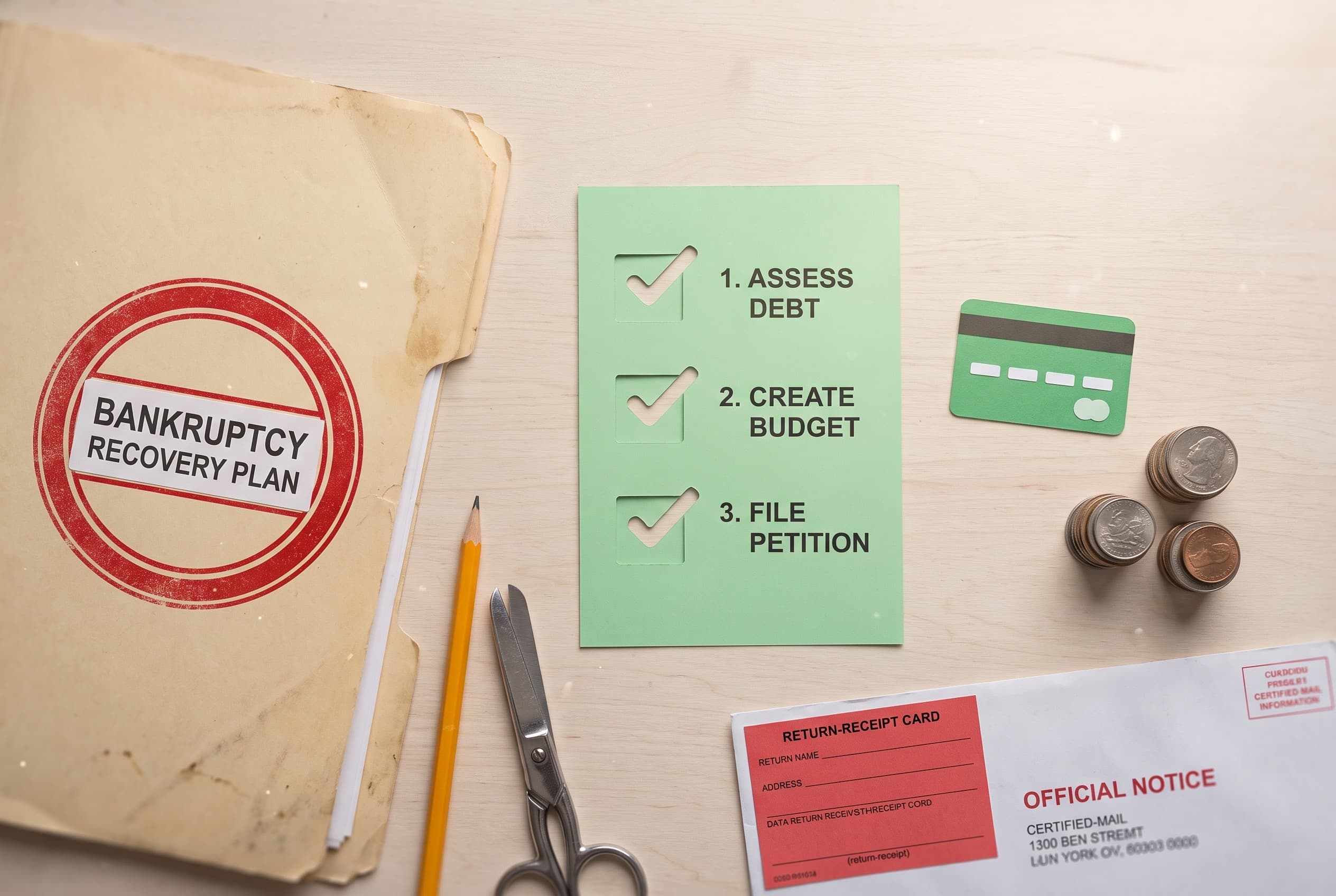
Here's the roadmap I walk clients through. Follow it in order.
Step 1 — Pull all three reports and audit them (Week 1)
Get your reports from all three bureaus at AnnualCreditReport.com — it's the only federally authorized free source. Now go line by line and check:
- Is every debt included in the bankruptcy reporting as "included in bankruptcy" with a $0 balance owed by you?
- Are there any collections still showing that were part of the discharge?
- Any accounts still marked "past due" or "charged off" with a balance when they should be zeroed?
- Any hard inquiries you don't recognize or didn't authorize?
Every one of those is a dispute target. This audit is the single most important step, and it's the one everybody rushes.
Step 2 — Dispute the inaccuracies (Weeks 1–6)
File disputes on anything that's wrong, unverifiable, or outdated. Do it in writing. Certified mail matters here — and here's an operator detail most people miss: certified mail with return receipt gives you a date-stamped record of when the bureau received your dispute, which starts their 30-day clock. Without that, they can slow-walk you and claim they never got it. The green card is your proof.
When the dispute hits the bureau, it goes through an automated system called e-OSCAR that converts your letter into a coded dispute sent to the furnisher. The furnisher has to check its records and respond. If they can't verify, the item comes off. This is exactly how we knocked out those five inquiries in Orlando.
If you want the full breakdown of how our dispute process works, we get this question constantly — check out our FAQ.
Step 3 — Open your first secured card (Month 1–2)
This is your engine for a new positive tradeline. A secured card after bankruptcy is one you fund with a deposit — say $200 to $500 — and that deposit becomes your limit. Because you funded it, approval odds are high even with a fresh discharge.
Rules for using it:
- Charge something tiny every month — a tank of gas, a streaming subscription.
- Pay it in full, on time, every single month. Payment history is 35% of your score.
- Keep your balance under 30% of the limit. Under 10% is even better.
Don't open five cards at once. Start with one, maybe two. Quality over quantity.
Step 4 — Add a credit-builder loan or become an authorized user (Month 2–4)
Scoring models like to see a mix of credit. A credit-builder loan (offered by a lot of credit unions) reports installment history while you "pay off" a loan that's held in savings. Or get added as an authorized user on a family member's old, in-good-standing card — their positive history can help anchor your file.
Step 5 — Protect the recovery (ongoing)
- Don't let anybody shotgun your credit. When you shop for a car, tell the dealer up front they get ONE pull, and do all your rate shopping inside a tight window (a couple weeks) so the models group it together.
- Set up autopay so you never miss a payment by accident.
- Re-pull your reports every few months and keep auditing.
Step 6 — Keep stacking, keep patient
Most of my post-bankruptcy clients see real movement within the first several months of consistent, on-time activity. I can't promise you a number or a date — nobody honest can, and it's against the rules for me to try. What I can tell you is the people who follow this plan account by account climb out. The people who wait, don't.
Bankruptcy recovery is a rebuild, not a magic trick. Fix what's wrong. Build what's new. Guard your file. That's the whole game.
Frequently Asked Questions
What's the first thing to do after a bankruptcy discharge to rebuild credit?
Pull all three credit reports and confirm every discharged debt is reporting with a $0 balance owed by you and marked "included in bankruptcy." Furnishers frequently make errors here, and a discharged debt still showing a balance is inaccurate — which means you can dispute it under the FCRA. This audit is your first move because it catches the errors dragging your score down before you spend a dime on rebuilding.
How long does a bankruptcy stay on your credit report?
A Chapter 7 bankruptcy stays on your credit report for 10 years from the filing date, and a Chapter 13 stays for 7 years. This is set by the Fair Credit Reporting Act (15 U.S.C. § 1681c). But the damage to your score fades long before removal — many people qualify for an FHA mortgage just two years after a Chapter 7 discharge if they've rebuilt responsibly.
Can I get a secured card right after bankruptcy?
Yes — a secured card is usually the easiest credit to get after a bankruptcy discharge because you fund it with your own deposit, which lowers the lender's risk. Use it for a small monthly charge, pay it in full every month, and keep the balance under 30% of the limit. It becomes your first positive tradeline and starts building fresh payment history immediately.
Can credit repair remove my bankruptcy from my report?
No, and be very suspicious of anyone who claims they can delete an accurate bankruptcy. Disputes under the FCRA only apply to information that's inaccurate, unverifiable, or outdated. What legitimate credit repair does is clean up the errors that often surround a bankruptcy — discharged debts still showing balances, collections that should've been zeroed, and inquiries that lacked a permissible purpose — while you build new positive credit.
How long does it take to rebuild credit after Chapter 7?
It varies by person, but most people who follow a consistent plan — disputing inaccuracies, opening a secured card, adding a credit mix, and paying everything on time — see meaningful progress over several months of steady activity. There's no guaranteed timeline, and anyone promising a specific score by a specific date is misleading you. The speed depends on how many accounts you build and how clean your payment record stays.
Talk to a Real Credit Specialist — Free
The fastest way to get straight answers about your situation in Orlando and across Florida.
4.9 · 89 Google reviews · No upfront fee
Call (407) 606-7117Individual results vary. We help you dispute inaccurate, unverifiable, or outdated items — no one can remove accurate, current information from your credit report, and you can dispute it yourself for free with the bureaus.
Ready to Rebuild? Let's Build Your Plan.
You've got the roadmap. If you've read this far and realized it's a multi-account, months-long lift you don't want to run alone, that's exactly what we handle. We work with clients nationwide by phone — auditing your report, disputing the inaccurate and unverifiable items, and building a step-by-step recovery around your situation.
Call Freedom Credit Repair at (407) 606-7117 for a straight-talk consultation. No promises we can't keep — just a real plan and someone in your corner. And if you want to learn more about collections and other negative items on your report first, take a look at our [collections removal process](collections removal).
Your discharge was the bell. Now come out swinging.

Matt Brody
Founder, Freedom Credit Repair
Matt is the founder of Freedom Credit Repair based in Orlando, FL. Since 2019, Matt has helped clients remove negative items from their credit reports and take control of their financial future. Call (407) 606-7117 for a free consultation. More about Matt →