Does Closing a Credit Card Hurt Your Score? When to Keep It
What You'll Learn
- The two credit score factors that take an immediate hit when you close a card — and the math to figure out how bad the damage will be before you close it
- Why closing your oldest card can quietly wreck your score for a decade (and the one exception where it doesn't matter)
- The exact strategy I use with Orlando clients to neutralize an unused card without closing it
- A MetroWest apartment story that shows how a bogus $2,800 charge on a closed account spiraled into a collections nightmare — and how we killed it with one dispute strategy
![[IMAGE:2] Instructional Visual — Top-down overhead shot of a light birch wood desk with two columns of items arranged neatly.](/_next/image?url=https%3A%2F%2Ftyyvgkzyojviljefkhzv.supabase.co%2Fstorage%2Fv1%2Fobject%2Fpublic%2Fimages%2Fblog%2Fdoes-closing-a-credit-card-hurt-your-score-when-to-keep-it%2Fbody-1.jpg&w=3840&q=75)
The Card You're About to Close Might Be Holding Your Score Together
Honestly, I get this call at least three times a week — probably more like five if I'm counting texts too. Someone in Orlando just paid off a credit card — maybe it was a store card from Best Buy, maybe a Capital One card they opened ten years ago — and their first instinct is to close it.
"I don't need it anymore. Why keep it open?"
Because that card might be the only thing keeping your credit utilization under 30%. And if it's your oldest account? You're about to shave years off your credit history in one phone call.
Does closing a credit card hurt your credit score? In most cases, yes. But the real answer is: it depends on which card, when you close it, and what your credit profile looks like right now.
I've seen clients lose 40 points overnight from closing the wrong card. I've also told clients to close cards immediately because the annual fee was bleeding them dry and the math worked out. Look, there's no one-size-fits-all answer here, but there IS a process that works every single time. Let me walk you through it — step by step, the same way I'd break it down if you were sitting right across the table from me.
What Happens to Your Score the Moment You Close a Card
Two things get hit right away. Two more get hit later. Most people only know about one of them, and trust me, that blind spot is exactly what tanks their score.
Hit #1: Credit Utilization Spikes
OK so, this is the big one — and it's the hit that blindsides almost everybody I work with. Here's the thing — your credit utilization ratio is basically just how much you're charging divided by your total available credit across every card you've got. It accounts for about 30% of your FICO score.
Here's the math that trips people up.
Say you've got three cards:
- Card A: $5,000 limit, $2,000 balance
- Card B: $8,000 limit, $0 balance (the one you want to close)
- Card C: $3,000 limit, $1,000 balance
Right now your utilization is $3,000 used out of $16,000 available. That's about 19%. Solid.
Close Card B and your available credit drops to $8,000. Same $3,000 in balances. Now you're at 37.5% utilization. You just crossed the 30% threshold that scoring models penalize, and you didn't spend a single extra dollar.
That's how closing a credit card affects your credit score even when you think you're being responsible.
Hit #2: Average Age of Accounts (Delayed Fuse)
Here's the thing most people get wrong — and honestly, a lot of credit "experts" online get wrong too.
When you close a card, it doesn't vanish from your credit report immediately. FICO still counts closed accounts in your average age of credit for up to 10 years after you close them. So the damage to your average age of credit accounts is on a delayed fuse.
But VantageScore (which is what Credit Karma uses) drops closed accounts from the age calculation much sooner. So if you're monitoring your score on Credit Karma and you close an old card, you might see a sharper drop there than you'd see on your actual FICO.
Real talk — the average age of credit accounts matters more than people think. It's about 15% of your FICO score. If you've got a card you opened in 2011 and your next oldest is from 2020, that one old card is doing a LOT of heavy lifting.
Hit #3: Credit Mix (Minor)
If the card you're closing is your only revolving credit account (meaning you only have installment loans like a car payment or mortgage left), your credit mix takes a small hit. This is only about 10% of your score, but I've seen it matter for clients right on the edge of a mortgage approval threshold.
Hit #4: The "Ghost Balance" Problem
This one drives me crazy. You close a card but there's still a balance on it. Maybe you forgot about a $12 recurring subscription. Maybe there's a final interest charge that posted after you called to close. Now you've got a balance on a closed account that you're not monitoring, and it goes delinquent.
I had a client in Windermere last year who closed an Amex and forgot about a $9.99 Hulu charge. It sat there for four months, went 120 days late, and cost him 83 points. Over ten bucks.
Always verify a zero balance and no pending charges before you close anything.
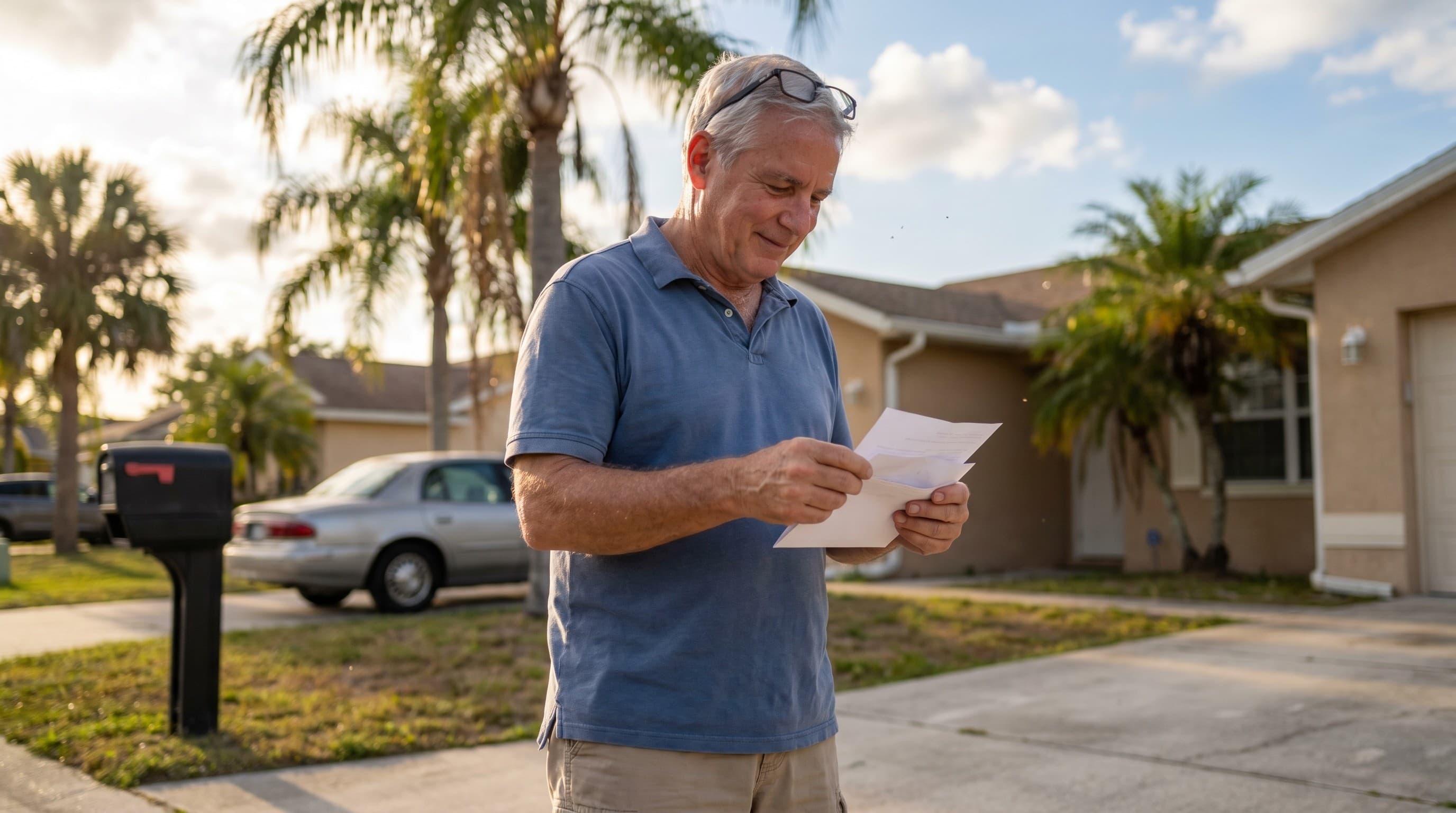
![[IMAGE:3] Local Proof — A quiet residential street in the MetroWest neighborhood of Orlando on a warm, hazy late afternoon. R](/_next/image?url=https%3A%2F%2Ftyyvgkzyojviljefkhzv.supabase.co%2Fstorage%2Fv1%2Fobject%2Fpublic%2Fimages%2Fblog%2Fdoes-closing-a-credit-card-hurt-your-score-when-to-keep-it%2Fbody-2.jpg&w=3840&q=75)
The MetroWest Carpet Scam (and Why "Closed" Doesn't Mean "Done")
Let me tell you about a client I worked with in MetroWest — I'll call him Ray, and honestly, his story still ticks me off. Ray lived in the same apartment complex for five years — nice enough place, nothing fancy. Decent tenant. Paid rent on time. When he moved out in early 2025, the complex hit him with a $2,800 bill for "carpet damages."
Ray had just closed the credit card he used to pay his security deposit years ago. He figured closing the account meant that chapter of his financial life was over.
Dead wrong.
The apartment complex sent the $2,800 to collections. It showed up on Ray's credit report as a fresh collection account, tanking his score by over 60 points. And because he'd already closed the card he originally used for that apartment, he had less available credit to absorb the utilization hit from his other accounts.
Double punch.
OK so here's where it gets interesting — and where we fought back hard for Ray. Under Florida Statute 83.49, landlords have strict procedural requirements for how they handle security deposits and claim deductions. They've got to give proper notice, itemize their claims, and follow the timeline the statute lays out. On top of that, HUD guidelines and Florida case law recognize a 7-year useful life for carpet — meaning after 5 years of Ray living there, that carpet had already depreciated roughly 71% of its value through normal wear and tear. The complex was trying to charge him for brand-new carpet when the old stuff was nearly worthless on paper.
We disputed using the landlord's failure to follow proper security deposit procedures under 83.49 and challenged the inflated charge with the HUD depreciation standards. The complex couldn't justify the charge beyond normal wear and tear. The collection was deleted.
But here's the lesson for today's topic: if Ray hadn't closed that credit card, his utilization wouldn't have spiked when the collection hit, and his score wouldn't have dropped as far. The card closure made the collection damage worse.
I'll come back to what you should do instead of closing cards in a minute. (Trust me on this.)
When Closing a Card Actually Makes Sense
Look, I'm not gonna sit here and tell you to never close a credit card — that'd be straight-up dishonest. That's generic advice that doesn't account for real life. Sometimes closing is the right call.
Close the card if:
-
The annual fee is more than the card is worth. If you're paying $95/year for a card you don't use and it's NOT your oldest account, close it. Or call and ask to downgrade to a no-fee version of the same card. This preserves the credit line and account age. Honestly, that's the move I recommend about 90% of the time — it just makes way more sense financially.
-
You're going through a divorce. If it's a joint account, close it NOW. I've seen Orlando clients get destroyed by an ex-spouse running up charges on a joint card after separation. Trust me on this one, your divorce attorney's gonna tell you the exact same thing.
-
The card is a temptation you can't resist. If having an open $10,000 credit line is going to lead you into $10,000 of debt, the score hit from closing is less expensive than the debt. I'd rather you lose 20 points than gain $10,000 in high-interest balances.
-
It's a secured card and you need the deposit back. Some secured cards tie up $200-$500. If you need that cash and the card issuer won't graduate you to an unsecured card, closing is fine — especially if you have other cards with longer histories.
Keep the card open if:
-
It's your oldest account. Full stop. The average age of credit accounts is too valuable to throw away.
-
It's got a big credit limit. Even if you never use it, that available credit is keeping your utilization low.
-
You're planning to apply for a mortgage, auto loan, or apartment in the next 6-12 months. Don't rock the boat. I tell every client at [INTERNAL_LINK:home] the same thing: freeze your credit behavior 6 months before any big application.
-
It has no annual fee. There's literally no cost to keeping it open. Why close it?
The "Sock Drawer" Strategy: How to Keep a Card Alive Without Using It
OK so here's what I actually tell clients to do instead of closing unused cards.
Put a small recurring charge on the card. I'm talking $5-$15/month. A Spotify subscription. A cloud storage plan. Something tiny.
Set up autopay for the full statement balance. Then put the physical card in a drawer and forget about it.
Why? Because card issuers will close your account for inactivity. If you don't touch a card for 12-24 months (it depends on the issuer), they'll shut it down on their end — no warning, no courtesy call, nothing. And an issuer-initiated closure has the exact same credit impact as you closing it yourself.
The sock drawer strategy keeps the card alive, keeps your credit limit in the utilization equation, and keeps the account aging in your favor. It costs you maybe $10/month.
That's the cheapest credit score insurance you'll ever buy.
The Math: How to Calculate Your Score Impact Before Closing
Before you pick up that phone, do this — grab a pen, I'm serious:
Step 1: Write down all your credit card balances and limits.
Every card. Not just the one you want to close.
Step 2: Calculate your current utilization.
Total balances ÷ total limits = utilization percentage. You want this under 30%. Under 10% is ideal.
Step 3: Remove the card you want to close and recalculate.
Subtract that card's limit from your total available credit. Does your utilization jump above 30%? Above 50%? That number tells you exactly how much damage you're staring at — and trust me, it doesn't lie.
Step 4: Check the card's age.
Log into your account or check your credit report. How old is this account? Is it your oldest? If removing it would cut your average account age in half, that's a red flag.
Step 5: Make the call — or don't.
If the math says your utilization stays under 30% and the card isn't your oldest, you're probably fine. If the math says otherwise, use the sock drawer strategy or ask for a product change to a no-fee card.
What About Store Cards? (The Orlando I-Drive Question)
I get this one a lot from hospitality workers on I-Drive and around the tourist corridor. They signed up for a store credit card — maybe a Disney Visa, maybe an Old Navy card — during a seasonal push when they needed the discount. Now they don't shop there anymore.
Should I close unused credit cards from stores I don't go to anymore?
Usually, no. Store cards tend to have low credit limits ($500-$1,500), so closing them doesn't free up much mental energy but DOES shrink your available credit. And if that store card is older than your other accounts, it's quietly aging your credit file in the right direction.
The exception: if the store card has an annual fee (rare for store cards, but some department store cards charge $25-$50) and you genuinely never use it, close it. The benefit doesn't justify the cost.
How Closing a Credit Card Interacts With Other Negative Items
Here's where my job gets complicated — and where I see the most damage in Orlando.
Most people don't close a credit card in isolation. They close it because something else is going on. They're stressed about money. They're trying to "simplify." They just got a collections notice and they're panicking.
Closing a card while you've got other negative items on your report is like pulling out your own stitches. The wound was already there — now it's worse.
I had a client in Pine Hills last year who had two collections and a late payment on her report. She closed her oldest card (a Bank of America card she'd had for 11 years) because she "didn't want any more credit card problems." Her score dropped from 618 to 571. She went from "might qualify for an FHA loan" to "not a chance" in one phone call.
If you've got negative items on your report, the move isn't to close accounts. The move is to dispute the negative items while keeping your positive accounts alive and aging. That's exactly what we do at [INTERNAL_LINK:home] — we attack the stuff that's dragging you down instead of letting people accidentally remove the stuff holding them up.
The Action Plan: Close Smart or Don't Close at All
If you've decided to close a card, do it right:
- Pay the balance to zero. Confirm it's actually zero — call the issuer and ask if any pending charges exist.
- Redeem any rewards. Points, cashback, miles — they're usually gone once you close. Don't leave money on the table — seriously, I've seen people walk away from hundreds in cashback because they didn't think to check.
- Call and ask for a product change first. "Can I switch this to a no-annual-fee version?" If they say yes, you keep the credit line and account age while losing the fee. Honestly, this is the no-brainer move — I have no idea why more people don't just try it first before they go canceling anything.
- If you must close, call the issuer directly. Don't just cut up the card. Get a confirmation number on the call. Then request written confirmation — via secure message, email, or letter — that the account is closed at your request with a $0 balance. Ask them for your final statement date so you know nothing else will post.
- Send a written follow-up as backup. Mail a letter to the issuer confirming your closure request. Keep a copy. I've seen issuers "forget" to close accounts and charge fees for months. The phone confirmation and secure message are your primary proof — the letter is your safety net.
- Check your credit report 30-60 days later. Make sure the account shows as "closed at consumer's request," NOT "closed by creditor." There's a difference, and lenders notice.
- Monitor your utilization. If it spiked, pay down balances on other cards to bring it back under 30%.
If you're keeping the card open:
- Put one small recurring charge on it. Autopay the full balance.
- Check it once a quarter for unauthorized charges or fraud.
- Don't let it collect dust for more than a year. Issuers close inactive accounts.
We get questions about this all the time — check out our frequently asked questions for more on how account closures, disputes, and credit repair work together.
Frequently Asked Questions
Does closing a credit card I've had since 2019 hurt more than closing a newer card?
Absolutely. Closing a 20-year-old card can slash your average age of credit accounts dramatically — especially if your other accounts are younger. Under FICO scoring, the closed account still counts toward your average age for up to 10 years, but after that, it drops off and your average age could plummet. Under VantageScore, the effect hits sooner. If the card has no annual fee, use the sock drawer strategy instead.
Will my credit score recover after closing a card?
It can, but don't expect overnight miracles — it takes time. If the main damage was to your utilization, you can recover within 1-2 billing cycles by paying down balances on your remaining cards. If the damage was to your average account age, that's a slower recovery — potentially years. The score doesn't "snap back" on its own.
Can I reopen a credit card after I close it?
Some issuers allow it within a short window (usually 30 days). After that, you'd need to apply for a new card — which means a hard inquiry and a brand-new account age. American Express is one of the few that sometimes lets former cardholders reinstate old accounts with the original open date. Call and ask, but don't count on it — I've seen it work maybe twice.
Should I close a credit card that was used fraudulently?
It depends on what happened. If someone opened a card in your name through identity theft, don't just dispute it like a normal error — you need the full identity theft playbook. Go to IdentityTheft.gov and file an FTC Identity Theft Report first. Then send that report to the credit bureaus along with a copy of your government ID and proof of address, and request an identity theft block under FCRA's identity theft provisions. File a police report too. That account should be removed entirely, not just closed.
If YOUR card was compromised but it's still your legitimate account, that's different. The issuer should issue a new card number while keeping the same account open — don't let them close and reopen it as a new account. That kills your account age for no reason.
I'm trying to buy a house in Orlando. Should I close any cards before applying?
No. Not unless a mortgage professional specifically advises it after reviewing your full credit profile. Closing cards before a mortgage application is one of the most common mistakes I see in Central Florida. Your lender wants to see low utilization, long credit history, and no recent account closures. Keep everything stable for at least 6 months before you apply — I mean it, don't touch anything.
Ready to Stop Guessing and Start Fixing?
Look, whether you're trying to figure out which cards to close, fighting a bogus collection like Ray did in MetroWest, or just trying to get your score high enough to qualify for a home in Orlando — that's what I do every day.
Call me at (407) 606-7117 or visit [INTERNAL_LINK:home] to set up a free consultation. I'll pull your actual credit report, run the numbers myself, and tell you exactly what to close, what to keep open, and what to dispute — no guessing involved.
No fluff. No generic advice. Just a plan.
Talk to a Real Credit Specialist — Free
The fastest way to get straight answers about your situation in Orlando and across Florida.
4.9 · 89 Google reviews · No upfront fee
Call (407) 606-7117Individual results vary. We help you dispute inaccurate, unverifiable, or outdated items — no one can remove accurate, current information from your credit report, and you can dispute it yourself for free with the bureaus.

Matt Brody
Founder, Freedom Credit Repair
Matt is the founder of Freedom Credit Repair based in Orlando, FL. Since 2019, Matt has helped clients remove negative items from their credit reports and take control of their financial future. Call (407) 606-7117 for a free consultation. More about Matt →