Wage Garnishment in Florida: The Head-of-Household Shield

If a creditor just won a judgment against you and you're a Florida resident, listen up. Your paycheck might be a lot safer than you think.
Most people who call me are already spiraling. They got served, they ignored it (big mistake — more on that in a sec), a judge signed off, and now they're staring at a Writ of Garnishment wondering how they're going to make rent when their employer starts skimming their wages. I get it. That fear is real.
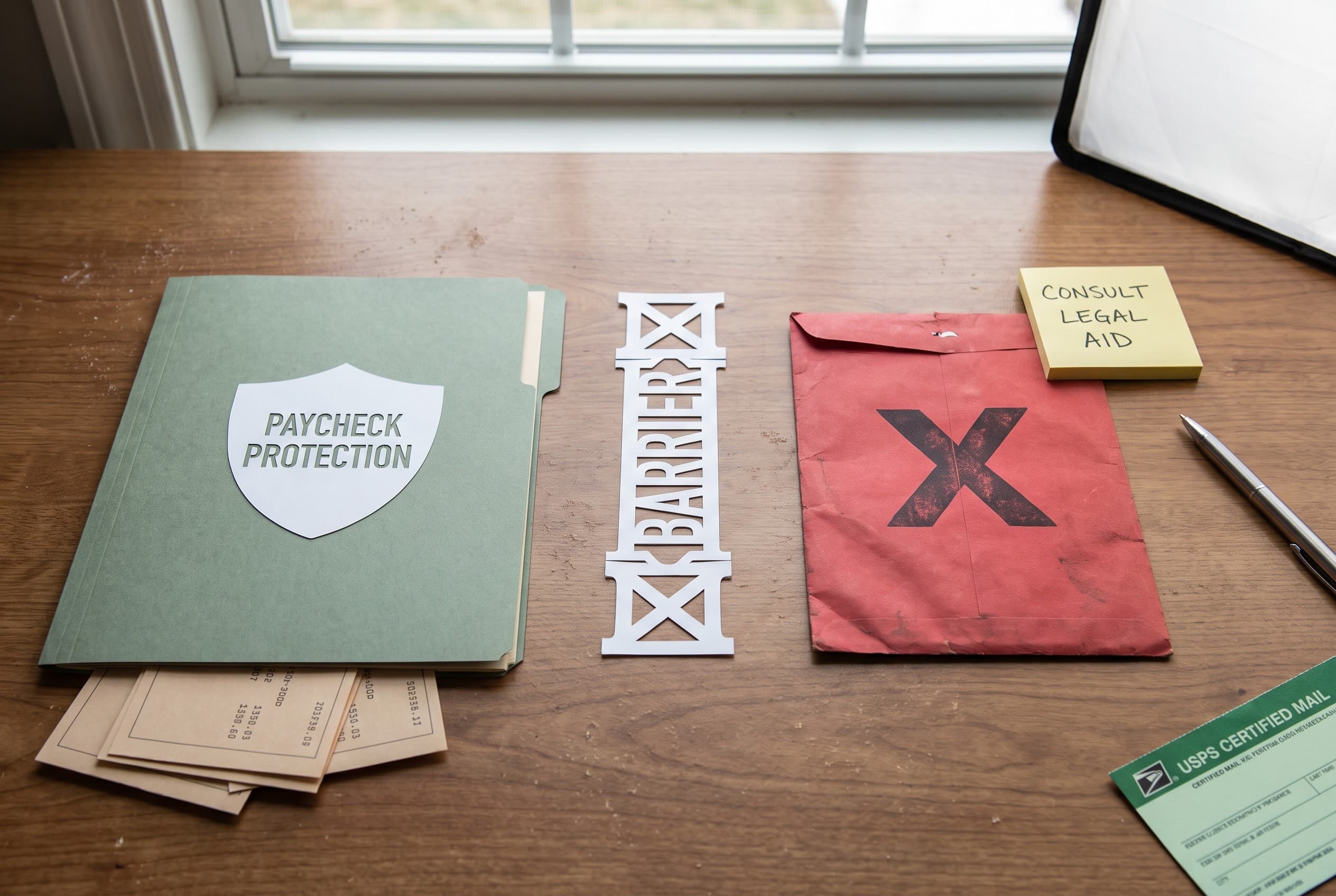
But here's the thing about wage garnishment in Florida — this state hands you one of the strongest paycheck protections in the entire country. It's called the head-of-household exemption, and if you qualify, a creditor can be blocked from taking a single dollar of your wages. Not 25%. Not 10%. Zero.
Let me show you how it works and, more importantly, how to claim it before your money walks out the door.
What You'll Learn
- The specific Florida statute that can shield 100% of your paycheck from most creditor garnishments (and who actually qualifies)
- The strict deadline that decides whether you keep your wages or lose them — miss it and the exemption is gone
- What really happens after a creditor gets a judgment in Orange, Osceola, or Seminole County — step by step
- How a garnishment and the judgment behind it wreck your credit, and what you can legally do about the reporting
- The exact affidavit you file to claim head-of-household status yourself
First, Stop Ignoring Your Mail
Real talk — the number one reason people end up garnished isn't that they owe money. It's that they ghosted the lawsuit.
Here's how it usually goes. A debt collector like Midland or Portfolio Recovery buys your old $6,000 credit card debt for pennies. They file suit in county court. You get served (or they claim you got served). You panic, toss the papers in a drawer, and do nothing.
Thirty days pass. No response. The court enters a default judgment against you — meaning you lost automatically, without ever telling your side. Now that creditor has a court order, and in Florida a judgment is good for 20 years and accrues interest the whole time.
Sound familiar? If you're at this stage, don't beat yourself up. Just don't make it worse by hiding.
The Scare: What a Judgment Creditor Can Actually Do
Once a creditor has that judgment, they've got teeth. Here's what's on the table in Florida:
- Wage garnishment — they get a Continuing Writ of Garnishment served on your employer, who is then legally required to withhold part of every check and send it to the creditor.
- Bank account levy — they can freeze and drain your checking account.
- Judgment lien on personal property — filed with the state, it clouds titles and follows you.
Federal law caps ordinary garnishment at 25% of your disposable earnings or the amount over 30x the federal minimum wage, whichever is less — you can read the Department of Labor's breakdown here. Twenty-five percent of a working person's check is brutal. That's the difference between paying the electric bill and sitting in the dark.
And here's the kicker — the judgment itself is now a public record hammering your credit. It signals to every future lender that a court had to force you to pay. That's exactly the kind of item we fight over the reporting of at Freedom Credit Repair.
But Florida gives you a way to fight the garnishment part. And it's a big one.
Your Legal Leverage: Florida's Head-of-Household Exemption
Here's the loophole that most national blogs won't tell you about, because they're writing for all 50 states and this one's uniquely Florida.
Under Florida Statute § 222.11, the wages of a person who qualifies as "head of household" are protected from garnishment by most creditors. Fully protected, in most cases.
So what makes you a head of household in Florida? Two things:
- You provide more than half the support for a child or another dependent, AND
- Those are your earnings (disposable wages from personal services).
If your disposable earnings are $750 a week or less, and you're head of household, the creditor generally cannot touch your wages at all — no garnishment, period.
If you make more than $750 a week, you're still protected on the amount up to $750, and the creditor can only reach the excess if you agreed to it in writing. Most people never signed anything like that, which means most people are fully covered.
Now here's where it gets interesting. This exemption doesn't apply automatically. You have to claim it. And Florida law — specifically § 222.12 — gives you a tight window to do it. Blow the deadline and you lose the protection even if you clearly qualified.
One caveat, and I won't sugarcoat it: the head-of-household exemption does not protect you from everything. It won't stop garnishment for child support, alimony, or most federal debts like taxes and student loans. Those follow different rules. But for that credit card judgment or medical bill collector? This is your shield.

The Action Plan: How to Claim Head-of-Household in Florida
OK, so your employer got the writ or you just got notice. Here's exactly what to do. Move fast — the clock is already running.
Step 1: Watch for the "Notice of Rights" and the deadline
When a garnishment is issued, you're supposed to receive a copy of the writ along with a Claim of Exemption and Request for Hearing form. In Florida, once you're served that notice, you generally have 20 days to file your claim of exemption with the court.
Read the dates on your paperwork the day it arrives. Not next week. That day.
Step 2: Fill out the Claim of Exemption affidavit
This is a sworn statement. On it, you check the box asserting you're the head of household and that your wages are exempt under § 222.11. You sign it under oath. The county clerk — whether that's Orange, Osceola, Seminole, or wherever your case sits — has this form. In Orange County you file it right at the courthouse in downtown Orlando or through the clerk's e-filing portal.
Step 3: File it with the clerk and serve the creditor
Two things happen here, and don't confuse them. First, you file the affidavit with the court — and your proof of that is the clerk's date-stamped copy or your e-filing confirmation. That's what shows you filed on time. Keep it somewhere safe.
Second, you deliver a copy to the creditor's attorney and the garnishee (your employer). For that part I tell every client the same thing: send it certified mail, return receipt requested, and photograph it before it goes in the envelope. The green card is your evidence that you served them. When a creditor's lawyer claims they never got it, that little receipt ends the argument.
Step 4: Be ready for the hearing
The creditor has a short window to dispute your claim. If they do, the court sets a hearing. Bring proof you support your household — tax returns showing dependents, your kids' school records, household bills in your name, pay stubs. Show up. Judges see these all the time, and a documented head-of-household case is tough for a creditor to beat.
Step 5: Deal with the credit damage separately
Stopping the garnishment protects your paycheck. It does not erase the judgment from your credit report. Those are two different battles.
And this is where I want to tell you about a client, because it shows how much the reporting of a debt can be wrong even when everything feels hopeless.
I had a client over in the UCF area — a college student, thin credit file, panicking because a collection account was tanking their score before they'd even graduated. When we dug in, here's what actually happened: their parent had added them as an authorized user on a credit card years earlier. The student never used it. Never swiped it once. But the parent's account went sideways, landed in collections, and that whole mess got reported onto the student's file.
Here's the thing — an authorized user isn't contractually liable for the debt. So we requested removal as an authorized user and disputed the tradeline as inaccurate. Within 15 days, it was gone. The student's file cleaned right up.
The lesson? Debts get reported to the wrong people, on the wrong terms, all the time. When there's a judgment or collection dragging your score down, it's worth having someone check whether it's even being reported accurately in the first place. Disputing inaccurate, unverifiable, or outdated items is your right under the Fair Credit Reporting Act — and you can dispute items yourself for free with the bureaus.
That's the kind of judgment and collection reporting we work through at Freedom Credit Repair. If a judgment is sitting on your report, our judgment removal service focuses on challenging the accuracy and verifiability of how it's reported.
Don't Wait Until the Check Clears
Here's my honest coaching: the head-of-household exemption is one of the best paycheck protections in America, but it rewards people who move fast and punishes people who freeze. The exemption exists whether or not you claim it — but the protection only kicks in when you file that affidavit on time.
If you're a Florida head of household staring down a garnishment, you've got a real shield. Use it. And if the judgment and its credit fallout feel like too much to handle alone, that's exactly why we're here.
We work with clients across Florida — from Orlando to Kissimmee to Winter Park — and nationwide by phone. Learn more about our statewide work on our Florida credit repair page, or check our FAQ for the questions we hear most.
Talk to a Real Credit Specialist — Free
The fastest way to get straight answers about your situation in Orlando and across Florida.
4.9 · 89 Google reviews · No upfront fee
Call (407) 606-7117Individual results vary. We help you dispute inaccurate, unverifiable, or outdated items — no one can remove accurate, current information from your credit report, and you can dispute it yourself for free with the bureaus.
Call us at (407) 606-7117 and let's talk it through — no judgment, just a plan.
Frequently Asked Questions
Does the Florida head-of-household exemption stop wage garnishment completely?
In most cases, yes. If you provide more than half the support for a dependent and your disposable earnings are $750 a week or less, Florida Statute § 222.11 protects 100% of your wages from garnishment by most creditors. Above $750 a week, the amount up to $750 stays protected, and the excess can only be reached if you agreed to it in writing. It does not stop garnishment for child support, alimony, or most federal debts.
How do I claim the head-of-household exemption in Florida?
You file a Claim of Exemption and Request for Hearing affidavit with the court that issued the garnishment, generally within 20 days of receiving notice of the writ. On the form you swear you're the head of household and that your wages are exempt under § 222.11. File it with the county clerk — keep your date-stamped copy or e-filing confirmation as proof you filed on time — then serve a copy on the creditor's attorney and your employer, and keep proof of service (I recommend certified mail with a return receipt). If the creditor disputes it, show up to the hearing with documents proving you support your household.
How long do I have to respond to a wage garnishment in Florida?
Generally 20 days from when you're served the notice of garnishment and the exemption claim form. This deadline is strict — if you miss it, you can lose the exemption even if you clearly qualified. The moment garnishment paperwork arrives, read the dates and file your claim right away. Don't wait for your next paycheck to disappear.
Will claiming the exemption remove the judgment from my credit report?
No. Claiming head-of-household protects your paycheck from garnishment, but the underlying judgment and any related collection accounts can still appear on your credit report. Those are separate issues. You have the right under the Fair Credit Reporting Act to dispute items that are inaccurate, unverifiable, or outdated — and you can do that yourself for free with the bureaus, or work with a company like ours to challenge the reporting.
Can a creditor garnish my bank account if my wages are exempt?
Sometimes — and this trips people up. Wages that are exempt under § 222.11 can generally keep their exempt status even after they're deposited into your bank account, but you may have to prove the funds came from protected earnings. If a creditor levies your account, you can file a claim of exemption to assert those deposited wages are still protected. Keep clean records showing which deposits are your paycheck.

Matt Brody
Founder, Freedom Credit Repair
Matt is the founder of Freedom Credit Repair based in Orlando, FL. Since 2019, Matt has helped clients remove negative items from their credit reports and take control of their financial future. Call (407) 606-7117 for a free consultation. More about Matt →