Mortgage Denied Because of a Judgment? 7 Things to Review

Mortgage Denied Because of a Judgment in Orlando? Here's How to Fix It and Reapply
What You'll Learn
- The one document in your mailbox that tells you exactly why the lender said no, and the federal law that forces them to send it
- Why a judgment that hasn't shown up on credit reports since 2017 can still kill your loan (and where underwriters actually find it)
- The difference between paying a judgment and getting it legally closed out, and why underwriters only care about one of them
- A step-by-step checklist to run before you reapply, so you don't burn a second hard pull on a second denial
Your Mortgage Got Denied Because of a Judgment. Now What?
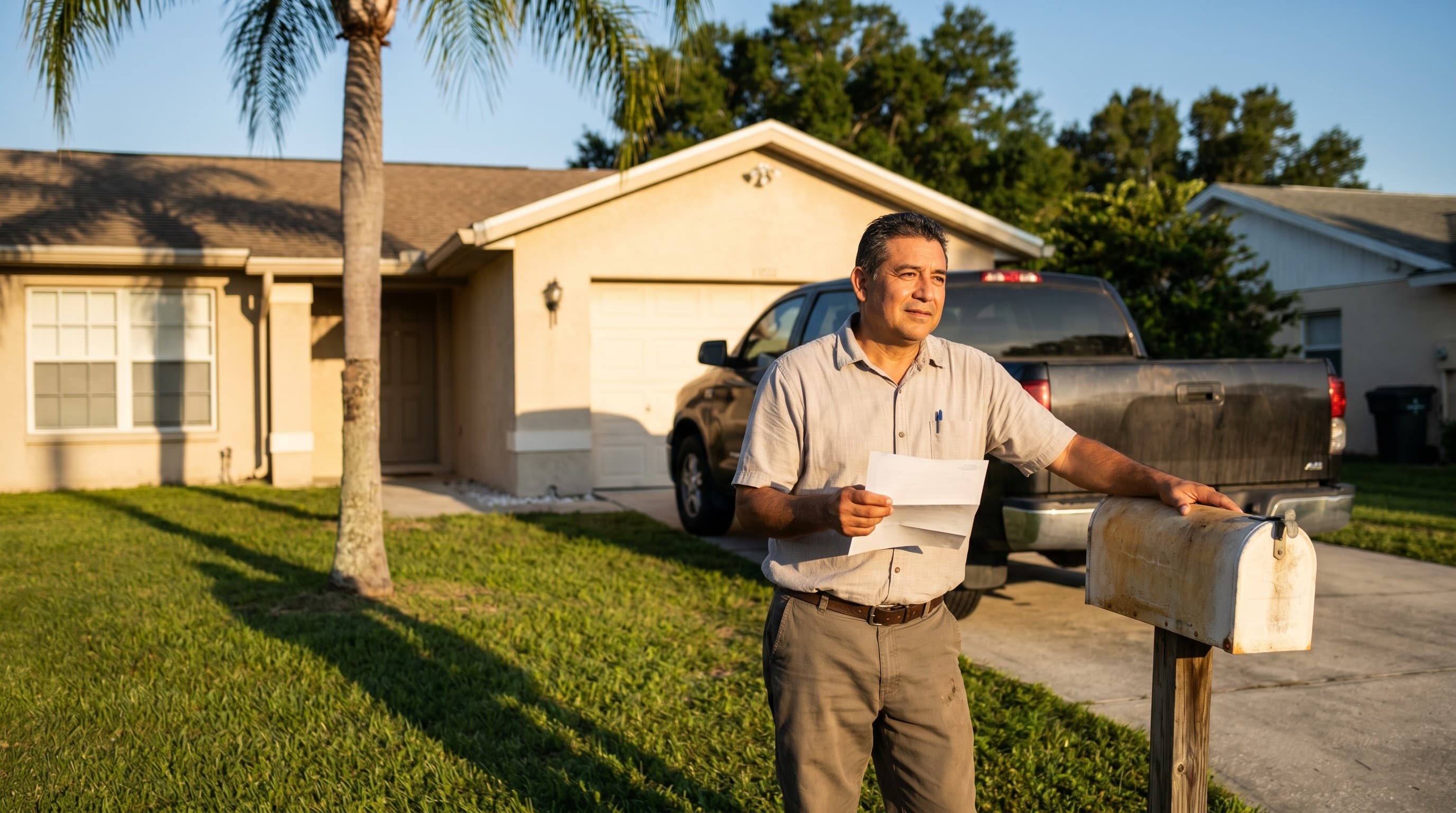
If you got a mortgage denied because of a judgment, whether you're buying in Lake Nona, Kissimmee, Sanford, or anywhere else around Orlando, stop refreshing your banking app and go find the letter.
You know the one. It came a few days after the loan officer's awkward phone call, and you probably tossed it on the counter because it felt like a rejection slip. That letter is your roadmap.
Here's the thing most people don't realize: a civil judgment is one of the few problems where the lender usually isn't confused about what it found. It's a court record. It's sitting in a public database with your name, a case number, and a dollar amount attached. Sound intimidating? It is (I won't pretend otherwise). But a court record also leaves a paper trail, and paper trails give you something to work with.
I've worked with Central Florida buyers who had a contract signed, an appraisal ordered, and a closing date 30 days out when underwriting flagged an old judgment from a credit card lawsuit they didn't even know about. In a market where Orlando sellers have backup offers waiting, nobody's giving you forever. Real talk: the next 2-3 weeks decide whether you keep that house or start shopping all over again.
The Scare: What Happens If You Just Reapply and Hope
Let me tell you about 'Carlos.' Carlos works at AdventHealth and was under contract on a townhome in Kissimmee. He gets denied by Lender A over a $3,100 judgment from a medical-practice lawsuit back in 2021. He's frustrated, so he applies with Lender B the next week. Then Lender C.
Know what the worst part is? Every one of those lenders runs the same public-record and title checks. The judgment doesn't disappear because you switched banks. Carlos racked up extra hard inquiries and lost two weeks. And his seller's patience? Gone.
Here's what an unresolved judgment can actually do to you here in Florida:
- Block the loan outright. Under Fannie Mae's general guidelines, lenders generally require outstanding judgments to be paid off before or at closing. FHA rules can allow a documented payment arrangement in some cases, but the underwriter calls the shots on your file.
- Cloud the title. In Florida, once the creditor records a certified copy of the judgment in a county's Official Records, it becomes a lien on real property you own or later acquire in that county (Fla. Stat. 55.10). That lien lasts 10 years and can be re-recorded to stretch it up to 20. The title company won't insure a clean title with that lien hanging over it.
- Stick around for a long time. A Florida judgment can stay enforceable for up to 20 years (Fla. Stat. 95.11(1)). That 2021 judgment isn't going to quietly age off before your closing.
- Trigger garnishment or a bank levy. If the creditor hasn't collected yet, they can still go after your wages or bank account. Florida does give you some armor here: if you're a head of family providing more than half the support for a dependent, your wages can be largely or fully exempt from garnishment under Fla. Stat. 222.11. But exemptions don't apply themselves. You have to claim them, on time. Picture your down payment sitting in a checking account the week a levy hits. Not fun.
- Keep growing. Most judgments accrue post-judgment interest. That $3,100 from 2021 may cost you a lot more to pay off today.
"But wait, doesn't Florida homestead protect my house?" Good question. Florida's homestead exemption (Art. X, §4 of the Florida Constitution) generally shields a homestead from forced sale by most judgment creditors. Here's the catch: you don't have a homestead yet. You're buying it. And even when homestead protection applies, underwriters and title companies usually still want the judgment paid or properly cleared before they'll sign off. Homestead is a shield after you move in, not a free pass to closing.
None of that is guaranteed to happen in your case. But ignoring it guarantees you'll find out the hard way.
Wait, Judgments Aren't Even on Credit Reports Anymore, Right?
Mostly right, and this one trips people up constantly.
Back in 2017, the three major bureaus effectively stopped reporting civil judgments under the National Consumer Assistance Plan's stricter public-record data standards (judgments had to carry enough identifying info and get refreshed regularly, and almost none did). So when someone tells me they saw a judgment on their credit report in 2026, my ears perk up. That's often a red flag for a reporting error, a mixed file, or a collection account that the furnisher has mislabeled.
So how did your lender find it? Usually one of three ways:
- The title search. The title company pulls county records for liens against the buyer's name. Judgment liens pop up here all the time.
- Specialty consumer reporting agencies. Some lenders use public-record data vendors that still compile court filings. Those companies count as consumer reporting agencies under the FCRA, which matters a lot (more on that in a sec).
- Your application. The standard mortgage application asks directly whether you have outstanding judgments. Checked no? Underwriting will ask questions.
The Debt Behind the Judgment Can Wreck You Too
Sometimes the judgment isn't the only problem. The underlying debt can poison your file in a totally separate way.
I had a client in Windermere, Florida, who'd settled a $12,000 credit card balance for $4,800. Paid it in full, had the settlement agreement signed and everything. But the creditor kept reporting the original $12,000 balance. It never updated the account to settled for less than the full amount.
Think about what an underwriter sees there. A $12,000 open balance inflates your utilization and can muddy your debt picture. Your score sinks, and that file looks a lot riskier than your real life. She did everything right and the report still punished her for it. That one drives me crazy.
Your Legal Leverage: The Rights Lenders and Bureaus Don't Advertise
OK so, here's where you stop playing defense.
Right #1: The Adverse Action Notice
Under the Equal Credit Opportunity Act and its regulation, Regulation B, 12 CFR 1002.9, a lender that denies your application generally has to give you written notice with the specific principal reasons for the denial, or tell you how to request those reasons. Vague answers like you didn't meet our standards don't cut it.
If a consumer report played a role, the FCRA's adverse action rules at 15 U.S.C. § 1681m require the lender to name the reporting agency it used and tell you about your right to a free copy of that report within 60 days. That's huge. If a public-record vendor supplied the judgment data, you're entitled to see exactly what they said about you.
Right #2: The FCRA Dispute
If any consumer reporting agency, including a specialty public-record company, reports a judgment that isn't yours, shows the wrong amount, or still shows it unpaid after you satisfied it, you can dispute it. Under 15 U.S.C. § 1681i, the agency generally has 30 days to reinvestigate and must correct or delete information it can't verify as accurate.
And you can file that dispute yourself, for free. No company needed. You can get your free reports at the official site the CFPB points consumers to.
What the Law Won't Do for You
I'm going to be straight with you, because nobody else will.
If the judgment is accurate, no dispute letter on earth makes it legally vanish. A court entered it. The FCRA protects you from inaccurate and unverifiable reporting, not from debts you actually owe. Anybody promising to erase a valid court judgment from the public record before your closing is selling you something you shouldn't buy.
What you can do with an accurate judgment: pay it or settle it, get the satisfaction properly recorded, and make every report and every title search reflect that it's closed. That's the real deal. In some cases, like a default judgment where you never got properly served, a local attorney may be able to move to vacate it. That's a court fight, not a credit dispute, and it takes time.
![[IMAGE:2] Top-down photo of a clean white desk laid out like a step-by-step plan from left to right: a red folder with a pape](/_next/image?url=https%3A%2F%2Ftyyvgkzyojviljefkhzv.supabase.co%2Fstorage%2Fv1%2Fobject%2Fpublic%2Fimages%2Fblog%2Fmortgage-denied-because-of-a-judgment-7-things-to-review%2Fbody-1.jpg&w=3840&q=75)
The Action Plan: Fix Credit Before Reapplying for a Mortgage
Here's the exact order I'd attack this in. Don't skip ahead.
Step 1: Read the Adverse Action Notice Line by Line
- Find the stated reasons for the denial. Judgment? Score? DTI? Often it's more than one.
- Write down the name of every reporting agency listed.
- Note the date. Your 60-day window for a free report starts ticking.
- No notice yet? Call the loan officer and request it in writing. Bottom line, you can't fight what you can't see.
Step 2: Pull the Actual Court Record
Go to the clerk of court website for the county where the judgment was entered and search your name. Around here, that means the Orange County Clerk of Courts (myorangeclerk.com), plus the Osceola, Seminole, and Lake County Clerk sites. Then check the county Official Records search too, because that's where recorded judgment liens and satisfactions actually show up, and it's exactly what the title company is looking at. Heads up: a judgment can be recorded in any county where you own or buy property, so check the county you're buying in, not just the one where you got sued.
Get the case number, the plaintiff, the judgment date, and the amount.
Now check it hard:
- Is it actually you? Same name, different person happens more than you'd think, especially with common names.
- Who owns it now? Debt buyers purchase judgments all the time. The plaintiff on the docket may not be who you pay. And if a debt buyer or collection attorney is the one calling you? Make them prove they own it before you pay a cent. You can demand written validation under FDCPA §809, they can't misrepresent the amount or their authority under FDCPA §807, and Florida's own Consumer Collection Practices Act (Fla. Stat. 559.72) bans harassment and bogus collection tactics. Paying the wrong company doesn't clear the lien. (Yes, I've seen it happen.)
- Did you already pay it? If so, does the docket show a recorded satisfaction? If not, that's your problem right there.
Step 3: Request Every Report the Lender Used
Pull your three bureau reports, plus any specialty report named on the notice. I can't stress this enough: compare them side by side. Look for a judgment that shouldn't be there, a duplicate collection tied to the same debt, wrong balances, or an account that should say paid or settled and doesn't.
Step 4: Dispute What's Wrong, With Proof
Here's an operator detail most people miss. When you file a dispute, the bureau usually translates it into a short code and sends it to the furnisher through an automated system called e-OSCAR. A one-line online dispute like this isn't mine often turns into a generic code, and the furnisher just confirms their data matches their data.
So don't send a one-liner. Send documents. (Our dispute letter guide walks through what to include.)
- Mail your dispute certified, return receipt requested, so you've got proof of the date the 30-day clock started.
- Attach the satisfaction of judgment, settlement agreement, or proof of payment.
- State precisely what's wrong and what the correct entry should be.
- Keep copies of everything. Every page.
Remember my Windermere client? That's exactly how we fixed hers. We disputed with the signed settlement agreement attached as proof. The creditor updated the balance to $0 and the status to settled. Her utilization ratio dropped like a rock, and her score climbed 45 points. Same debt, same history. The only thing that changed was the report finally told the truth. Every case differs, so I can't promise you 45 points, but that's what accurate reporting can do.
Step 5: Resolve the Judgment and Get the Satisfaction Recorded
If the judgment's valid, this step decides your loan.
- Call the judgment holder (or their attorney) and request a written payoff, including post-judgment interest through a specific date.
- Negotiate if you can. Some holders take less for a lump sum, especially on older judgments. Get any deal in writing before you send a dime.
- Ask your loan officer first. Sometimes a lender lets you pay the judgment off at closing out of your proceeds or funds. Paying it now with your down payment money could leave you short on reserves. No-brainer conversation to have before you write a check.
- Demand a recorded satisfaction of judgment. Paying isn't enough. The holder has to file it with the court and get it recorded in Official Records, and the title company wants to see it. Hands down, this is where most deals stall.
Look, a lot of buyers pay a judgment and assume they're done. Then the satisfaction never gets filed, the title search still shows an open lien, and closing slips by two weeks. I had a Sanford buyer who paid in full and then waited almost three weeks for the creditor's attorney to get the satisfaction onto the Seminole County record. Follow up until you see it on the docket.
Step 6: Talk to Your Loan Officer About Timing
Once the corrected reporting or recorded satisfaction is in hand, ask your lender whether a rapid rescore makes sense. Lenders, not consumers, request these, and they only reflect changes you can already document. They don't create new results out of thin air, and no one can promise a specific score or date.
Be honest about your closing date too. Some fixes take days. Others, like a vacated judgment or a slow furnisher, can take longer than your contract allows. Better to ask for an extension now than beg for one the week of closing.
Step 7: Reapply Strategically, Not Emotionally
Go back to the same lender if you can, with a clean packet: the satisfaction of judgment, corrected reports, and a short letter of explanation. They already know your file. Shotgunning applications to five new lenders just repeats Carlos's mistake.
And Carlos? Once he quit shotgunning, he got a written payoff, paid the judgment, chased the creditor until the satisfaction hit the Osceola County record, and went back to Lender A with the paperwork. His original seller had moved on, but he closed on a different Kissimmee townhome about six weeks later. Every case differs, but that's the playbook.
![[IMAGE:3] The exterior of a classic small-city American county courthouse at golden hour, shot from across the street at eye](/_next/image?url=https%3A%2F%2Ftyyvgkzyojviljefkhzv.supabase.co%2Fstorage%2Fv1%2Fobject%2Fpublic%2Fimages%2Fblog%2Fmortgage-denied-because-of-a-judgment-7-things-to-review%2Fbody-2.jpg&w=3840&q=75)
When It Makes Sense to Call for Backup
You can do every single step above yourself. Free. I mean that.
But here's the kicker. Most of the buyers who call me don't have months. They've got a seller, a rate lock, and a realtor texting them daily. A judgment on top of that feels like getting jumped in the last round. If you'd rather have someone pull the court records, compare every report, build the dispute packets, and chase the furnishers while you keep your deal alive, that's exactly what we do at Freedom Credit Repair.
We're rooted in Orlando and work with buyers all over Central Florida, from Windermere to Winter Park to Kissimmee. (Not local? We also help clients nationwide by phone.) Check out how we approach judgment-related credit issues, and if you've got questions about fees or how the process works, our FAQ covers the common ones. We don't charge before we perform services, and we won't promise to remove accurate information or hit a deadline nobody can control. What we will do is dispute what's inaccurate, outdated, or unverifiable, and help you get your paperwork right.
Talk to a Real Credit Specialist — Free
The fastest way to get straight answers about your situation in Orlando and across Florida.
4.9 · 89 Google reviews · No upfront fee
Call (407) 606-7117Individual results vary. We help you dispute inaccurate, unverifiable, or outdated items — no one can remove accurate, current information from your credit report, and you can dispute it yourself for free with the bureaus.
Call us at (407) 606-7117 or reach out here. Bring your adverse action notice. Let's go to work.
FAQ: Mortgage Denied Because of a Judgment in Orlando
Can I get a mortgage with an unpaid judgment?
Usually not, unless you resolve it before or at closing. Fannie Mae-style conventional guidelines generally require outstanding judgments to be paid off, while FHA can sometimes allow a documented payment arrangement. Your underwriter makes the final call on your specific file.
Do civil judgments still show up on credit reports?
The three major bureaus effectively stopped reporting civil judgments in 2017. If one shows up on your report today, review it closely, because it may be an error or a mislabeled collection. Lenders still find judgments through title searches and specialty public-record agencies.
Will paying off a judgment raise my credit score?
Not necessarily, since most bureau reports no longer include the judgment itself. Paying it and recording the satisfaction mainly clears the way for underwriting and title. If the related collection account shows the wrong balance, correcting it can help your score.
How long does a lender have to tell me why I was denied?
Under Regulation B, a lender generally must notify you within 30 days after receiving a completed application. The notice must give the specific reasons or explain how to request them. If a credit report played a part, you can get a free copy within 60 days.
Can a credit repair company remove a judgment before my closing?
No legitimate company can promise to remove an accurate judgment or finish on your timeline. What a company can do is help dispute inaccurate or unverifiable reporting and organize your paperwork. You can also dispute errors yourself for free.

Matt Brody
Founder, Freedom Credit Repair
Matt is the founder of Freedom Credit Repair based in Orlando, FL. Since 2019, Matt has helped clients remove negative items from their credit reports and take control of their financial future. Call (407) 606-7117 for a free consultation. More about Matt →