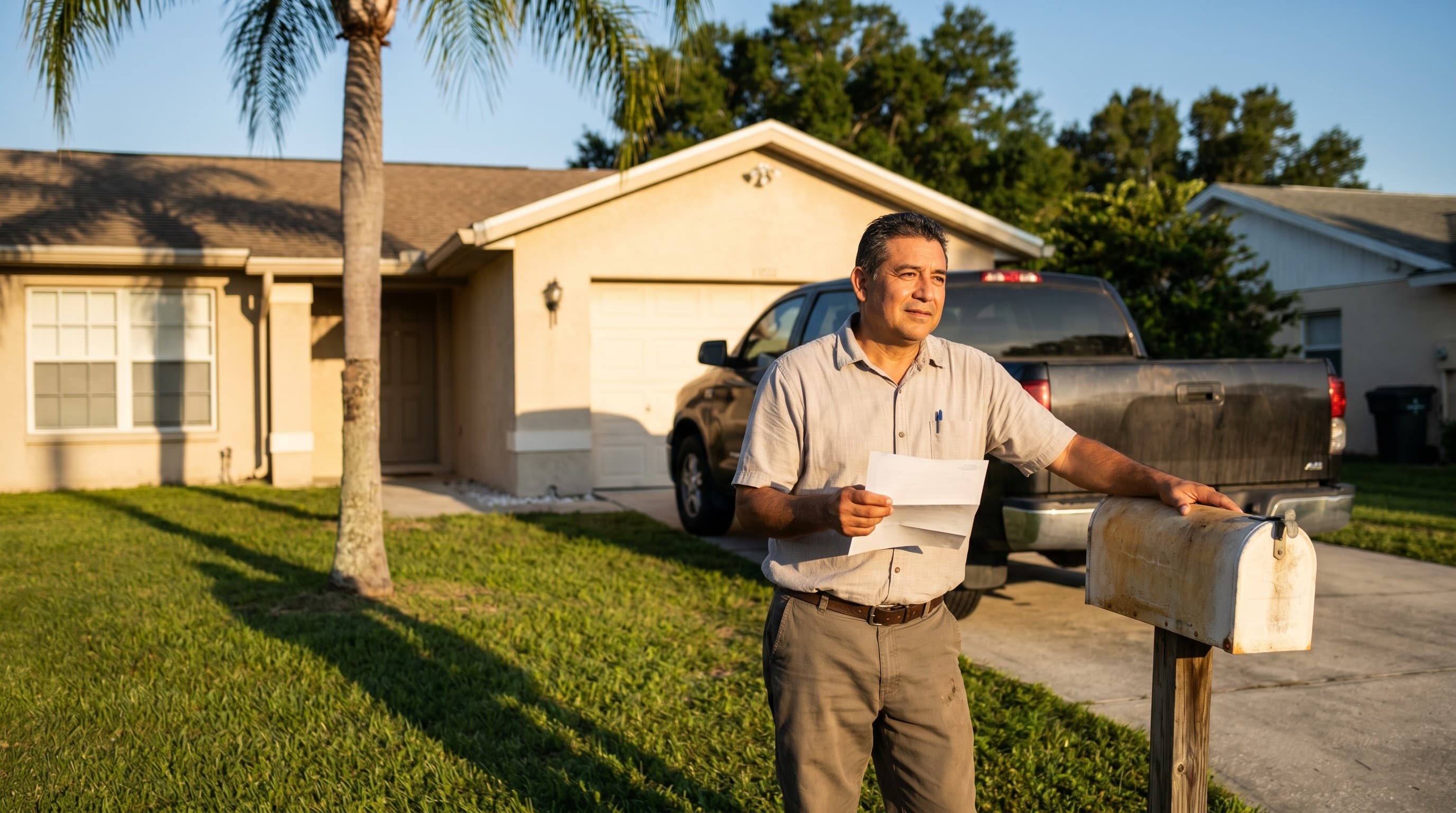
Mortgage Denied Because of a Charge-Off? Fix This First

If your loan officer just called to say your mortgage got kicked back over a charge-off, take a breath. You're not out of the game. But the clock is running, and what you do in the next two weeks matters more than anything you did in the last two years.
Let's get to work.
What You'll Learn
- The one document your lender legally has to send you — and why it's the map to your entire approval
- Why a charge-off you "already paid" can still torpedo your file (this one drives me crazy)
- The exact federal law that forces a creditor to PROVE the debt is yours — or delete it
- A real client whose score jumped 68 points after one dispute, and how we did it
- The step-by-step reapply plan that keeps your closing date alive
First — Stop Blaming Yourself and Read the Denial
Here's the thing most people do wrong. They get the denial, feel embarrassed, shove the letter in a drawer, and start Googling "how to raise my credit score fast" at midnight.
Stop.
When a lender denies you, federal law requires them to tell you exactly why. That document is called an adverse action notice, and under the Equal Credit Opportunity Act, they have to send it to you — usually within 30 days of the decision.
That notice is gold. It tells you:
- The specific reason for the denial ("serious delinquency," "charge-off account," "collection account")
- Which credit bureau they pulled
- Your credit score they used and the key factors that hurt it
Read it. Then read it again. Because 9 times out of 10, the charge-off that killed your loan is sitting right there in black and white — and half the time, the details reported are wrong.
What Actually Happens in Underwriting (The Part Nobody Explains)
Let me pull back the curtain on the charge-off mortgage underwriting denial so you know what you're fighting.
A charge-off doesn't mean the debt disappeared. It means the original creditor gave up trying to collect and wrote it off as a loss for their taxes. The debt is still very much alive — and it's still reporting on your credit as a negative account for up to seven years.
So what does this mean for your mortgage? Underwriters look at charge-offs two ways:
On a conventional loan (the kind that follows Fannie Mae/Freddie Mac rules), a charge-off on a non-mortgage account usually doesn't require payoff before closing — but it drags your score down, and if it drops you below that magic 620 credit score conventional floor, you're done. A single reporting error can be the difference between 618 and 640.
On an FHA loan, underwriters get pickier. Large or recent charge-offs can trigger a manual underwrite where a human decides whether you're a risk. A charge-off that's inaccurate or unverifiable can sink you here even if the dollar amount is small.
Now here's where it gets interesting. Underwriters don't investigate whether the charge-off is accurate. That's not their job. They take the credit report at face value. So if a collector reported a wrong balance, a wrong date, or a debt that isn't even yours — the underwriter treats it as gospel and denies you.
That's the gap you exploit.

The Charge-Off That Wasn't Even Their Fault
Let me tell you about a client of mine here in Florida — Winter Park, actually. She was pre-approved, found the house, and then the reapproval blew up over a $4,200 charge-off/collection.
Here's the kicker. It was an ER bill from a major Orlando-area hospital. She'd gone to the emergency room, her insurance denied the claim as out-of-network, and the hospital's billing partner shipped it straight to collections — before she even knew the claim had been denied. First she heard about it? When it showed up as a negative account tanking her mortgage.
Sound familiar? This happens constantly with medical debt. Insurance drags its feet, the provider sends it to a collector, and the collector reports it fast because reporting is a pressure tactic to make you pay.
She called me with a closing date already circled on her calendar. No time to "wait and see." That's the exact situation this whole post is about — and I'll tell you how it ended in a minute.
Your Legal Leverage: They Have to Prove It or Delete It
Here's the law nobody teaches you.
Under FCRA Section 611 (15 U.S.C. § 1681i), when you dispute an item on your credit report, the credit bureau has to investigate it within 30 days. They contact the furnisher — the creditor or collector who reported it — and that furnisher has to verify the information is accurate.
If the bureau can't verify it during the investigation? It should be deleted or corrected. Here's the catch though: furnishers sometimes respond with only minimal verification, and an item can be modified or even reinserted later. That's exactly why your documentation matters — the stronger your paper trail, the harder it is for them to wave a weak confirmation and call it a day.
And separately, under FDCPA Section 809 (15 U.S.C. § 1692g), if you send a collector a written dispute within 30 days of getting their initial validation notice, they have to stop collecting until they mail you validation — the amount owed, the name of the creditor, that kind of verification information. Miss that 30-day window and the leverage isn't the same, so move fast when a collector first contacts you.
Now, I'm going to be straight with you, because that's how I operate. This is not a magic eraser. If the charge-off is 100% accurate, current, and yours, the law is not going to make it vanish. Anyone who tells you they can delete a legitimate debt is lying to you — and the FTC has gone after companies for exactly that.
What these laws DO is force accuracy. And the dirty secret of the credit reporting system? A shocking amount of what's on your report is inaccurate, outdated, or unverifiable. The FTC's own study found roughly 1 in 5 people had an error on at least one of their reports. That's your opening.
How the 68-Point Jump Actually Happened
Back to my Winter Park client.
We pulled all three bureau reports and lined up the medical collection. Wrong details everywhere — and more importantly, this was a debt she'd never been properly notified about, tied to an insurance dispute that was still unresolved.
We disputed it under FCRA Section 611. Filed with all three bureaus. Documented everything.
The 30-day clock started. The collector had to verify the debt — produce the paperwork proving the amount, the ownership, the chain of custody. They couldn't do it in time.
Deleted. All three bureaus.
Her score jumped 68 points. That pushed her back over the threshold her lender needed, and she reapplied. I'm not going to promise you the same number — every file is different and I'd be breaking the law to guarantee a result — but that's a real outcome from a real, unverifiable item that never should've been reported the way it was.
That's the kind of work we handle every day on the charge-off removal side — disputing inaccurate and unverifiable charge-offs so they stop dragging down otherwise-qualified buyers. charge-off removal
The Action Plan: What to Fix Before You Reapply
OK, here's your battle plan. Move fast but move clean.
1. Get your adverse action notice and all three reports
Demand the adverse action notice from your lender if you don't have it yet — it's your right under ECOA. Then pull your reports from all three bureaus free at AnnualCreditReport.com. Don't rely on the one bureau your lender pulled. Charge-offs often report differently across the three.
2. Audit the charge-off line by line
Go through the reported charge-off like a hawk. Check:
- Is the balance correct?
- Is the "date of first delinquency" accurate? (This controls when it legally falls off.)
- Is it reporting on all three bureaus, or just one?
- Is it listed twice — once by the original creditor AND once by a collector? (Double-reporting the same debt is a common error.)
- Is it even yours?
Every wrong detail is a potential dispute.
3. Dispute inaccurate or unverifiable items in writing
You have the right to dispute errors yourself, for free, directly with the bureaus. Do it in writing, keep copies, and send it certified mail so you've got a paper trail with a delivery date. That date starts the 30-day clock under FCRA 611. The CFPB has free dispute letter templates if you want to go the DIY route.
Real talk — if you've got a closing date bearing down on you and no time to learn this stuff, that's exactly when people call us instead. The deadline is real. You don't have months to figure out the FCRA.
4. Don't do anything stupid with a legitimate charge-off
If the charge-off is accurate and yours, don't ignore it and don't randomly pay it either — not before you understand how. Here's the thing: paying won't reset the legal 7-year reporting clock (that's tied to the date of first delinquency), but an update to the account status and balance can change how it scores in the short term — sometimes for the worse. Watch out for improper re-aging too; keep an eye on that DOFD and the estimated removal date so nobody quietly restarts the clock on you. And if you're going to settle, get it in writing before you send a dime — but understand pay-for-delete is NOT guaranteed. Plenty of original creditors won't do it at all, and some collectors will only agree to update to "paid" or "settled" rather than delete. Whatever they agree to, get the exact terms on paper. Verbal promises from a collector are worth exactly nothing.
5. Keep your file frozen otherwise
While you're mid-mortgage: don't open new credit cards, don't finance a car, don't let anyone run a hard pull. Underwriters re-check your credit right before closing. One new inquiry or new debt can re-trigger a denial. Sit tight.
6. Reapply with a clean, documented file
Once the inaccurate items are corrected or removed, get an updated report showing it, hand it to your loan officer, and reapply. Bring documentation of every correction. A clean, well-papered file moves through underwriting a lot smoother the second time.
When DIY Is Actually the Right Call
I'll say it because it's true: if you've got ONE obvious error, plenty of time, and you're organized — you can dispute it yourself for free. Nobody needs to pay for that. We tell people this all the time; check our FAQ for the honest breakdown of when you do and don't need help.
Where we earn our keep is the messy files. Multiple charge-offs, collectors that verify garbage to keep an item on your report, cross-bureau inconsistencies, and a hard deadline that doesn't care about your learning curve. That's the fight we're built for.
Don't Let a Reporting Error Cost You the House
A charge-off denial feels like the end. It's not. It's a flag on a piece of paper — and if that flag is wrong, the law is on your side to fix it.
We work with clients nationwide by phone, so it doesn't matter what state your house is in. If you just got denied and the reapply clock is ticking, call us at (407) 606-7117 or reach out through Freedom Credit Repair. We'll pull your report, find what's actually wrong, and build the dispute plan — fast.
Talk to a Real Credit Specialist — Free
The fastest way to get straight answers about your situation in Orlando and across Florida.
4.9 · 89 Google reviews · No upfront fee
Call (407) 606-7117Individual results vary. We help you dispute inaccurate, unverifiable, or outdated items — no one can remove accurate, current information from your credit report, and you can dispute it yourself for free with the bureaus.
FAQ
Can a mortgage be denied because of a charge-off?
Yes. A charge-off signals to underwriters that you defaulted on a previous debt, and it lowers your credit score — often enough to drop you below a loan program's minimum, like the 620 floor on many conventional loans. On FHA loans, a large or recent charge-off can trigger a manual underwrite where a human reviewer decides your risk. The good news: underwriters take the credit report at face value, so if the charge-off is reported inaccurately or can't be verified, disputing it under the FCRA can change the outcome.
How long do I have to wait to reapply for a mortgage after a charge-off denial?
There's no fixed waiting period — you can reapply as soon as the underlying issue is fixed. If your denial was caused by an inaccurate or unverifiable charge-off, you could be ready to reapply within weeks of the item being corrected or removed, since a credit bureau must complete its investigation within 30 days under FCRA Section 611. If the charge-off is legitimate, timing depends on your lender's guidelines and how you resolve the account. Read your adverse action notice first — it tells you the exact reason so you're fixing the right thing.
Do I have to pay off a charge-off to get a mortgage?
Not always. On many conventional loans, a non-mortgage charge-off doesn't have to be paid before closing — but it still hurts your score. On FHA and some other programs, underwriters may require it addressed. Before you pay anything, confirm whether the debt is even accurate and yours, and never pay a collector without a written settlement or pay-for-delete agreement in hand. Paying won't reset the legal 7-year clock, but updating an old account can change how it scores in the short term, so get the strategy right first.
What is an adverse action notice and why does it matter?
An adverse action notice is the document a lender must send you when they deny your loan, required under the Equal Credit Opportunity Act. It states the specific reason for the denial, which credit bureau they used, and the credit score and key factors behind the decision. It matters because it tells you exactly what to fix — if it names a charge-off, you know precisely which account is blocking your approval so you can audit and dispute it if the reporting is wrong.
Can a credit repair company remove a legitimate charge-off?
No — and anyone who guarantees they can delete an accurate, verifiable debt is not being honest with you, which is exactly the kind of claim the FTC has taken action against. What a legitimate credit repair company does is dispute charge-offs that are inaccurate, outdated, or unverifiable, and help you exercise your rights under the FCRA and FDCPA. You also have the right to dispute errors yourself for free directly with the bureaus. The value we add is speed and knowing how to fight collectors who verify weak paperwork — especially when you're up against a closing deadline.

Matt Brody
Founder, Freedom Credit Repair
Matt is the founder of Freedom Credit Repair based in Orlando, FL. Since 2019, Matt has helped clients remove negative items from their credit reports and take control of their financial future. Call (407) 606-7117 for a free consultation. More about Matt →