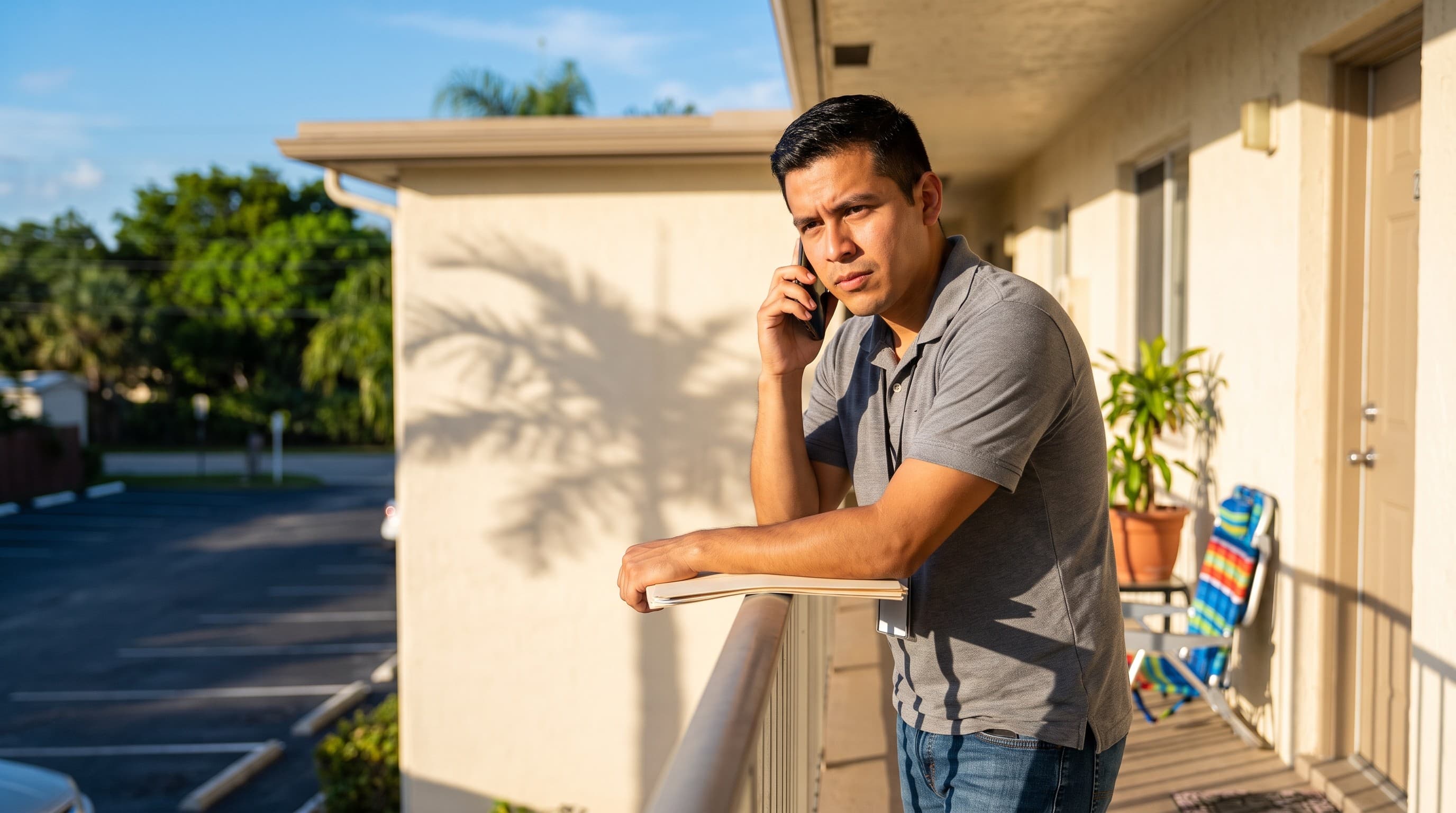
Got an Adverse Action Letter in Florida? Here's What to Do

If you just got a letter saying you were denied a car loan, a credit card, or that apartment near Conroy Road — stop crumpling it up. That "adverse action notice" in your hand is the single most useful piece of mail you'll get all year.
Most people see the word "denied" and toss it. Big mistake.
That letter is legally required to tell you exactly why you got turned down, which credit bureau they pulled, and your score. It's basically a free cheat sheet for fixing whatever knocked you out. Let's read it together.
What You'll Learn
- The federal law that forces lenders to tell you why they said no (and what happens when they don't)
- How to spot the one section of the letter that tells you which bureau to attack first
- Why a denial notice is actually your best free tool for finding errors on your report
- The exact reason a dealership near Millenia Mall can wreck your score in a single afternoon — and how one client undid most of it

First — What Does "Adverse Action" Even Mean?
Adverse action means a lender, landlord, or creditor took a negative step against you based on your credit. Most people think it just means a flat-out "no." It's broader than that.
An adverse action notice gets triggered when a company:
- Denies you credit, a loan, or a lease
- Approves you but at a worse rate than you applied for
- Cuts your existing credit limit
- Closes an account on you
So if a dealership in Orlando "approves" you but the interest rate jumped from 6% to 18% — that's adverse action too. And they owe you a notice explaining it.
Here's the thing most folks don't realize: this letter is your legal right, not a courtesy. The company isn't being nice. The law makes them send it.
The Scare: What Happens If You Ignore It
Look, I get it. Getting denied stings. The instinct is to shove the letter in a drawer and pretend it didn't happen.
But ignoring an adverse action notice is how a small problem becomes a permanent one.
Real talk — here's what I've watched happen to people who do nothing:
You keep reapplying blind. You got denied at one bank, so you apply at three more. Each one is a hard inquiry. Now you've got five hard inquiries in two weeks, your score drops another 15-25 points, and you still don't know what the actual problem was. You're just digging.
The error stays on your report. A huge chunk of denials I see in Orlando are caused by inaccurate information — a collection that isn't yours, a charge-off that was already paid, an old account reporting wrong. If you don't read the letter, you never find the error. It just sits there denying you over and over.
You miss the clock. Under federal law you've got a window to request your free report after a denial. Sit on it too long and you lose the easiest, cheapest shot at seeing what the lender saw.
Here's the bottom line: the denial isn't the damage. Doing nothing about it is the damage.
Your Legal Leverage: ECOA and FCRA
This is where you stop feeling like a victim and start feeling like the one in control.
Two federal laws stack up to protect you here.
The Equal Credit Opportunity Act (ECOA)
Under the Equal Credit Opportunity Act, any creditor who denies you has to give you a specific reason — not some vague "you didn't qualify." They have to say things like "serious delinquency," "too many recent inquiries," or "insufficient credit history."
That reason is gold. It tells you exactly where to aim.
ECOA also bans denying you based on race, religion, national origin, sex, marital status, age, or because you get public assistance. If you suspect that's what happened, the CFPB and FTC want to hear about it.
The Fair Credit Reporting Act (FCRA)
When a denial is based on your credit report, the Fair Credit Reporting Act, 15 U.S.C. § 1681m requires the lender to tell you:
- Which credit bureau they used (Equifax, Experian, or TransUnion)
- Your credit score and the key factors that hurt it
- That you have the right to a free copy of your report from that bureau within 60 days
- That you can dispute anything inaccurate in that report
Read that again. The letter names the bureau and the reasons. That means you're not guessing. You know precisely which report to pull and what to fight.
And here's the part that matters most: if the items dragging you down are inaccurate, outdated, or can't be verified, you have the right to dispute them. You can do that yourself for free directly with the bureaus, or you can have someone like us do the heavy lifting. Either way — the law's on your side.
One more right worth knowing. Under FCRA Section 604, 15 U.S.C. § 1681b, a company can only pull your credit if it has a permissible purpose — meaning the pull is tied to a transaction you actually authorized. That one becomes important in a second.

The Millenia Mall Dealership That Ran 7 Inquiries
Let me tell you about a client I had over near the Millenia Mall.
She went in to buy a car. Normal stuff — test drove it, sat down, started the paperwork. The dealership told her they'd "shop around for the best rate."
What that actually meant? They blasted her credit application out to seven different banks in a single afternoon. Seven hard inquiries. In one day.
She came to me confused, holding an adverse action letter from one of those lenders, with no idea why her score had dropped off a cliff in 24 hours.
Here's the thing about how this works. When you sign that dealership application, you're usually authorizing them to submit your info to multiple potential lenders — that's a permissible purpose. But it doesn't cover everything. A bank that has nothing to do with your car deal, an inquiry run after the deal was already done, or a pull you never directed at all? That's where you've got room to fight.
We dug into hers. Five of those seven inquiries came from banks with no connection to the transaction she actually authorized — pulls she never directed. So we filed disputes under FCRA Section 604 for inquiries with no permissible purpose tied to her application. Five of the seven came off within about 45 days.
The remaining two? Those were legitimate auto-loan shopping pulls. Depending on the scoring model, auto-loan rate-shopping inquiries made within a short window — often somewhere between 14 and 45 days — may get treated as a single event for scoring, not several. So the actionable move was simple: don't panic, write down the dates. Those two got consolidated down to roughly one inquiry's worth of impact.
That's the difference between reading your letter and ignoring it. She thought she'd ruined her credit. Turns out a sloppy dealership did most of the damage — and most of it was reversible.
If a [repossession](repossession removal) or messy auto loan is part of your story, that whole situation deserves a closer look. We see it constantly with car deals in Central Florida.
The Action Plan: What To Do Right Now
OK so you've got the letter in front of you. Here's exactly what to do, in order.
Step 1: Read the "Reasons" Section First
Find the part that lists why you were denied. ECOA requires it. Common ones I see in Orlando:
- "Too many recent credit inquiries"
- "Serious delinquency" or "derogatory public record"
- "Insufficient credit history"
- "High credit utilization"
- "Length of credit history too short"
Write these down. This is your target list.
Step 2: Find Out Which Bureau They Pulled
Somewhere on that letter it names Equifax, Experian, or TransUnion. That's the report you need. A bank might've only pulled one — and your three reports often don't match. You need to see the exact one that denied you.
Step 3: Pull Your Free Report
You've got 60 days from the denial to get that bureau's report free because of the adverse action. Go to AnnualCreditReport.com — the only federally authorized site. Don't pay for it, don't sign up for some "monitoring trial."
Step 4: Compare the Letter to the Report
Now line them up. The letter said "serious delinquency" — go find it on the report. Is it actually yours? Is the balance right? Is the date accurate? Is it older than seven years (which means it shouldn't even be there)?
This is where the errors jump out. I'd say a solid chunk of the denials I review have at least one thing on the report that's flat-out wrong or unverifiable.
Step 5: Dispute Anything Inaccurate or Unverifiable
If something's wrong — a [collection](collections removal) that isn't yours, a [charge-off](charge-off removal) reporting the wrong balance, those unauthorized inquiries — you have the right to dispute it. Under FCRA Section 611, 15 U.S.C. § 1681i, the bureau has 30 days to investigate. Here's how it shakes out: if they can't verify it, it has to be deleted; if they verify it, it can stay; and if it's partially wrong, it should be corrected or updated. Ask for the results in writing, and keep an eye out for anything that gets reinserted later.
You can do this yourself for free. Or, if it's tangled — multiple errors, unauthorized pulls, accounts you don't recognize — that's exactly the kind of mess we handle at Freedom Credit Repair.
Step 6: Stop Reapplying Until You Know Why
Do NOT fire off three more applications hoping one sticks. Each one is another inquiry. Fix the problem the letter pointed you to first, then apply once, clean.
Florida-Specific Stuff You Should Know
A few things that hit Central Florida folks harder than the national advice accounts for.
Rental denials are everywhere here. Orlando's rental market is brutal. A lot of apartment complexes auto-deny under 620, and they also owe you an adverse action notice when they reject you based on a tenant screening report. Same rights apply. Pull the screening report, check it for errors.
Seasonal income wrecks autopay. I see a ton of hospitality and theme park workers on I-Drive whose income swings with tourist season. A missed autopay during a slow month turns into a "late payment" that triggers a denial later. If it reported wrong, it's disputable.
Florida's a big auto-loan market. With the way people need cars to get around Orange, Osceola, and Seminole counties, the dealership inquiry game is rampant. Watch your authorizations. You don't have to let banks unconnected to your deal pull you.
We handle this stuff statewide — check out our [Florida credit repair](credit repair across Florida) breakdown for the full picture, and our FAQ covers the questions we get every single week.
Frequently Asked Questions
What does adverse action mean on a credit application?
Adverse action means a creditor took a negative step against you based on your credit — denying your application, approving you at a worse rate than you asked for, lowering your credit limit, or closing your account. Under federal law (ECOA and FCRA), the company must send you a written notice explaining the specific reasons and telling you which credit bureau they used.
How long do I have to get my free credit report after a denial in Florida?
You have 60 days from the date of the adverse action notice to request a free copy of your credit report from the bureau the lender used. This applies in Florida and nationwide under the FCRA. Get it from AnnualCreditReport.com — the only federally authorized source — and don't pay for it.
Can I dispute the items that caused my credit denial?
Yes — if the items are inaccurate, outdated, or can't be verified, you have the right to dispute them with the credit bureaus under FCRA Section 611. The bureau then has 30 days to investigate. If they can't verify it, it gets deleted; if it's partially wrong, it gets corrected; if it's verified, it can stay. You can dispute for free yourself, or have a credit repair company handle it for you. What you cannot do is remove accurate, current, verifiable debt.
A car dealership ran my credit at multiple banks. Is that legal?
It's only legal for a bank to pull your credit if there's a permissible purpose under FCRA Section 604. When you sign a dealership's application, you're usually authorizing them to send your info to multiple potential lenders, so those pulls are typically covered. Legitimate auto-loan shopping inquiries within a short window (often 14 to 45 days, depending on the scoring model) are usually counted as a single inquiry. But if a bank with no connection to your deal pulled you, or your credit got run after the deal was done or without your direction, those inquiries can be disputed and potentially removed.
Does an adverse action notice hurt my credit score?
No — the notice itself does nothing to your score. It's just a letter telling you about a decision that already happened. What may have affected your score is the hard inquiry from the application, plus whatever negative items were already on your report. The notice is actually your tool to find and fix those underlying problems.
Don't Sit On That Letter
That denial notice is a starting line, not a finish line. It tells you the bureau, the reasons, and your rights — everything you need to start fighting back.
If you're staring at a letter full of items you don't recognize, or a dealership just lit up your credit report like a Christmas tree, let's talk. We'll pull the report, find what's inaccurate, and dispute it the right way.
Call Freedom Credit Repair at (407) 606-7117 or reach out through our [contact page](contact us today). The first step is just knowing what you're up against.
Talk to a Real Credit Specialist — Free
The fastest way to get straight answers about your situation in Orlando and across Florida.
4.9 · 89 Google reviews · No upfront fee
Call (407) 606-7117Individual results vary. We help you dispute inaccurate, unverifiable, or outdated items — no one can remove accurate, current information from your credit report, and you can dispute it yourself for free with the bureaus.

Matt Brody
Founder, Freedom Credit Repair
Matt is the founder of Freedom Credit Repair based in Orlando, FL. Since 2019, Matt has helped clients remove negative items from their credit reports and take control of their financial future. Call (407) 606-7117 for a free consultation. More about Matt →