FCCPA vs. FDCPA: Extra Debt-Collection Rights in Florida

If a collector is blowing up your phone, calling your job, or threatening you over a debt in Florida — stop assuming federal law is your only shield. It's not.
Most people (and honestly, a lot of collectors) only think about the FDCPA, the federal Fair Debt Collection Practices Act. But Florida gives you a second weapon that hits harder in a few key spots. It's called the FCCPA — the Florida Consumer Collection Practices Act, tucked into Chapter 559 of the Florida Statutes.
Here's the thing about FCCPA Florida debt collection rules: they cover people and situations federal law flat-out ignores. And if you know how to use both laws together, you go from playing defense to landing punches.
Let me show you how.
What You'll Learn
- The one category of debt collector the FDCPA lets off the hook — that Florida drags right back into the ring
- The specific state statute wording that makes a collector's "I know you owe this" threat illegal in Florida
- How a client of mine in Apopka stopped a 15% wage garnishment cold and got the default wiped from his report
- The exact combo of federal + state validation demands that makes collectors either prove it or back off
- Why the timing and wording of your dispute letter matters more than you think
Want to skip straight to a human? Call us at (407) 606-7117.
The Hook: Federal Law Has Holes. Florida Patches Them.
The FDCPA is a solid law. It stops third-party collectors from harassing you, lying to you, or threatening stuff they can't legally do. Good.
But it has a giant blind spot: it only applies to third-party debt collectors. The original creditor — the bank, the hospital, the credit card company you actually borrowed from — is basically exempt from the FDCPA when they collect their own debt.
So when your original lender's in-house collections team starts calling you seven times a day? Federal law shrugs.
Florida doesn't.
In many situations, the FCCPA can reach any person collecting a debt — original creditors included, not just third-party collectors. Read Fla. Stat. § 559.72 and you'll see it says "no person shall" — not "no debt collector." That single word difference is a big deal. Florida courts have often read it to mean the bank harassing you is on the hook the same as some junk-debt buyer out of Buffalo.
That's your home-field advantage. Most people never use it.
The Scare: What Happens If You Just Ignore It
Real talk — the worst thing you can do is nothing.
I've watched it play out too many times. You toss the letters in a drawer. You dodge the calls. You figure it'll go away.
It doesn't. Here's the actual chain of events when you ignore a collector in Florida:
- The calls escalate. Then they find your employer, your references, your family.
- They sue. In Florida, a lot of these end up in county court (small claims for debts under $8,000, or circuit court for bigger balances). If you don't respond to the summons, you lose by default judgment — automatically.
- The judgment turns into garnishment or a lien. Once they've got a judgment, they can come after your wages or bank account.
And federal debt? That's a whole different animal. Federal student loans don't even need to sue you to garnish your check.
I had a client in Apopka — warehouse worker, living paycheck to paycheck — who defaulted on about $28,000 in federal student loans. He got a notice that a 15% administrative wage garnishment was about to hit his paycheck. No court, no judge, no lawsuit required. That's the power the feds have on defaulted student debt, and it terrified him because he was already stretched to nothing.
We'll get back to how that ended (it's a good ending). But understand the stakes first. Ignoring collectors doesn't make them disappear — it hands them the win.
Your Legal Leverage: FCCPA vs. FDCPA, Side by Side
OK so here's where it gets interesting. You don't pick one law. You stack them.
Think of the FDCPA as your federal floor and the FCCPA as the Florida ceiling that goes higher. When both apply, you assert both. Collectors hate that, because now they've got to comply with two sets of rules and two sets of penalties.
Where the FCCPA goes further than the FDCPA
1. It covers original creditors. Said it already, but it's the headline. Your own bank, your own credit card issuer, your own medical provider's billing office — in many situations, all bound by the FCCPA in Florida. The FDCPA (15 U.S.C. § 1692a) largely exempts them.
2. The "knowledge" standard on false claims. This one's sharp. Under Fla. Stat. § 559.72(9), a collector can't "claim, attempt, or threaten to enforce a debt when such person knows that the debt is not legitimate, or assert the existence of some other legal right when such person knows that the right does not exist." So if a collector knows the debt is past the statute of limitations, or knows it isn't really yours, and they threaten you anyway — that's a Florida violation. One caution here: don't assume an old debt is automatically time-barred. The clock depends on the type of debt and the facts, and a payment or written acknowledgment can reset it. Confirm it before you throw "time-barred" at anybody. That "knows" language is a hook federal law doesn't hand you the same way.
3. Communicating with you when they know you have a lawyer. Under § 559.72(18), once a collector knows you're represented, they can't keep contacting you directly. Strong protection.
4. Statutory damages plus attorney's fees. Win an FCCPA claim and you can recover up to $1,000 in statutory damages, actual damages, and your attorney's fees and court costs (Fla. Stat. § 559.77). That fee-shifting is why consumer attorneys in Florida will take these cases — the collector pays your lawyer if you win.
Where the FDCPA still matters
Don't sleep on the federal side. The FDCPA gives you the debt validation right that's pure gold. Under 15 U.S.C. § 1692g, you have 30 days from receiving a third-party collector's initial written notice to send a written demand that they validate the debt. Once they receive that demand, they have to pause collection until they mail you proof.
Here's an operator detail most blogs skip: a lot of these junk-debt buyers cannot actually validate. They bought your account in a spreadsheet batch for pennies on the dollar. They don't have the original signed agreement or the full payment history. When you demand validation in writing and they can't produce it, they often just go quiet — and that's leverage in your pocket.
Quick distinction, because people mix these up: FDCPA validation is about whether the collector can substantiate the debt enough to keep collecting. FCRA verification (the credit-bureau dispute process) is a different standard — it's about whether the bureaus and the furnisher can confirm the reporting is accurate. A bureau can "verify" with a furnisher without ever producing a signed contract, so a can't-validate collector doesn't guarantee automatic deletion from your report. Two different fights, two different rules.
So your play is both:
- Federal validation demand to make them prove the debt exists and it's yours.
- State FCCPA leverage if they harass you, contact you after you're represented, or push a debt they know is bogus or time-barred.
That's the combo. Now let's put it to work.
The Action Plan: How to Fight Back in Florida
Step 1: Write everything down — build your paper trail
Start a log today. Date, time, the number that called, who they said they were, what they said. Every single call.
Why? Because FCCPA and FDCPA cases live and die on evidence. "They called me a lot" loses. "They called me 9 times between 8:12 a.m. and 6:40 p.m. on March 3rd, and told my coworker I owed money" wins. Screenshot your call log. Save voicemails. Keep every letter and envelope.
Step 2: Send a written debt validation demand — certified mail
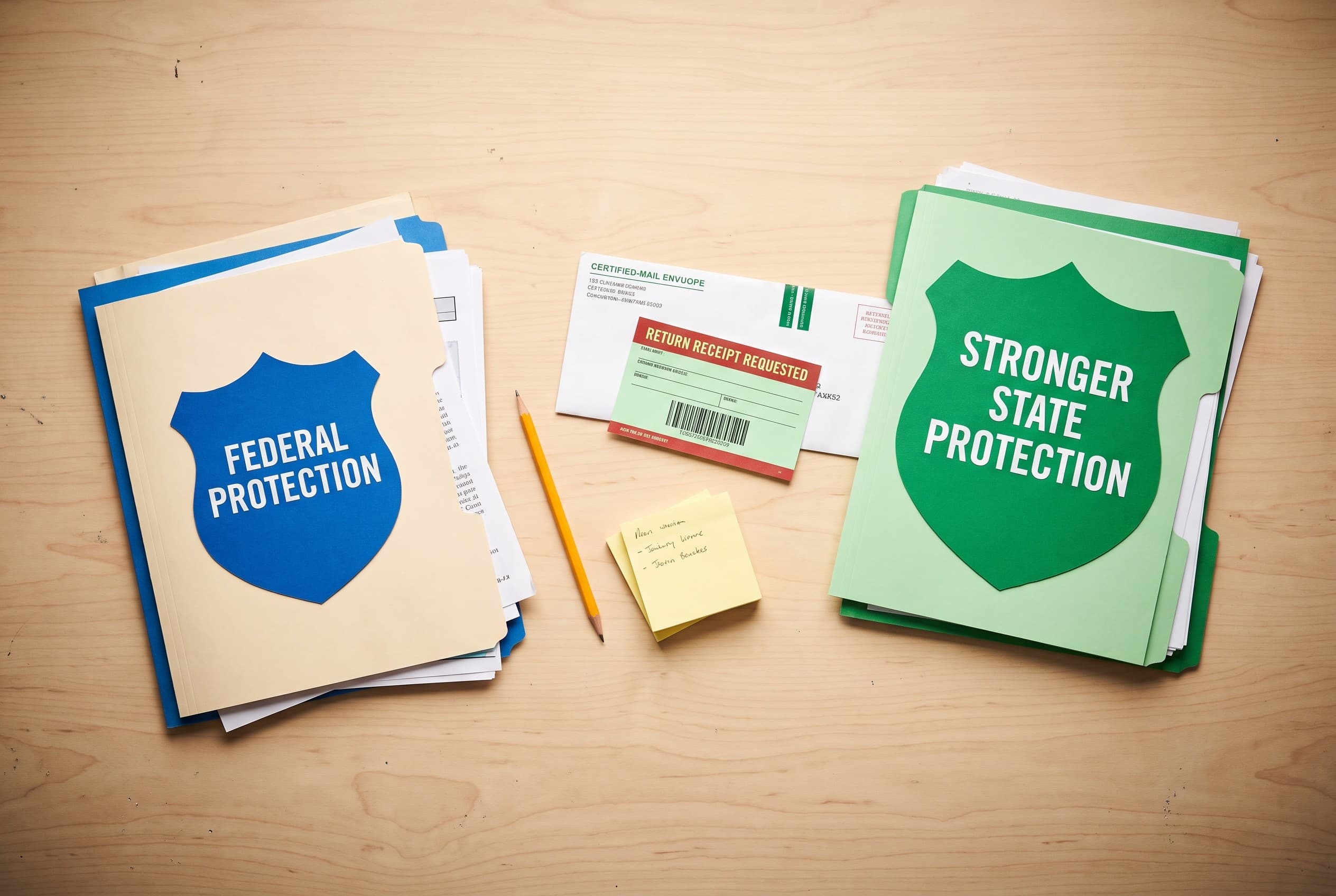
Within 30 days of receiving a collector's initial written notice, mail a written demand that they validate the debt. Do it by certified mail with return receipt.
The certified receipt isn't a formality — it's your proof of the date they received it. That green card proves your request was timely and received, and it proves they kept collecting (a violation) if they did anyway. I've had this exact detail win disputes. Don't email it. Don't call it in. Mail it, keep the receipt.
Step 3: Tell them, in writing, to stop calling your job
Under the FDCPA, a collector can't call you at work once it knows or has reason to know your employer prohibits those calls. So don't just say "stop calling me at work" — say in writing that your employer prohibits personal collection calls and demand no more workplace calls. And know this: collectors generally can't discuss your debt with your coworkers or supervisors — that third-party disclosure can be its own FCCPA problem under § 559.72. Put it in writing, and if they ignore it, you've stacked another violation.
Step 4: Dispute inaccurate or unverifiable items with the bureaus
Here's your free right — one you don't need to pay anyone to use. You can dispute any inaccurate, outdated, or unverifiable item directly with Equifax, Experian, and TransUnion for free under the FCRA (15 U.S.C. § 1681i). The bureaus then have 30 days (usually) to investigate and verify with the furnisher, or delete.
The wording and timing of that dispute matter. This is genuinely where a lot of people trip — they dispute the wrong thing, at the wrong time, with the wrong language, and the bureau "verifies" it and moves on. If you want help getting the collectionscollections removal items challenged correctly, that's the kind of thing we handle at Freedom Credit Repair.
Step 5: If they violated the law, use it
If a collector broke the FCCPA — harassed you, lied about the debt, kept calling after you demanded they stop — you may have a claim under Fla. Stat. § 559.77 worth up to $1,000 plus attorney's fees. A consumer-protection attorney will often take these on contingency because of the fee-shifting. That's real leverage.
Federal debt is a different fight — here's how my Apopka client won it
Remember the warehouse worker facing the 15% student loan garnishment? The FCCPA doesn't touch federal student loans — that's a federal program with its own rules. So we didn't fight it with state law. We used the federal path that actually works: loan rehabilitation.
We got him enrolled in the federal rehab program with income-driven payments of $87 a month — an amount he could actually cover. He made 9 consecutive on-time payments. After successful rehab, the garnishment stopped and the default status came off his report. Fair warning, though: rehab rules and reporting updates change over time and vary by servicer and bureau, so the exact timing and how it shows up isn't identical for everyone.
That's the lesson: match the tool to the debt. FCCPA and FDCPA for the harassing collectors. Rehab or an income-driven plan for defaulted federal student loans. Different fights, different weapons. If federal student debt is your issue, that's exactly what our student loan credit repairstudent loan credit repair work is built around.
We cover clients all over the state — Florida credit repaircredit repair across Florida from the Panhandle to Miami — and yeah, plenty right here in Apopkacredit repair in Apopka and around Orlandocredit repair in Orlando.
Quick Recap: FCCPA vs. FDCPA
- FDCPA = federal, third-party collectors only, gives you the 30-day validation right.
- FCCPA = Florida (Chapter 559), can cover everyone collecting a debt including original creditors, punishes collectors who threaten debts they know are bogus, and pays your attorney's fees if you win.
- Use both. They stack. Assert your federal validation rights AND your Florida protections.
- Federal student loans play by their own rules — rehab and income-driven plans, not the FCCPA.
You've got more leverage than you think. The collectors are betting you don't know that. Prove them wrong.
Talk to a Real Credit Specialist — Free
The fastest way to get straight answers about your situation in Orlando and across Florida.
4.9 · 89 Google reviews · No upfront fee
Call (407) 606-7117Individual results vary. We help you dispute inaccurate, unverifiable, or outdated items — no one can remove accurate, current information from your credit report, and you can dispute it yourself for free with the bureaus.
Ready to fight back? Call us at (407) 606-7117 and let's figure out your move.
Frequently Asked Questions
What's the difference between the FCCPA and the FDCPA?
The FDCPA is a federal law that only regulates third-party debt collectors, while the FCCPA (Florida Consumer Collection Practices Act, Chapter 559) can cover any person collecting a debt in Florida — including your original creditor. Florida's law also lets you recover up to $1,000 in statutory damages plus attorney's fees, and specifically punishes collectors who push a debt they know isn't legitimate. In Florida you can often assert both laws at once for maximum leverage.
Does the FCCPA apply to the original creditor, not just collection agencies?
Often, yes. Unlike the federal FDCPA, the FCCPA under Fla. Stat. § 559.72 uses the phrase "no person shall," which courts have frequently read to include original creditors collecting their own debts. So if your own bank, credit card company, or medical billing office is harassing you in Florida, they can be bound by the FCCPA — a protection federal law generally doesn't give you.
Can I stop a debt collector from calling me in Florida?
Yes. Send the collector a written request to stop contacting you, and separately state that your employer prohibits personal collection calls and demand no more workplace calls — ideally by certified mail so you have proof of the date they received it. Under both the FDCPA and FCCPA, continuing to contact you improperly after that can be a violation. Keep a detailed log of every call — dates, times, and what was said — because that evidence is what makes a harassment claim stick.
How much can I sue a debt collector for under Florida law?
Under Fla. Stat. § 559.77 you can recover up to $1,000 in statutory damages, plus any actual damages you suffered, plus your attorney's fees and court costs. That fee-shifting provision is why many Florida consumer-protection attorneys take these cases on contingency — if you win, the collector pays your lawyer.
Does the FCCPA cover federal student loan collection?
No. Federal student loans are governed by federal rules, and the U.S. Department of Education can garnish wages (typically up to 15%) without a court judgment. The fix there isn't the FCCPA — it's federal options like loan rehabilitation or an income-driven repayment plan, which can stop garnishment and, after successful completion, remove or update the default on your credit report (timing and reporting can vary by servicer and bureau). We get this question a lot — check out our FAQ for more, or call us at (407) 606-7117.

Matt Brody
Founder, Freedom Credit Repair
Matt is the founder of Freedom Credit Repair based in Orlando, FL. Since 2019, Matt has helped clients remove negative items from their credit reports and take control of their financial future. Call (407) 606-7117 for a free consultation. More about Matt →