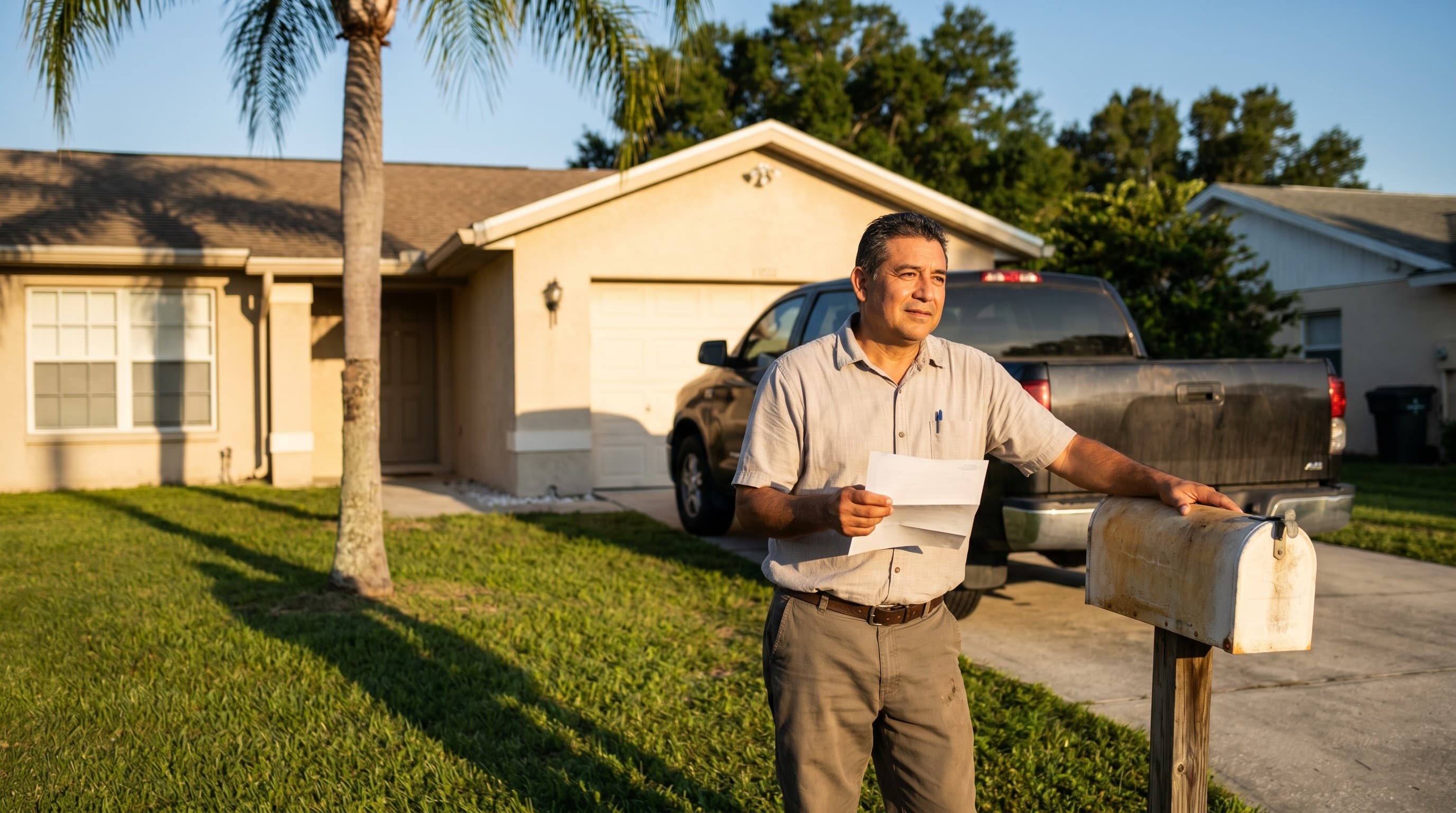
Debt Validation Letter for Medical Collections Florida

What You'll Learn
- The exact proof a Florida medical debt collector needs before you pay a dime
- Why one wrong sentence in your letter can make your situation messier
- How federal debt validation rules work with Florida medical debt collection rights
- What to do if the collector already reported the account to Equifax, Experian, or TransUnion
The Hook: Don’t Pay a Florida Medical Collection Just Because It Looks Official
If a collector sent you a bill for an old ER visit, surgery balance, ambulance ride, or lab charge, don’t panic-pay it.
That’s exactly how people get clipped.
A debt validation letter for medical collections Florida situation usually starts with a vague notice: a balance, a hospital name, a collection agency, and a deadline that makes your stomach drop. Sound familiar?
Here’s the thing — medical billing is messy. Insurance adjustments come late. Hospitals sell or assign accounts in batches. Collectors get partial records. Sometimes the balance already got reduced, paid, written off, or billed to the wrong plan.
And honestly? I’ve seen Florida consumers pay medical collections they never legally owed because they didn’t want trouble.
Bad move.
A debt validation letter forces the collector to slow down and show their cards. You’re not begging. You’re making them prove the debt before you hand over money or admit anything.
![[IMAGE:2] Instructional Visual — top-down flat-lay paper cutout style composition on a clean white desk showing a medical col](/_next/image?url=https%3A%2F%2Ftyyvgkzyojviljefkhzv.supabase.co%2Fstorage%2Fv1%2Fobject%2Fpublic%2Fimages%2Fblog%2Fdebt-validation-letter-for-medical-collections-florida%2Fbody-1.jpg&w=3840&q=75)
The Scare: What Happens If You Ignore Medical Collections in Florida
Look, I hate fear tactics. But I hate unopened collection letters even more.
If you ignore the collector, a few things can happen:
- The collection may appear on your credit reports if it meets current credit reporting rules
- The collector may keep calling or mailing you
- The account may move to another agency
- The creditor or collector may sue if the debt remains within the legal filing window
- A bad credit file may cost you a mortgage approval, apartment lease, or decent auto loan rate
Medical collections hit harder than people think. A $640 lab bill can turn into a mortgage problem. A $1,900 ER balance can make a car lender treat you like you’re radioactive.
Current credit bureau policies matter here too. Paid medical collections are generally removed from consumer credit reports, unpaid medical collections usually get a one-year waiting period before appearing, and medical collections with an initial reported balance under $500 generally aren’t reported by the big three bureaus. That’s bureau policy, not a magic federal shield, and rules can change — so check the current reporting status before you make decisions.
I had a client in Orlando/Millenia who bought a car near the Millenia Mall, and the dealership ran her credit at 7 different banks in one day. Seven hard inquiries. Boom. Her file looked like she went on a credit application spree.
That wasn’t a medical collection case, but the lesson applies: credit damage often starts with paperwork people don’t challenge fast enough. In her case, we reviewed the actual application language, authorization scope, and credit pulls, then attacked the inquiries we believed lacked permissible purpose under FCRA Section 604. More on that in a sec.
Medical collections work the same way in spirit. If the collector can’t prove the account, if the amount doesn’t match, or if the reporting lacks accuracy, you don’t just shrug and eat it.
You fight smart.
Your Legal Leverage: FDCPA, FCRA, and FCCPA Medical Debt Collection Rights
You’ve got three lanes of leverage here: federal debt collection law, federal credit reporting law, and Florida’s state consumer collection law.
The FDCPA Validation Notice Gives You a Written Fight Window
Under the federal Fair Debt Collection Practices Act, a debt collector must give you a validation notice with key information about the debt, including the amount and the creditor’s name. If you dispute the debt in writing within 30 days after receiving the validation notice, the collector must stop collection activity until it mails verification. You can read the statute at 15 U.S.C. § 1692g.
That 30-day window matters.
Miss it, and you can still dispute the debt, but you lose some pressure. Hit it in time, and you force the collector to pause and produce legally sufficient verification before pushing harder.
And let’s be clear: you can request itemized bills, insurance adjustments, and proof of collection authority. You should. But the FDCPA doesn’t always force a collector to hand over every document you ask for like it’s a full-blown trial packet. A weak response may give you room to push back, dispute reporting, or talk to a lawyer — but missing one requested document doesn’t automatically erase the debt.
Bottom line: send the letter fast.
The FCRA Controls Credit Reporting Accuracy
If the medical collection already shows on your credit reports, you’re now in FCRA territory too. The Fair Credit Reporting Act gives you the right to dispute inaccurate or unverifiable credit report information with the bureaus. The bureau generally must investigate under 15 U.S.C. § 1681i.
Most bureau investigations run about 30 days, though that can stretch to 45 days in some situations. If you dispute through a credit bureau, the furnisher usually gets notified and has duties under FCRA Section 623 to investigate and report back. That’s different from sending a direct dispute to the collector or medical debt furnisher.
This matters because debt validation and credit bureau disputes are not the same thing.
A debt validation letter Florida consumers send goes to the collector. A credit report dispute goes to Equifax, Experian, or TransUnion. Sometimes you need both. Sometimes you need to wait and see what the collector sends back first.
That’s where people get tangled up.
Florida Adds Extra Protection Through the FCCPA
Florida also has the Florida Consumer Collection Practices Act, often called the FCCPA. Florida law bars certain abusive or misleading collection conduct, including trying to enforce a debt when the collector knows it isn’t legitimate or asserting a legal right when the collector knows that right doesn’t exist. You can read the statute in Fla. Stat. § 559.72.
This one drives me crazy because collectors act like Florida consumers don’t know the state law exists.
But don’t mix up the lanes. The FDCPA pause comes from a timely written validation dispute. The FCCPA targets certain bad conduct under Florida law. They can overlap, but they’re not the same punch.
If a collector threatens something it can’t legally do, misrepresents the balance, contacts you in a way the law bars, or keeps pushing after a proper FDCPA dispute when it shouldn’t, document everything. Dates. Times. Caller ID. Letters. Envelopes. Screenshots.
Florida gives you more ammo than most people realize.
What to Send in a Medical Collection Debt Validation Letter
Your letter should be firm, short, and boring.
Don’t tell your life story. Don’t explain why you couldn’t pay. Don’t promise a payment plan. Don’t say, “I know I owe this but…”
Nope. Stop right there.
You want proof. That’s it.
Ask for These Specific Items
In a medical collection debt validation letter, request:
- The name of the original medical provider
- The date or date range of service
- An itemized statement showing charges, adjustments, insurance payments, and patient responsibility
- The account number used by the original provider
- Proof the collector owns the debt or has authority to collect it
- The current balance and a breakdown of fees or interest
- The date the account went into default or collection
- The name and mailing address of the current creditor
- Copies of any judgment, if they claim one exists
For medical bills, that itemized statement is the real deal. A collector saying “you owe $2,184” doesn’t cut it for me.
I want to see how they got there.
Just remember: this is your request list. It’s not a guarantee the FDCPA requires every single item before the collector can ever act again. If they send thin proof, you use that weakness. You don’t assume the fight is automatically over.
Don’t Request Private Medical Details You Don’t Need
Real talk — you don’t need diagnosis codes, procedure notes, or private medical records floating around a collection dispute unless a lawyer tells you otherwise.
Ask for billing proof, not your full chart.
Medical debt disputes already sit in a sensitive zone. Keep your request tight: dates, provider, charges, payments, insurance adjustments, and collector authority.
Sample Debt Validation Letter for Florida Medical Collections
Use this as a starting point. You can send letters yourself for free. You don’t need to hire me or anyone else just to mail a validation request.
[Your Name]
[Your Mailing Address]
[City, State ZIP]
[Date]

[Collector Name]
[Collector Mailing Address]

Re: Request for Debt Validation
Account Number: [Account Number Listed]
Original Creditor/Provider: [If Listed]
Amount Claimed: [$ Amount]

To Whom It May Concern:

I am responding to your collection notice regarding the account listed above. I dispute this debt and request validation under the Fair Debt Collection Practices Act.

Please provide the following:

1. The name and address of the original medical provider;
2. The date or date range of medical service;
3. An itemized statement showing charges, insurance payments, adjustments, credits, and the claimed patient responsibility;
4. Proof that your company owns this debt or has authority to collect it;
5. The name and address of the current creditor;
6. A breakdown of the current balance, including any fees or interest;
7. The date this account was placed for collection.

If this request is being sent within the 30-day validation period, please cease collection activity until verification is provided as required by 15 U.S.C. § 1692g(b).

This letter is not an admission of liability and does not grant permission to contact me by phone. Please communicate with me in writing at the address above.

Sincerely,

[Your Name]
Short. Clean. No drama.
How Florida Medical Debt Collection Rights Work in Real Life
Here’s where Florida gets tricky.
A lot of people think, “It’s medical debt, so they can’t do anything.” Wrong.
Medical debt can still go to collections. A collector can still contact you within legal limits. A creditor can still sue if the claim sits within the proper statute of limitations and they can prove it.
But Florida consumers have leverage if they use it early.
Florida Statute of Limitations Can Matter
Florida’s statute of limitations depends on the type of claim. Many written contract claims have a 5-year limit under Fla. Stat. § 95.11, but Florida also has a specific 3-year period for certain actions to collect medical debt for services rendered by a hospital licensed under Chapter 395.
That distinction matters. A hospital facility bill may not be the same legal animal as a separate ER physician group, ambulance company, radiology group, anesthesia provider, or lab bill. Same visit. Different claimant. Different paperwork. Different fight.
Don’t guess.
If the collector hints at a lawsuit on an older medical bill, get the dates. Date of service. Last payment. Date placed for collection. Who owns it now. And if the timing looks close, have a Florida consumer attorney check it before you pay, settle, or admit anything.
The kicker is simple: paying or agreeing to pay without understanding the timeline may create new problems. Assignment or placement for collection alone doesn’t magically restart the clock, but your own payment or promise can complicate things. Don’t hand them free leverage.
County Court Process Isn’t Instant, But It’s Serious
In Florida, smaller debt lawsuits often move through county court. If you get served, don’t toss it on the kitchen counter and “deal with it later.” That’s how default judgments happen.
I’ve seen people in Orange, Osceola, Seminole, Duval, Hillsborough, Broward, and Miami-Dade wait too long because the paperwork looked confusing. Then they call after the deadline.
That’s a bad corner to fight from.
If a lawsuit lands, a debt validation letter won’t replace an answer to the complaint. Different fight. Different clock. Court papers go to a Florida consumer attorney or legal aid, not a credit repair shortcut.
The Action Plan: What to Send, How to Send It, and What to Track
OK so, here’s the plan.
Don’t freestyle this. Follow the steps.
1. Confirm Who Contacted You
Write down:
- Collector name
- Mailing address
- Phone number
- Account number
- Amount claimed
- Original provider listed
- Date you received the notice
- Any dispute deadline stated in the notice
Save the envelope too. Yes, really.
The 30-day FDCPA window runs from your receipt of the validation notice. The postmark can help support the timeline, but don’t treat it like the only date that matters. If the notice gives a dispute deadline, write that down and move fast.
2. Send the Debt Validation Letter by Certified Mail
Mail the letter by USPS Certified Mail. Keep the receipt, tracking number, and a copy of the exact letter.
I like certified mail because it creates a clean paper trail. No “we never got it” nonsense.
Don’t send original documents. Send copies if needed, and keep your file organized like you may need to show it to a judge one day.
Also, know this: collectors don’t always have to keep collecting. If they decide to stop collection instead of verifying, that may be the end of that collector’s push — at least for now. Save everything anyway.
3. Don’t Admit the Debt
Don’t write:
- “I owe this but can’t pay”
- “I’ll pay when I get my tax refund”
- “This was from my surgery, but insurance should’ve paid”
- “Can you settle my debt?”
You may think you’re being reasonable. The collector may treat it like useful evidence.
Say you dispute the debt and request validation. That’s enough.
4. Review the Collector’s Response Like a Hawk
When the collector responds, compare everything:
- Does the provider match?
- Do the dates of service match your records?
- Did insurance pay anything?
- Did the provider adjust the balance?
- Does the collector prove authority to collect?
- Does the balance match the itemized statement?
If the response looks thin, push back.
A one-page printout with a balance isn’t always enough for a medical account. I want the math.
5. If It’s on Your Credit Report, Dispute the Reporting Too
If the collection already appears on your credit reports, pull all three reports at AnnualCreditReport.com and review the entry line by line.
Then dispute inaccurate, incomplete, outdated, or unverifiable reporting with the credit bureaus. You can do this yourself for free, or you can work with a legitimate credit repair company that follows CROA rules and charges only for work after it’s performed.
Watch for wrong balances, wrong dates, duplicate accounts, paid medical collections still showing, missing dispute notation, or accounts that don’t match current medical collection reporting policies. If a bureau notifies the furnisher, the furnisher has to investigate and report results back through the FCRA process. That’s where sloppy reporting can get exposed.
At Freedom Credit Repair, we help clients challenge inaccurate, unverifiable, or outdated medical collection reporting without promising fake “deletions” or magic score jumps. If medical debt is the core issue, our [medical debt removal service](medical debt removal) is the place I’d start.
6. Use Florida Law if the Collector Crosses the Line
If the collector threatens illegal action, misstates the debt, keeps calling after you limit contact, or uses abusive tactics, document it under the FCCPA.
Keep:
- Call logs
- Voicemails
- Letters
- Texts
- Emails
- Screenshots
- Certified mail receipts
Don’t argue on the phone. Build the file.
That’s how you punch back.
![[IMAGE:3] Sense of Place — atmospheric cinematic shot of a Central Florida courthouse exterior walkway in the late afternoon,](/_next/image?url=https%3A%2F%2Ftyyvgkzyojviljefkhzv.supabase.co%2Fstorage%2Fv1%2Fobject%2Fpublic%2Fimages%2Fblog%2Fdebt-validation-letter-for-medical-collections-florida%2Fbody-2.jpg&w=3840&q=75)
What If the Medical Collection Came From a Hospital Near You?
Florida medical debt often comes from big hospital systems, emergency groups, radiology companies, anesthesia providers, ambulance services, and third-party labs.
That means you may see one hospital visit turn into four separate bills. One for the facility. One for the ER doctor. One for imaging. One for labs.
I’ve had clients in Orlando who thought AdventHealth or Orlando Health sent one bill, then later found out a separate physician group sent another account to collections. Same visit. Different billing entity. Total mess.
If you’re in Central Florida, this is exactly why local help can matter. Our statewide [Florida credit repair help](credit repair across Florida) and [Orlando credit repair support](credit repair in Orlando) focus on the paperwork trail, not guesswork.
But the rules apply statewide — Tampa, Jacksonville, Miami, Pensacola, Fort Myers, Tallahassee, Gainesville, Lakeland, you name it.
What the Collector Might Send Back
Collectors usually respond in one of four ways.
They Send Real Documentation
If they send an itemized bill, proof of assignment, the correct provider, matching dates, and a clear balance, you need to deal with reality.
That doesn’t mean you automatically pay the full amount. You may still verify insurance, request financial assistance records, negotiate, or dispute credit reporting errors.
But don’t pretend strong documentation doesn’t exist.
They Send Weak Documentation
This happens a lot.
You ask for itemized medical billing, and they send a generic account summary. No insurance adjustments. No provider detail. No clear chain showing they can collect.
That’s when you send a follow-up dispute and keep the pressure on.
They Don’t Respond
If they don’t respond, save proof that you sent the letter.
If they keep collecting without validation after a timely written dispute, talk to a Florida consumer attorney or legal aid about FDCPA options. The FDCPA has teeth, but you need documentation.
They Report to the Credit Bureaus Anyway
If they report after your dispute, check whether they marked the account as disputed. Credit reporting must be accurate.
If the account contains wrong dates, wrong balances, duplicate reporting, paid balances still showing open, or missing dispute notation, attack it through the bureau dispute process.
The Orlando/Millenia Lesson: Paper Trails Win Fights
Remember that Orlando/Millenia client I mentioned earlier?
The dealership ran her credit at seven banks in one day. Seven hard inquiries can spook lenders, especially when someone is trying to keep their file clean for financing.
Now, let me be clear because this matters: multiple lender submissions in an auto deal aren’t automatically illegal. A consumer-initiated credit transaction can create permissible purpose. The fight depends on the actual application, the authorization language, what the consumer agreed to, and whether each access had a real permissible purpose.
We filed disputes under FCRA Section 604, which deals with permissible purpose for accessing a consumer report. Five of the seven inquiries came off within 45 days. The remaining two got treated as one for auto-shopping purposes under the common scoring window lenders use for rate shopping.
Why bring that up in a medical collection article?
Because the playbook is the same: don’t argue emotionally — force the paper trail.
With medical collections, the paper trail is the provider, the itemized statement, the insurance adjustment, the assignment authority, and the credit reporting accuracy. If they can’t prove it, you don’t make their job easier.
Common Mistakes I See With Florida Medical Debt Validation Letters
Mistake 1: Calling First and Talking Too Much
Collectors train people to talk. They want names, dates, confirmations, payment clues, and admissions.
You don’t need a 22-minute phone call to request validation.
Send it in writing.
Mistake 2: Waiting Past the 30-Day Window
That validation notice window under the FDCPA matters.
If you’re at day 25, stop researching and mail the letter. Certified. Today.
Mistake 3: Disputing Everything With a Template You Found Online
Generic templates can hurt you when they sound fake, overbroad, or legally confused.
Collectors see the same copy-paste letters all day. Keep yours specific to the medical account and Florida facts.
Mistake 4: Forgetting Insurance
Call the provider’s billing office and your insurer separately.
Ask whether the claim got filed, denied, adjusted, appealed, or written off. Get names, dates, and reference numbers.
A collector may chase a balance that should’ve gone back through insurance. Happens more than people think.
Mistake 5: Thinking Validation Automatically Removes Credit Reporting
Validation doesn’t guarantee credit deletion. Credit repair law doesn’t let anyone promise that accurate, current, verifiable information will disappear.
What you can do is dispute inaccurate, unverifiable, outdated, duplicated, or improperly reported information.
That’s the legal lane.
When You Should Call Instead of DIY Mailing
Send the letter yourself if the account is fresh, you’re inside the 30-day window, and the collector hasn’t reported it yet.
But call for help if:
- The account already appears on your credit reports
- You’re applying for a mortgage in the next 3-6 months
- You don’t know whether insurance paid
- The collector threatens a lawsuit
- You received court papers
- Multiple medical collections came from one hospital visit
- You suspect mixed files, duplicate billing, or identity issues
That’s middle-of-the-funnel stuff. You’re not just browsing. You’ve got a live problem.
Talk to a Real Credit Specialist — Free
The fastest way to get straight answers about your situation in Orlando and across Florida.
4.9 · 89 Google reviews · No upfront fee
Call (407) 606-7117Individual results vary. We help you dispute inaccurate, unverifiable, or outdated items — no one can remove accurate, current information from your credit report, and you can dispute it yourself for free with the bureaus.
We work with clients statewide by phone from Orlando, and we deal with this paperwork every week. If you’re unsure whether the account is accurate, insured, paid, collectible, or reportable, contact Freedom Credit Repair before you make a move you can’t easily unwind.
If court papers, lawsuit threats, or FDCPA/FCCPA violations are on the table, talk to a Florida consumer attorney or legal aid. If the problem is credit reporting, documentation, and bureau disputes, call Freedom Credit Repair at (407) 606-7117 and let’s map the fight before the collector lands another punch.
Quick Florida Medical Collection Letter Checklist
Before you mail anything, make sure you have:
- A copy of the collector’s notice
- The envelope it came in
- Your draft validation letter
- The account number from the notice
- Certified Mail tracking
- A folder for all responses
- Notes from insurer and provider calls
- Copies of credit reports if the account already appears
Simple beats fancy.
Organized beats emotional.
FAQ: Debt Validation Letter for Medical Collections Florida
What should I send a debt collector for a Florida medical collection?
Send a written debt validation letter that disputes the debt and asks for the original provider, dates of service, itemized charges, insurance adjustments, current creditor, and proof the collector can collect. Keep it short and don’t admit the debt.
Can I send a debt validation letter myself for free?
Yes, you can send a debt validation letter yourself for free. Use certified mail, keep copies, and track the deadline from the collector’s validation notice.
Does a debt validation letter remove a medical collection from my credit report?
No, a debt validation letter doesn’t automatically remove a medical collection from your credit report. If the reporting is inaccurate, incomplete, outdated, duplicated, or unverifiable, you may dispute it under the FCRA.
What if the collector doesn’t validate the medical debt?
If the collector doesn’t validate the debt after your timely written dispute, it should stop collection activity until it provides verification or stop collection. If it keeps pushing anyway, document everything and consider talking to a Florida consumer attorney or legal aid.
Can a Florida medical collector sue me?
Yes, a Florida medical collector or creditor may sue if the claim is legally collectible and within the proper filing period. If you receive court papers, respond to the lawsuit deadline instead of relying only on a validation letter.
We answer questions like this all the time in our FAQ section, but if there’s a collector already breathing down your neck, don’t wait around.
Ready to Fight the Medical Collection the Right Way?
If you’ve got a Florida medical collection letter in your hand, don’t wing it.
Send the right letter. Demand proof. Track every move. If it’s already on your credit report, bring in help before it costs you a loan approval or higher interest rate.
Call Freedom Credit Repair at (407) 606-7117 or reach out through Freedom Credit Repair. We work with clients nationwide by phone, and we’re based right here in Orlando.
No fake promises. No magic deletions. Just a real fight plan.

Matt Brody
Founder, Freedom Credit Repair
Matt is the founder of Freedom Credit Repair based in Orlando, FL. Since 2019, Matt has helped clients remove negative items from their credit reports and take control of their financial future. Call (407) 606-7117 for a free consultation. More about Matt →