Debt Validation Letter for a Repo Deficiency in Florida

What You'll Learn
- The 30-day window that decides whether a collector has to stop and prove its numbers, and why most people miss it
- The two Florida repo documents that can shrink or kill a deficiency (most people throw one of them away)
- The exact wording I'd put in a debt validation letter for a repossession deficiency in Florida, and the one sentence I'd never write
- How a UCF-area client got a debt that was never theirs off their report in 15 days
The Car's Gone. The Bill Isn't.
They took the car three months ago. You figured that was the end of it.
Then the letter showed up: $7,850 "remaining balance" from a collection agency you've never heard of. That's a repossession deficiency balance, and in Florida it's real, it's collectible, and it can follow you to court.
Here's the thing, though. That number isn't automatically right. And you have a free, legal tool to make them prove it: a debt validation letter for a repossession deficiency in Florida. You can write and send it yourself. It costs you a stamp and a certified-mail fee.
But timing and wording matter. Send it wrong (or late) and you lose leverage you can't get back. So let's do it right.
What a Repossession Deficiency Balance in Florida Actually Is
When a lender repos your car, it sells it, usually at a dealer-only auction. Then it subtracts the sale price from what you owed and bills you for the gap. Add towing, storage, auction fees, and "reconditioning," and the gap gets ugly fast.
A quick example. Say "Danielle" in Kissimmee owed $18,400 on her SUV:
- Auction sale price: $9,800
- Repo, storage, and auction fees: $1,250
- Claimed deficiency: $9,850
Know what the worst part is? That auction price is often thousands below what the car would bring on a retail lot. (I've seen a 2019 Camry go at auction for less than the payoff on a 2014 Corolla. I wish I was kidding.)
That's why Florida's version of UCC Article 9 (Chapter 679 of the Florida Statutes) puts rules on how the lender sells the car and how it calculates what you owe. Break the rules, and the deficiency is open to attack.
First question: is this even your debt?
Before you argue about the number, confirm you're legally on the hook at all. This one drives me crazy, because people skip it.
I had a client in the UCF area, a junior with a thin credit file who was trying to get approved for a first apartment off Alafaya. Her mom had added her as an authorized user on a credit card years earlier. The card went to collections. My client never used it, never signed for it, and that collection was dragging her tiny file into the 500s.
Authorized users aren't contractually liable. Same logic applies on a repo: if you weren't the borrower or a co-signer on the retail installment contract, a collector shouldn't be reporting that deficiency on you. (More on how her story ended in a sec.)
The "Scare": What Happens If You Ignore the Deficiency Letter
Real talk — ignoring this doesn't make it go away. Here's what can actually happen in Florida:
- A lawsuit in county court. Deficiency claims under $8,000 usually land in small claims; bigger ones go to county court (up to $50,000). In Orange, Osceola, and Seminole, the summons often comes by process server to your door or your job.
- A default judgment. You get 20 days to respond to a county court complaint. Miss it, and the collector can get a default judgment for the full claimed amount plus costs, and sometimes attorney's fees if your contract allows them.
- Garnishment. With a judgment, the creditor can garnish a bank account or wages. Florida does protect you here (more below), but only if you claim the exemption. It's not automatic.
- Credit damage stacking. The repo itself, the charge-off, and the collection can all show up. One bad car loan can produce three negative entries if nobody checks the reporting.
What won't happen: they can't take your homestead to pay an ordinary deficiency judgment (Florida's homestead protection is among the strongest in the country), and they can't arrest you over a car debt. Anyone who threatens that is breaking Florida law.
Bottom line: the deficiency is a fight you can win or shrink, but only if you show up.
Your Legal Leverage: FDCPA Validation + the FCCPA + Florida's Article 9 Rules
This is where Florida folks have an edge. You've got three layers working together, and most online templates only use one of them.
Layer 1: The federal validation right (FDCPA)
If a third-party debt collector contacts you, the Fair Debt Collection Practices Act, 15 U.S.C. § 1692g requires it to send you a validation notice. If you dispute the debt in writing within the 30-day validation period, the collector has to stop collecting until it mails you verification.
The CFPB lays out what that notice must include on its debt collection validation page: who the creditor is, an itemization of the balance, and the dispute deadline.
Be honest about the limits:
- The FDCPA validation right covers debt collectors, not the original lender collecting its own loan.
- Verification can be thin. Courts don't require a collector to hand over the whole file.
- Missing the 30 days doesn't erase your other rights, but you lose the automatic "stop collecting" pause.
Layer 2: The Florida Consumer Collection Practices Act (FCCPA)
This is the big one, and it's why I love working Florida files. The FCCPA, Fla. Stat. § 559.72 applies to any person collecting a consumer debt, including the original lender. That means the bank's in-house repo department can't play dirty either.
Under 559.72, nobody collecting from you can:
- Claim or threaten to enforce a debt when they know it's not legitimate, or assert a legal right they know doesn't exist
- Contact you at work after you've told them not to (with limited exceptions)
- Call between 9 p.m. and 8 a.m. without your permission
- Talk about your debt with your family or employer
Violations can carry actual damages, up to $1,000 in statutory damages, and attorney's fees. And if a debt buyer bought your deficiency, Fla. Stat. § 559.715 requires notice of the assignment at least 30 days before it takes action to collect.
So what does this actually mean for your letter? It means asking for validation isn't just a federal move in Florida. It puts every collector on notice that you know the rules.
Layer 3: Florida's Article 9 repo rules (the hidden weapon)
Here's where it gets interesting. Most debt validation letter Florida templates online ask "who are you and what do I owe?" That's fine. But a deficiency isn't a credit card balance. It only exists if the lender followed Chapter 679 when it sold your car.
The rules that matter most:
- Fla. Stat. § 679.611 and § 679.614 — Before selling the car, the lender generally has to send you a written notice of disposition. In a consumer deal, that notice has specific required content: the date of a public sale or the date after which a private sale happens, your right to an accounting, and how to redeem.
- Fla. Stat. § 679.6141 — Florida's own add-on to the disposition-notice rules. We broke it down in a separate post on FL Statute 679.6141; read that one before you assume your notice was fine.
- Fla. Stat. § 679.610 — Every aspect of the sale has to be commercially reasonable. Method, manner, time, place, terms.
- Fla. Stat. § 679.616 — In a consumer-goods deal, the lender owes you a written explanation of how it calculated the deficiency, and if you ask for one, it generally has to provide it within 14 days.
- Fla. Stat. § 679.625 — If the lender didn't comply, you may have a claim for damages. In consumer-goods transactions, that can include a minimum recovery tied to the finance charge plus 10% of the principal.
I can't stress this enough: a defective notice or a sloppy sale doesn't guarantee the deficiency disappears. Courts look at the facts. But in my experience, it's the single biggest pressure point in these files. A lender that can't produce a compliant notice of sale has a much harder time walking into court asking for $9,000.
Debt Validation Letter for a Repossession Deficiency in Florida: The Action Plan
OK so, here's how I'd run it. Step by step.
Step 1: Pull your paperwork before you write a word
Dig out:
- Your retail installment contract (check whose name is actually on it)
- The notice of sale / notice of disposition you got after the repo (look at the date you received it vs. the sale date)
- Any explanation of deficiency letter
- The collector's first letter (note the date you got it; your 30-day clock usually runs from receipt)
No notice of sale in the pile? Write that down. It matters.
Step 2: Pull all three credit reports
Get them free at AnnualCreditReport.com. Check how the repo, the charge-off, and any collection show up. Look for:
- A balance on the original tradeline and the collection (double-reporting)
- A wrong date of first delinquency
- A deficiency amount that doesn't match the collector's letter
- An account that isn't yours at all
Step 3: Write the letter (here's the wording that matters)
Keep it short and factual. Put this in writing, never just on the phone:
I dispute this debt and request validation under 15 U.S.C. § 1692g. Please provide: (1) the name of the original creditor and a copy of the signed retail installment contract; (2) an itemization of the claimed deficiency, including the sale price, all fees, and credits; (3) a copy of the notice of disposition sent to me under Fla. Stat. §§ 679.611 and 679.614, with proof of mailing; (4) the explanation of the deficiency calculation required by Fla. Stat. § 679.616; (5) the date and method of the sale; and (6) proof of your authority to collect, including any assignment notice under Fla. Stat. § 559.715. Please communicate with me in writing only and do not contact me at my place of employment.
Now the sentence I'd never write: "I know I owe this but I can't pay right now." That's an admission, and in a deficiency fight it's a gift to the other side.
Also skip promises to pay, partial payments "in good faith," and anything about your income. You're asking them to prove a claim. Nothing more.
Step 4: Mail it the right way
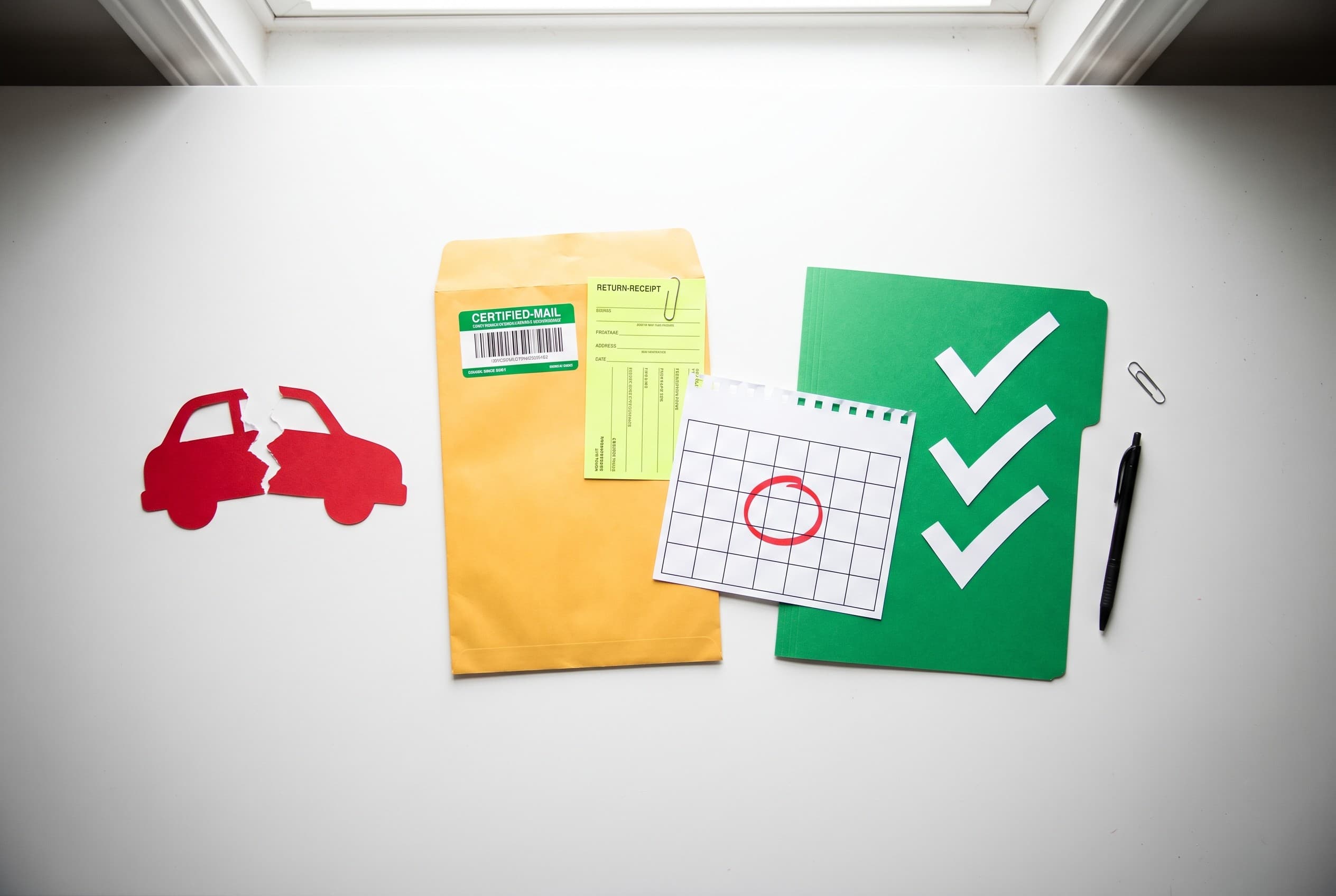
Send it certified mail with return receipt. Here's what actually matters from the inside:
- Keep the certified mail number and a photocopy of the exact letter you sent. Not a draft — the signed copy.
- Mail it to the address on the collector's validation notice, not a random P.O. box from their website.
- Mark your calendar for day 30 after you received their notice. Mail it well before that. I tell clients: if you got the letter Monday, mail by Friday.
In my experience, the green return card is what wins arguments later. "We never received it" falls apart fast when you've got a signature.
Step 5: Watch what they do (and don't do)
If the collector keeps calling, sends new demands, or reports the debt as undisputed before verifying, write it all down: date, time, name, what they said. Under the FDCPA, they have to stop collecting until they verify. Under the FCCPA, harassing or misleading collection can create claims.
If they come back with a one-page printout and no notice of sale? That's a weak file. Note it.
Step 6: Dispute the credit reporting separately
A validation letter goes to the collector. A credit dispute goes to the bureaus. Different laws, different clocks. Under the FCRA, the bureaus generally get 30 days to investigate, and they forward your dispute to the furnisher through an automated system called e-OSCAR, usually as a two-digit code plus a short note. That's why a vague "not mine" dispute often gets a rubber-stamp "verified." Attach documents and be specific.
Remember my UCF-area client? We sent the card issuer a written request to remove her as an authorized user, then disputed the tradeline with all three bureaus with a clear statement: never contractually liable, never signed, never used the card. The tradeline came off her reports within 15 days. Not because of any magic, but because the reporting was inaccurate as applied to her, and the paperwork proved it.
Same principle with repo deficiencies. If you weren't on the contract, or the balance is reported wrong, dispute the inaccuracy specifically. That's the kind of work we handle through our repossession removal service.
Step 7: If they sue, answer. Every time.
Got served? You've got 20 days in Florida county court. File a written answer with the clerk, show up to the pretrial conference in small claims, and raise the notice-of-sale and commercial-reasonableness issues. Talk to a consumer attorney; many take FCCPA and Article 9 cases because the statutes allow fee shifting.
And if a judgment ever leads to garnishment, know Florida's head-of-family wage exemption under Fla. Stat. § 222.11. If you provide more than half the support for a child or dependent, wages up to $750 a week generally can't be garnished unless you agreed in writing. You have to file a claim of exemption — they don't hand it to you.

Florida Details That Wreck People's Timelines
Honestly, most people don't realize how much local life messes with deadlines.
If you're a Disney cast member paid biweekly, or you work I-Drive hospitality with slow months in September, you probably got behind on the car in the first place because autopay hit before payday. Then the repo letters showed up during a 60-hour week, and nobody opened them. Sound familiar?
Do this: open every envelope from the lender or a collector the same day, photograph it, and write the received date on it. That one habit has saved more of my clients' cases than any template.
And on the statute of limitations: Florida generally gives creditors five years to sue on a written contract. A deficiency from a 2022 repo could still be live in 2026. Don't assume it's too old without checking dates carefully, and know that making a payment or signing a written acknowledgment can create problems.
Should You Do This Yourself or Get Help?
You can absolutely do every step above yourself, for free. That's your right under federal and Florida law, and disputing directly with the bureaus costs nothing.
Where people call us is the middle part: matching the notice-of-sale dates against Chapter 679, spotting double-reporting, and building disputes that don't get bounced by e-OSCAR. We work clients all over the state through our Florida credit repair program, and plenty of local folks find us through our Orlando credit repair page.
We can't promise any item gets deleted or that your score hits a number. Nobody honest can. What we do is help you dispute inaccurate, unverifiable, or outdated items and push your rights as far as the law lets them go. That's what Freedom Credit Repair has been doing since 2019.
Talk to a Real Credit Specialist — Free
The fastest way to get straight answers about your situation in Orlando and across Florida.
4.9 · 89 Google reviews · No upfront fee
Call (407) 606-7117Individual results vary. We help you dispute inaccurate, unverifiable, or outdated items — no one can remove accurate, current information from your credit report, and you can dispute it yourself for free with the bureaus.
Call me at (407) 606-7117 before your 30-day window closes. If you've got more questions, hit our FAQ.
FAQ: Repo Deficiency Validation in Florida
Can I send a debt validation letter for a repossession deficiency in Florida myself?
Yes, you can write and send it yourself for free. Mail it certified with a return receipt within 30 days of receiving the collector's validation notice, and ask for the contract, an itemization, the notice of sale, and the Fla. Stat. § 679.616 deficiency explanation.
Does the original lender have to validate a repo deficiency?
Not under the FDCPA, which covers third-party debt collectors. But Florida's FCCPA (Fla. Stat. § 559.72) applies to original creditors too, and Chapter 679 separately requires the lender to explain how it calculated a consumer deficiency when you ask.
Can a Florida lender charge a deficiency if it didn't send a notice of sale?
It may still try, but a missing or defective notice gives you a strong defense. Florida's Article 9 rules require proper notice and a commercially reasonable sale, and noncompliance can reduce the deficiency or give you a damages claim, depending on how a court applies the facts.
How long can they collect a repo deficiency in Florida?
Generally five years to file a lawsuit on a written contract in Florida. The negative credit reporting is a separate clock: the FCRA generally allows it for about seven years from the original delinquency.
Will a validation letter remove the repo from my credit report?
No, a validation letter alone doesn't remove anything from your report. It forces a collector to back up its claim; disputing inaccurate or unverifiable reporting with the credit bureaus is a separate step.

Matt Brody
Founder, Freedom Credit Repair
Matt is the founder of Freedom Credit Repair based in Orlando, FL. Since 2019, Matt has helped clients remove negative items from their credit reports and take control of their financial future. Call (407) 606-7117 for a free consultation. More about Matt →