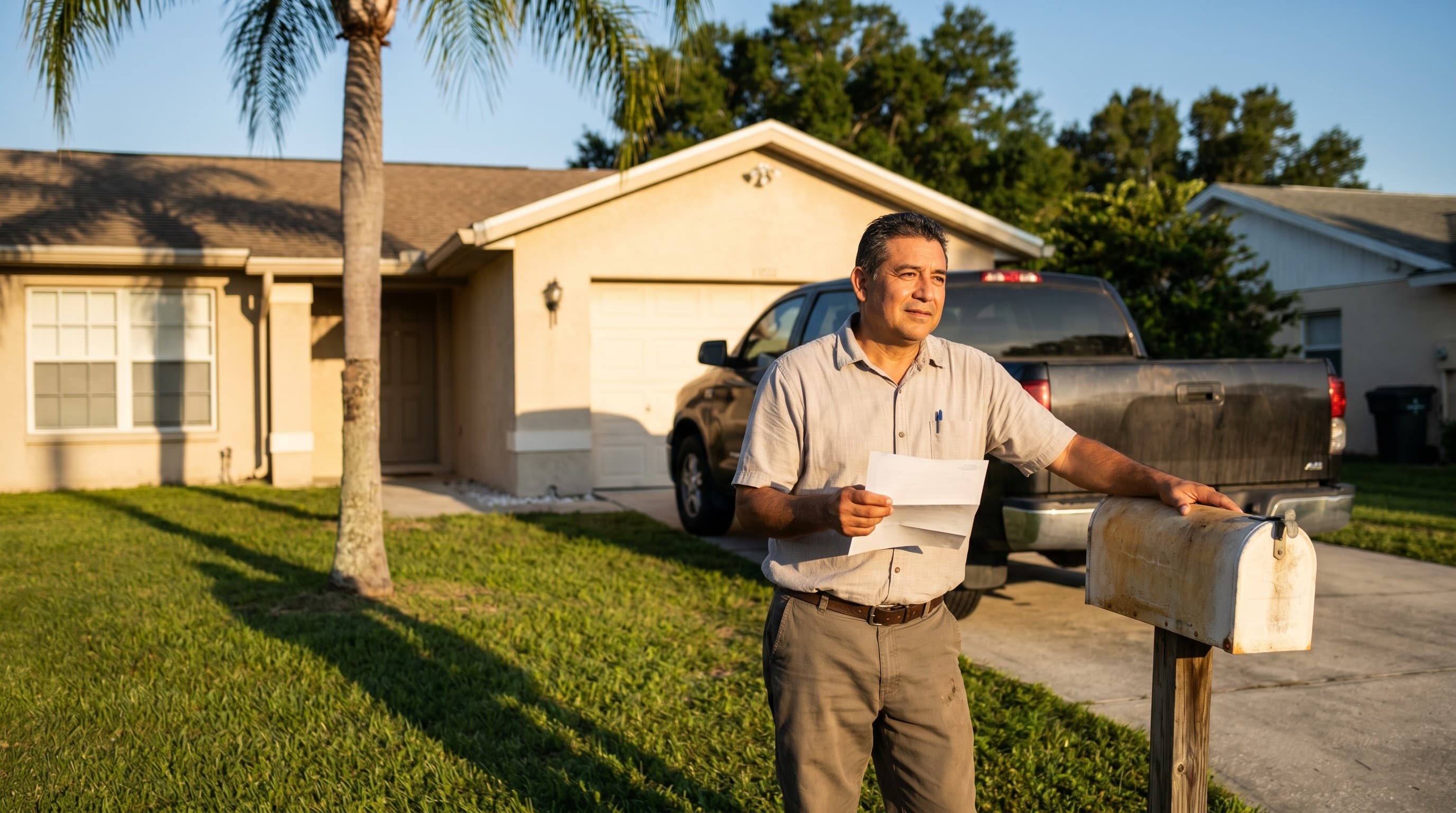
Credit Repair Cost After Foreclosure: $79–$149 a Month

How Much Does Credit Repair Cost After a Foreclosure? (2026 Orlando Guide)
What You'll Learn
- The real price ranges credit repair companies charge on a foreclosure file in 2026, and why the total depends on more than the monthly fee
- The one federal law that makes it illegal for a credit repair company to take your money up front
- Why a foreclosure rarely shows up as just one line on your report, and why that changes your bill
- How to tell whether you should pay a pro or handle the disputes yourself
How Much Does Credit Repair Cost After a Foreclosure? The Short Answer
You lost the house. Now you're staring at a credit report that looks like a crime scene, and you want a straight number on credit repair cost after foreclosure.
Here it is. How much does credit repair cost after a foreclosure? Most legitimate companies charge $79 to $149 a month, or $50 to $150 per item on pay-per-delete plans. A typical foreclosure file takes several months of work, so most people spend somewhere in the $400 to $1,200 range total. Some spend less. A messy file with a second mortgage, a deficiency balance, and a couple of collections can run higher.
And you can dispute errors yourself for $0. More on that in a sec, because I'm not going to pretend otherwise.
I've run Freedom Credit Repair since 2019. We're based in Orlando, and a lot of our foreclosure files come out of Orange, Osceola, and Seminole County courts. We also work files by phone for people in every state. And the question I get on almost every first call isn't about the law. It's this: is credit repair worth it after foreclosure, or am I lighting money on fire?
Fair question. Let's answer it honestly.
The Reality Check Nobody Gives You
Here's the thing most companies won't say on the first call.
If your foreclosure is reported accurately, nobody can legally remove it. Not me, not a $3,000 'premium' program, not a guy on TikTok with a template letter. Under the FCRA's reporting time limits (15 U.S.C. § 1681c(c)), an accurate foreclosure can stay on your report for seven years. The clock starts from the delinquency that led to the foreclosure. Technically the statute counts from 180 days after that delinquency began, so it can report for roughly seven and a half years. (Yes, really. Don't circle the exact seven-year date on your calendar and expect a party.)
So what are you paying for?
You're paying for someone to find the errors. And on foreclosure files, I find them constantly. Foreclosures are paperwork disasters. Loans get sold, servicers change, lawyers file, the house goes to auction, and somewhere in that chaos the reporting breaks.
The kicker is that a foreclosure almost never shows up as a single line. It usually drags a whole crew along with it.
What Happens If You Do Nothing
I hate it when people ignore their mail. With a foreclosure, ignoring it gets expensive fast.
This is what I see when people sit on a foreclosure file for a year or two:
- Duplicate tradelines. The original lender and the new servicer both report the same mortgage. Two late-payment histories, two derogatory marks, one debt.
- Phantom balances. The house sold at auction, but the account still shows the full pre-sale balance. Lenders reading your report think you owe $180,000 you don't owe.
- Deficiency balances sent to collections. In states that allow deficiency judgments, the leftover balance can get sold to a debt buyer. Ignore the lawsuit and the creditor can win a default judgment, and depending on your state, that can lead to wage garnishment or a bank levy.
- Mortgage denials that last longer than they need to. FHA generally wants three years after a foreclosure. VA usually wants two. Conventional loans backed by Fannie Mae typically want seven, or three with documented extenuating circumstances. An error-riddled report can stall you even after you've hit those marks.
Florida readers, listen up. Florida does allow deficiency judgments. But on an owner-occupied home, the lender generally has just one year after the foreclosure sale to sue for the deficiency (Fla. Stat. § 95.11(5)(h)). If a debt buyer shows up years later chasing a stale Florida deficiency, that's their problem, not yours. And if you're the head of a family providing more than half the support, Florida's § 222.11 gives your wages strong protection from garnishment.
Got a letter from a collector about a deficiency? You've got 30 days from their first contact to demand validation in writing under the FDCPA (§ 809). Do it. Florida's Consumer Collection Practices Act (Chapter 559) piles on more protection, and it covers original creditors too, not just third-party collectors.
Now here's where it gets interesting. The damage often isn't just the house.
I had a client in Sanford who went through a foreclosure and, around the same time, couldn't keep up with the car note either. She did what she thought was the responsible thing. She drove the car back to the lender and handed over the keys. Voluntary surrender. She figured it would look better than waiting for a tow truck at 3 a.m.
Know what showed up on her report? Involuntary repossession. Wrong code. That one mistake knocked her score down roughly 40 extra points on top of the foreclosure damage.
Sound familiar? Foreclosure years are when everything falls at once. And that's exactly when nobody's checking the codes. (I'll tell you how her story ended in the action plan.)
![[IMAGE:2] Instructional Visual — Top-down photo of a clean white desk arranged as a physical cost breakdown. On the left, a r](/_next/image?url=https%3A%2F%2Ftyyvgkzyojviljefkhzv.supabase.co%2Fstorage%2Fv1%2Fobject%2Fpublic%2Fimages%2Fblog%2Fcredit-repair-cost-after-foreclosure-79-149-a-month%2Fbody-1.jpg&w=3840&q=75)
Credit Repair Pricing Models: What You're Actually Paying For
OK so, let's break down the credit repair pricing models you'll actually run into. These are 2026 ranges based on what I see in the industry and the quotes clients bring me from other companies when they're shopping around. They're ballpark, not gospel.
1. Do It Yourself: $0
You have the legal right to dispute inaccurate information directly with Equifax, Experian, and TransUnion for free. The FTC lays out the process here. You can pull your reports free at AnnualCreditReport.com.
Best for: People with a simple file (one foreclosure tradeline, maybe one late account), decent organization skills, and time.
2. DIY Software or Templates: $0 to $30 a Month
Letter generators and tracking apps. They help you stay organized. They don't read your file for you, and they won't catch a wrong repossession code unless you know what you're looking for.
3. Monthly Subscription: $79 to $149 a Month
This is the most common credit repair monthly fee. The company reviews all three reports, drafts disputes, tracks bureau and furnisher responses, and follows up when something comes back 'verified' without real verification.
On a foreclosure file, expect several months of work. Bottom line: budget $400 to $1,200 total for most foreclosure situations, with heavier files running longer.
4. Pay-Per-Delete: $50 to $150 per Item
You pay only when an item gets corrected or removed. Sounds great. And honestly? It can be. Just read the fine print. A foreclosure file with six disputed items can cost more under this model than a few months of a subscription.
5. Onboarding or 'First Work' Fees: $0 to $199
Some companies charge a fee for the initial file review and first round of disputes. Legal, as long as they charge it after the work is done. Which brings us to the most important part of this post.
Your Legal Leverage: The Law That Protects Your Wallet
This one drives me crazy, because so many people don't know it.
The Credit Repair Organizations Act (15 U.S.C. § 1679b) makes it illegal for a credit repair company to charge you before it performs the services it promised. No money up front for future work. Period.
CROA also requires a written contract, a written disclosure of your rights before you sign, and gives you three business days to cancel without paying a dime.
In Florida, you've got another layer. The state's Credit Service Organizations law (Fla. Stat. § 817.7001 and following) has its own rules on advance fees and bonding. A legit company should be playing by both the federal and Florida rules. Ask them.
So if someone asks for $500 before they've sent a single dispute? Hang up. That's a hard no.
Here's a quick list of red flags I'd walk away from:
- They demand payment before doing any work
- They promise to remove an accurate foreclosure
- They guarantee a specific score or a specific timeline
- They tell you to dispute everything, even accurate items, or to create a new credit identity (that's a federal crime, not a strategy)
At Freedom Credit Repair, we don't charge any fee before the work is performed. You get our pricing as a range on the first call, tied to your actual file, not a sales script. We get asked about this all the time, so it's spelled out in our FAQ too.
The Law That Actually Fixes the Errors
The FCRA puts a duty on furnishers, the banks and servicers that report your accounts, to report accurately. Section 623(a)(1) of the FCRA (15 U.S.C. § 1681s-2(a)(1)) says a furnisher can't report information it knows or has reasonable cause to believe is inaccurate.
And when you dispute through a bureau, FCRA Section 611 (15 U.S.C. § 1681i) generally gives the bureau 30 days to investigate, sometimes up to 45 if you send extra information during that window. The CFPB explains the dispute process here.
Be honest with yourself about what this law does and doesn't do. It fixes inaccurate, incomplete, or unverifiable reporting. It doesn't erase an accurate foreclosure.
What Actually Happens Behind the Scenes (and Why It Affects Price)
Real talk — this is the part I wish more people understood before they pick a company or go DIY.
When you send a dispute to a bureau, a human doesn't sit down and study your foreclosure. The bureau converts your letter into a short code and fires it to the furnisher through an automated system called e-OSCAR. The furnisher's reply often comes back just as automated: 'verified as reported.'
That's why vague disputes fail. 'This isn't mine' or 'please remove' gets a two-digit code and a rubber stamp.
A specific dispute is a different animal. 'The account reports a $184,300 balance, but the property sold at a foreclosure sale on March 14, 2024, and the balance should reflect $0 or the actual deficiency' forces a real answer. Attach the sale record and you've made it a lot harder to rubber-stamp. In Florida, that's the Certificate of Sale or Certificate of Title from the county Clerk of Court. (Non-judicial states use a trustee's deed. Florida doesn't.)
That precision is most of what you're paying a pro for. It's also why a foreclosure file costs more time than a single medical collection. More documents, more tradelines, more back-and-forth.
![[IMAGE:3] Sense of Place — A quiet American suburban cul-de-sac at golden hour, modest single-story and two-story homes with](/_next/image?url=https%3A%2F%2Ftyyvgkzyojviljefkhzv.supabase.co%2Fstorage%2Fv1%2Fobject%2Fpublic%2Fimages%2Fblog%2Fcredit-repair-cost-after-foreclosure-79-149-a-month%2Fbody-2.jpg&w=3840&q=75)
Is Credit Repair Worth It After Foreclosure?
It depends on your file and your time. Here's my honest breakdown.
Do it yourself if:
- Your foreclosure shows up once, with correct dates and a $0 balance
- You have no deficiency collections or extra derogatory accounts
- You've got a few free hours a month and you're good with paperwork
Paying for help makes sense if:
- You see the same mortgage reported by two or more companies
- There's a second mortgage or HELOC, a deficiency balance, or collections tied to the foreclosure
- Other accounts went bad at the same time (car, cards, medical)
- You want a mortgage again and don't have the time to fight three bureaus and five furnishers
Most people who call me after a foreclosure land in that second bucket. They've got money coming in again. What they don't have is time, and the recovery runs long. That's the trade. I see it a lot with Central Florida hospital and theme-park workers pulling long shifts. They're not short on discipline. They're short on hours.
I had a client last year, an Orlando-area nurse working hospital shifts, whose foreclosure was reporting through both the original lender and the servicer that bought the loan. Two identical derogatory tradelines. Once we disputed the duplicate with her sale documents attached, the duplicate came off and her score moved from 583 to 641 over about five months, alongside a secured card she was paying on time. Your file isn't her file, and nobody can promise you her result. But that's the kind of error worth paying someone to find.
Your Orlando Action Plan: Rebuild Credit After Foreclosure Without Overpaying
The real cost to rebuild credit after foreclosure isn't just the credit repair fee. It's every month you spend with errors dragging you down. Here's the plan.
Step 1: Pull All Three Reports Today
Go to AnnualCreditReport.com. Free. Print all three. Lenders don't all pull the same bureau, and errors often show up on just one.
Step 2: Map Every Account Tied to the Foreclosure
Grab a highlighter. Mark:
- The first mortgage (who's reporting it, and how many times?)
- Any second mortgage or HELOC
- Any deficiency balance or collection account
- The date of first delinquency on each one, which controls the seven-year clock
- Anything else that went bad in the same stretch, especially vehicles
Step 3: Check the Codes, Not Just the Accounts
This is where my Sanford client's story pays off.
We pulled her reports and saw the auto loan coded as an involuntary repossession. She had paperwork showing she returned the car herself. So we disputed the specific code, cited the furnisher's accuracy duty under FCRA Section 623(a)(1), and attached her surrender documentation.
The furnisher corrected it to voluntary surrender, which scoring models treat less harshly. Of the roughly 40 points that wrong code cost her, she got back 35. The account didn't disappear, because the surrender was real. The wrong code was the problem, and fixing it was the win. If your file includes a vehicle too, our repossession help process works the same way: prove the error, demand the correction.
Step 4: Gather Your Foreclosure Documents
- Certificate of Sale and Certificate of Title from the Clerk of Court (in non-judicial states, the notice of sale or trustee's deed)
- Final settlement or sale statement
- Any 1099-C (cancellation of debt) you received
- Letters showing loan transfers between servicers
Florida tip: Orange, Osceola, and Seminole County clerks post foreclosure sale records online, so you can usually pull your own sale record without begging your old lender for it.
These turn a vague dispute into one a furnisher can't brush off.
Step 5: Send Specific Disputes by Certified Mail
Online disputes are fast, but mail gives you a paper trail. Send each dispute certified with return receipt and keep copies of everything. Mark your calendar 30 days out. If it comes back 'verified' with no change, dispute again with the furnisher directly and attach the proof.
If a collector is reporting a deficiency, don't just dispute the tradeline. Send that written validation demand within 30 days of their first contact. Make them prove it.
Step 6: Rebuild While You Dispute
Disputes clean up the mess. They don't add positive history. Open a secured card, keep the balance under 10%, and pay it on time every month. That's a no-brainer.
And when you do buy again? File for the homestead exemption with your county property appraiser. You lost it with the old house, and it won't come back on its own.
Step 7: Decide on Help With Real Numbers
If you go the paid route, get the price range in writing, confirm no fee is due before work is performed, and ask exactly which items they plan to dispute and why. If they can't answer that last question, keep shopping.
If you want someone to go through your foreclosure file line by line, that's what our foreclosure credit repair service is built for. Call (407) 606-7117 and we'll tell you straight whether you even need us.
Talk to a Real Credit Specialist — Free
The fastest way to get straight answers about your situation in Orlando and across Florida.
4.9 · 89 Google reviews · No upfront fee
Call (407) 606-7117Individual results vary. We help you dispute inaccurate, unverifiable, or outdated items — no one can remove accurate, current information from your credit report, and you can dispute it yourself for free with the bureaus.
Frequently Asked Questions
How much does credit repair cost after a foreclosure?
Most credit repair companies charge $79 to $149 a month or $50 to $150 per item. A typical foreclosure file runs several months, so many people spend roughly $400 to $1,200 total. You can also dispute errors yourself with the bureaus for free.
Can credit repair remove a foreclosure from my credit report?
No, not if the foreclosure is reported accurately. An accurate foreclosure can stay on your report for about seven years from the delinquency that led to it (the statute adds up to 180 days). Credit repair targets errors like wrong balances, duplicate tradelines, incorrect dates, or wrong account codes.
Is credit repair worth it after foreclosure?
It's worth it when your file has errors you don't have time to fight, like duplicate mortgage tradelines or a deficiency collection. If your foreclosure reports once with correct information, you can probably handle disputes yourself for free.
Can a credit repair company charge me up front?
No. The Credit Repair Organizations Act bans credit repair companies from charging before they perform the promised services. You also get a written contract and three business days to cancel. Florida's Credit Service Organizations law adds its own protections on top.
How long after a foreclosure can I get a mortgage?
It usually depends on the loan type: about two years for VA, three years for FHA, and seven years for conventional Fannie Mae loans, or three with documented extenuating circumstances. Lender overlays can add more time, so get preapproval details in writing.
Ready for a Straight Answer on Your File?
Look, a foreclosure is a heavy hit. But it's a known hit, with a known clock. The stuff that keeps people stuck is the junk riding along with it: duplicate tradelines, phantom balances, the wrong repo code.
Call us at (407) 606-7117. We're in Orlando, and we work with clients nationwide by phone. We'll review your reports, tell you honestly whether you can handle it yourself, and if you want our help, give you a price range for your actual file. No fee before the work gets done.
That's how we do it at Freedom Credit Repair.

Matt Brody
Founder, Freedom Credit Repair
Matt is the founder of Freedom Credit Repair based in Orlando, FL. Since 2019, Matt has helped clients remove negative items from their credit reports and take control of their financial future. Call (407) 606-7117 for a free consultation. More about Matt →