Credit Card After Bankruptcy in Florida: Best 2026 Options

What You'll Learn
- Why you can actually get approved for a credit card after bankruptcy faster than most people think (yes, even at month one)
- The difference between secured and unsecured cards — and which one your situation actually calls for
- The specific cards Florida filers get approved for in 2026 (and the predatory ones to run from)
- The federal law that lets you fight credit report errors that are dragging your score down post-discharge — for free
- A step-by-step plan to go from discharged to a real credit score in 12 months
You Filed Bankruptcy. Now What?
If you just got your discharge papers and you're sitting there thinking your financial life is over — stop.
It's not. Not even close.
Here's the thing nobody tells you when you file: bankruptcy isn't the end of your credit. It's the reset button. And Florida filers know this better than almost anybody, because we file more bankruptcies per capita than nearly every state in the country. You're not alone, and you're definitely not done.
But here's where most people screw it up. They get the discharge, they're terrified to touch credit ever again, and they just... wait. Five years go by. They've got a clean slate and a 540 score because they never built anything new on top of it.
Real talk — the worst thing you can do after bankruptcy is nothing.
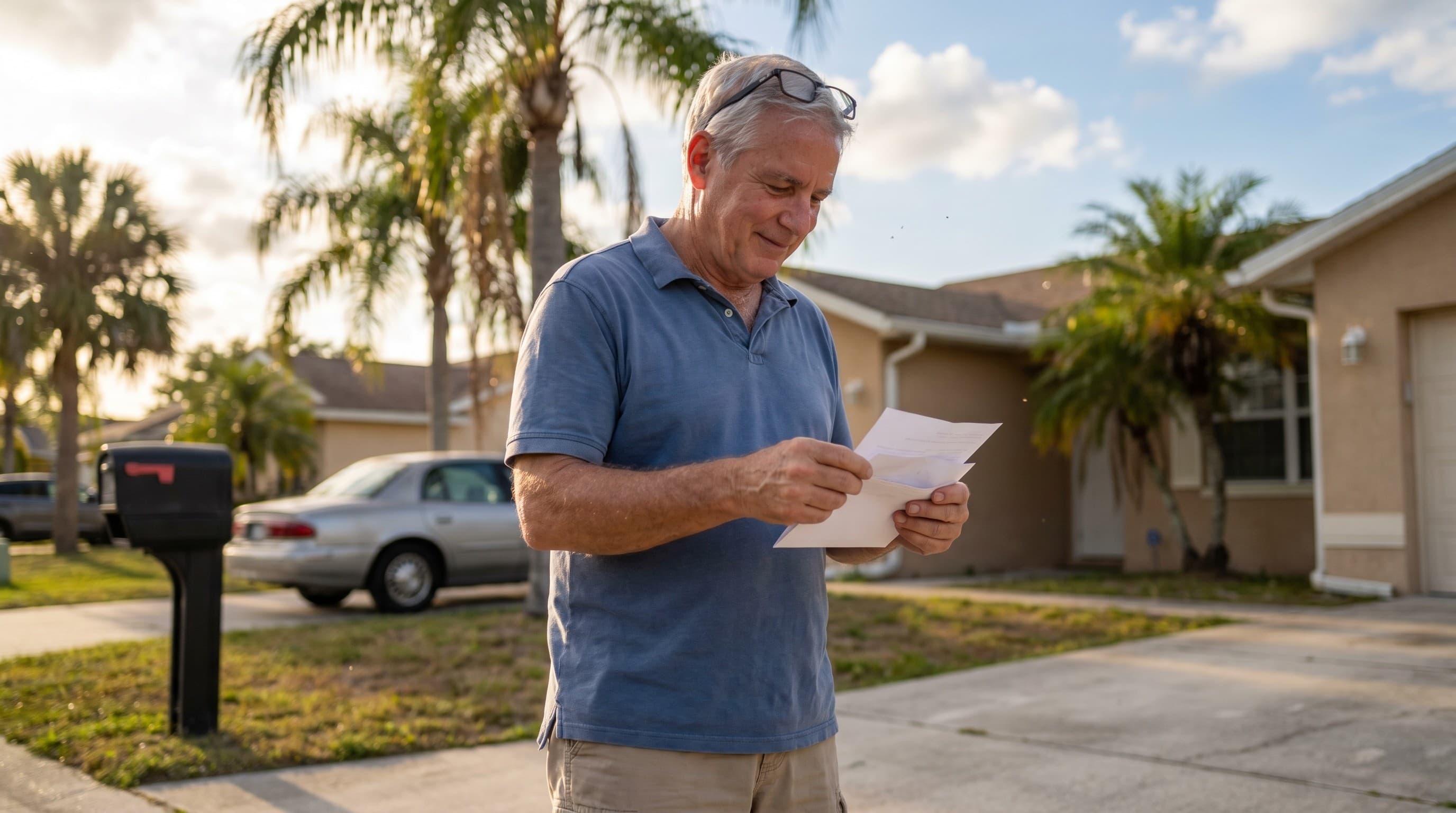
The second worst thing? Jumping at the first "pre-approved" predatory card that hits your mailbox the week after discharge. (And they will hit your mailbox. The lenders know exactly when your case closes — it's public record.)
Let me walk you through how to do this right.
The Scare: What Happens If You Just Sit There
Look, I get it. You went through hell to get this discharge. The idea of opening a new credit card feels like walking back into a burning building.
But understand what "doing nothing" actually costs you.
That bankruptcy is going to sit on your report for a while — a Chapter 7 stays for 10 years from the filing date, a Chapter 13 stays for 7 years. During that whole time, lenders, landlords, and even some Orlando-area employers are looking at your file. If the only thing on there is a bankruptcy and a bunch of closed accounts, you look frozen in time.
Meanwhile, the people who started rebuilding at month two? Twelve, eighteen months later they've got a 670, they're getting approved for an apartment in Lake Nona, they're financing a reliable car instead of buying a $3,000 beater off Craigslist with cash.
Here's the kicker — that gap between you and them isn't time. It's action. They didn't wait for their score to magically heal. They built it.
And if you sit on your hands hoping it fixes itself, you'll be three years out from discharge, still stuck, still getting denied, wondering why nothing changed. I've seen it happen too many times.
Can You Even Get a Credit Card After Bankruptcy? (Yes — Here's Why)
This is the question I hear most. "Matt, who's gonna give ME a credit card?"
More lenders than you'd think. And honestly, there's a weird logic to it.
After a Chapter 7 discharge, you legally can't file Chapter 7 again for 8 years. Lenders know this. From their cold, calculating point of view, a recently-discharged filer is actually less risky in one specific way — you're maxed out on your bankruptcy protection and your other debts are wiped, so your income is freed up. Some subprime lenders specifically target post-bankruptcy filers for exactly this reason.
So no, you're not radioactive. You just need to come in with the right strategy and the right card type for where you are.
Let's break those down.
Secured Credit Cards After Bankruptcy: Your Best First Move
For most people fresh off a discharge, a secured credit card after bankruptcy is the no-brainer starting point.
Here's how it works: you put down a deposit — usually $200 to $500 — and that becomes your credit limit. You use the card like a normal card, you pay it off every month, and the lender reports those on-time payments to all three bureaus. Your deposit is just collateral; you get it back when you close the account in good standing or graduate to an unsecured card.
Why this works so well post-bankruptcy:
- Approval is easy because the lender's risk is basically zero — they're holding your money
- It reports to Equifax, Experian, and TransUnion (you MUST confirm this — more on that in a sec)
- It rebuilds the single most important factor in your score: payment history (that's 35% of your FICO)
The cards I see Florida clients get approved for in 2026 without drama:
- Discover it Secured — reports to all three bureaus, no annual fee, and they review your account for potential graduation to unsecured. One of the best out there, hands down.
- Capital One Platinum Secured — sometimes lets you put down less than your full limit
- Citi Secured Mastercard — solid, straightforward, no annual fee
- OpenSky Secured — this one doesn't even do a credit check, which is clutch if you're scared of a hard pull right after discharge
The rule that matters more than which card you pick: confirm the card reports to all three credit bureaus. I can't stress this enough. There are "credit builder" cards that don't report to anybody, which makes them completely useless for your purpose. If it doesn't report, it doesn't build. Period.
Unsecured Credit Cards for Bad Credit: When You're Ready
Now, some of you don't want to tie up a deposit, or you've already got a secured card seasoning and you want to add a second tradeline. That's where an unsecured credit card for bad credit comes in.
These approve you without a deposit. The trade-off? Higher interest rates, lower limits, and sometimes annual fees. You're paying for the convenience of not fronting cash.
Decent options I've seen work for Florida filers:
- Capital One Platinum (unsecured) — for people whose score has started climbing back
- Mission Lane Visa — built for rebuilders, reasonable terms
- Petal cards — they look at your banking history, not just your score
But here's my warning, and listen close: the unsecured "bad credit" market is FULL of garbage. The First Premier and Credit One type cards will charge you a "program fee," a "monthly maintenance fee," an annual fee, and hit you with 35% APR — all to give you a $300 limit that's already half eaten by fees before you swipe it once.
If a card charges you to exist before you've even used it, walk away. A secured card with no annual fee beats a fee-loaded unsecured card every single time when you're rebuilding.
Chapter 7 vs. Chapter 13: Does It Change Your Strategy?
A little, yeah.
If you filed Chapter 7, your unsecured debts got wiped and your case typically closes within 4-6 months. Once you've got that discharge, you're free to apply for a credit card after Chapter 7 right away. Most of my Chapter 7 clients open a secured card within 30-60 days of discharge.
Chapter 13 is different. You're in a 3-to-5-year repayment plan, and during that time you often need court/trustee approval before taking on new credit — it depends on your plan terms and local practice, so check your plan or ask your attorney or trustee. But the second you get your credit card after Chapter 13 discharge, the same playbook applies — secured card first, build payment history, graduate up.
The end goal is identical for both: stack positive payment history on top of a clean slate as fast as responsibly possible.
Your Legal Leverage: Make Sure Your Report Is Even Accurate First
Here's something almost nobody checks, and it costs them dearly.
Before you start rebuilding, pull all three of your credit reports and read them line by line. Why? Because after a bankruptcy, credit reports are a disaster of errors. Accounts that should show "discharged in bankruptcy" still show as "past due" or "charged off." Balances that should be zero still show money owed. And those errors are tanking a score you're trying to rebuild.
Under the Fair Credit Reporting Act, specifically FCRA Section 611, 15 U.S.C. § 1681i, you have the right to dispute any inaccurate or unverifiable information. The bureaus generally have 30 days to investigate and either verify it or remove it (sometimes up to 45 days in certain situations, like when you hand them extra info mid-investigation). You can do this yourself, for free, directly with the bureaus. The FTC lays out your dispute rights here.
Let me give you a real example of how badly this can go sideways.
I had a client — I'll call him Jose, out in the Conway area (name changed for privacy) — who came to me confused about why his score was stuck in the dirt after he'd done everything right post-discharge. We pulled his reports and found the problem fast: somebody else's mortgage, an auto loan, and a few credit cards had gotten merged into his file. Turns out he shared a similar name AND the last four digits of his Social Security number with another guy. The bureaus' matching algorithm just smashed the two files together.
This is called a mixed file, and it's more common than you'd believe.
We filed a mixed file dispute under FCRA Section 611 with full identity documentation — his Social Security card, his ID, proof of address, the works. Within about 30 to 45 days, the accounts belonging to the other guy got separated out of his file.
His score jumped 112 points.
A hundred and twelve. He went from getting denied for a secured card to getting approved for an unsecured one — and none of his actual rebuilding habits had changed. The report was just finally accurate.
That's the kind of thing we dig for at [INTERNAL_LINK:Freedom Credit Repair|https://freedomcreditrepair.com]. If your post-bankruptcy report is full of inaccurate or unverifiable junk, fixing that is half the battle. We help Florida filers clean up [INTERNAL_LINK:collections that should've been discharged|https://freedomcreditrepair.com/services/collections-removal] and other errors that survive bankruptcy when they shouldn't.
The Action Plan: Discharged to Real Credit in 12 Months
Here's the exact sequence I give my Orlando clients. Follow it in order.
-
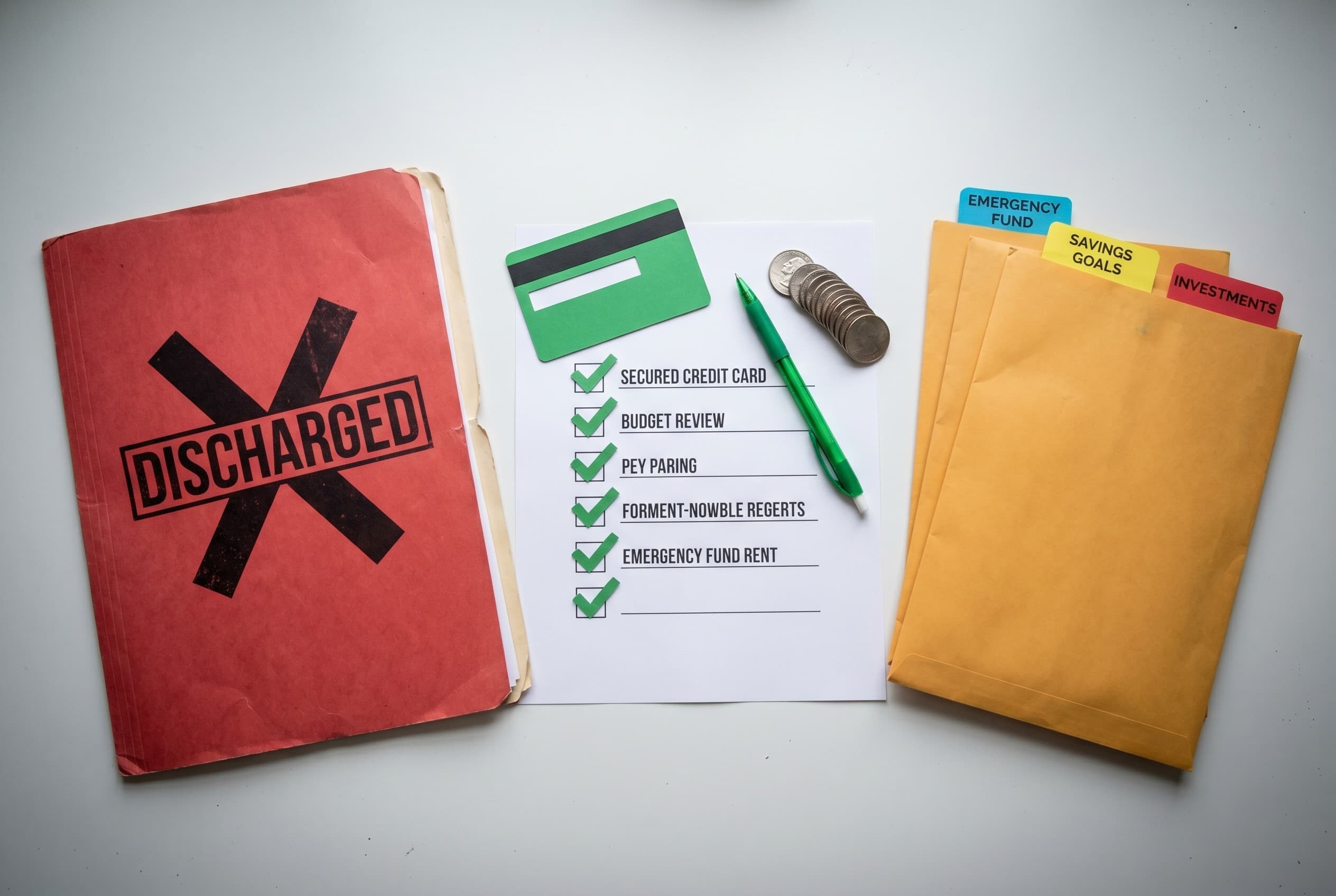
Pull all three reports first. Get them free at AnnualCreditReport.com. Read every line. Confirm every discharged debt shows a $0 balance and a "discharged in bankruptcy" status. Flag anything that looks wrong.
-
Dispute the errors before you apply for anything. If a discharged account still shows a balance, if there's a collection that should've been wiped, or if there are accounts that aren't even yours (like Jose's), dispute them under FCRA Section 611. You can do this yourself for free, or we can do the heavy lifting.
-
Open ONE secured card. Discover it Secured or Capital One Platinum Secured are my go-to recommendations. Put down $200-$300. Confirm it reports to all three bureaus.
-
Use it small and pay it in full. Charge ONE recurring bill to it — your phone bill, a streaming subscription, gas. Keep your usage under 30% of the limit (ideally under 10%). Pay the full statement balance every month. Never carry a balance and pay interest. The goal isn't to use credit, it's to demonstrate you can manage it.
-
Add a second tradeline around month 6. Once that first card has six months of perfect payments, add either a second secured card or a starter unsecured card. More positive tradelines = faster rebuild.
-
Become an authorized user if you can. Got a family member with a long, clean credit history? Get added as an authorized user on their card. Their age and good standing can flow onto your report. This works fast.
-
Don't apply for everything at once. Each application is a hard inquiry. Space them out. Two cards in your first year is plenty.
Do this consistently and most people I work with see meaningful score movement within 6-12 months. Some hit the high 600s inside a year. Your mileage depends on your starting point and how clean your report is — which loops right back to step one.
A Word for Central Florida Filers Specifically
Florida's bankruptcy filing rate runs consistently among the highest in the country, and Orange and Osceola counties are no exception. A lot of that's tied to our economy — hospitality and tourism workers on I-Drive deal with brutal seasonal income swings, and Disney cast members on biweekly pay schedules can get wrecked when a medical bill or a car repair lands in the wrong week.
If that's you, you're not a financial failure. You got caught in a system that doesn't bend for irregular income.
What matters now is the rebuild. And the rebuild is where Florida actually treats you fairly — there's no special state penalty on your credit for filing here, and our generous [INTERNAL_LINK:homestead and wage protections|https://freedomcreditrepair.com/florida-credit-repair] mean your fresh start is genuinely protected. Use it.
Whether you're in Orlando, Kissimmee, or anywhere across the state, the playbook is the same — clean the report, build the tradelines, stay patient.
FAQ
How soon after bankruptcy can I get a credit card?
You can apply for a secured credit card immediately after your Chapter 7 discharge, often within 30 days. Most of my Orlando clients are approved for a secured card within the first month or two because the lender's risk is covered by your deposit. For Chapter 13, you'll generally need court/trustee approval during your repayment plan, but you can apply freely once you receive your discharge.
What's the best credit card after Chapter 7 bankruptcy?
The best starting card after Chapter 7 is a no-annual-fee secured card that reports to all three credit bureaus — the Discover it Secured and Capital One Platinum Secured are two of the strongest options in 2026. They report your on-time payments to Equifax, Experian, and TransUnion, charge no annual fee, and the Discover card reviews your account for potential upgrade to an unsecured card. Avoid fee-loaded "bad credit" cards that charge program and maintenance fees before you even use them.
Will a secured credit card actually rebuild my credit after bankruptcy?
Yes, a secured credit card rebuilds credit after bankruptcy as long as it reports to all three bureaus and you pay it on time. Payment history is 35% of your FICO score, so consistent on-time payments on a secured card directly rebuild the most important scoring factor. The key is confirming the card reports to the bureaus — some "credit builder" products don't report at all and do nothing for your score.
Why is my credit score still low after my bankruptcy was discharged?
Your score may be low after discharge because of reporting errors, not your actual credit behavior. Discharged accounts that still show balances, collections that should've been wiped, or even accounts that aren't yours (a "mixed file") can drag your score down for years. Pull all three reports and dispute any inaccurate or unverifiable item under FCRA Section 611 — we get this question constantly, so check out our [INTERNAL_LINK:FAQ|https://freedomcreditrepair.com/#faq] for the full breakdown.
Can I get an unsecured credit card with bad credit after bankruptcy?
Yes, unsecured cards exist for bad credit and post-bankruptcy filers, but they come with higher rates, lower limits, and often annual fees. Cards like Capital One Platinum, Mission Lane, and Petal approve rebuilders without a deposit. Just be ruthless about avoiding cards that pile on "program fees" and "monthly maintenance fees" — a no-fee secured card is almost always the smarter first move.
Ready to Rebuild the Right Way?
If your post-bankruptcy credit report is a mess of errors, discharged debts still showing balances, or accounts that aren't even yours — that's exactly what we fix at [INTERNAL_LINK:Freedom Credit Repair|https://freedomcreditrepair.com]. We've helped Central Florida filers clean up their reports and get back to approvals, just like Jose in Conway.
You did the hard part already. Don't let a sloppy credit report rob you of your fresh start.
Call us at (407) 606-7117 or reach out below for a free credit consultation. Let's get you back in the fight.
Talk to a Real Credit Specialist — Free
The fastest way to get straight answers about your situation in Orlando and across Florida.
4.9 · 89 Google reviews · No upfront fee
Call (407) 606-7117Individual results vary. We help you dispute inaccurate, unverifiable, or outdated items — no one can remove accurate, current information from your credit report, and you can dispute it yourself for free with the bureaus.

Matt Brody
Founder, Freedom Credit Repair
Matt is the founder of Freedom Credit Repair based in Orlando, FL. Since 2019, Matt has helped clients remove negative items from their credit reports and take control of their financial future. Call (407) 606-7117 for a free consultation. More about Matt →