Broken Lease Collection on Your Credit? Oviedo & Lake Mary Renters, Read This

What You'll Learn
- Why a single broken-lease collection can auto-deny you at half the apartment complexes in Oviedo and Lake Mary
- The exact federal law that forces a collector to PROVE they own your debt before they can report it
- How property managers inflate what you "owe" — and the line-item math that exposes it
- The 30-day clock that starts the moment you dispute (and why timing matters when you've got a move-in date)
Your Old Landlord Sold Your "Debt" — And Now It's Killing Your Application
If you left an apartment in Seminole County and now there's a collection sitting on your credit report, stop refreshing your application status and read this.
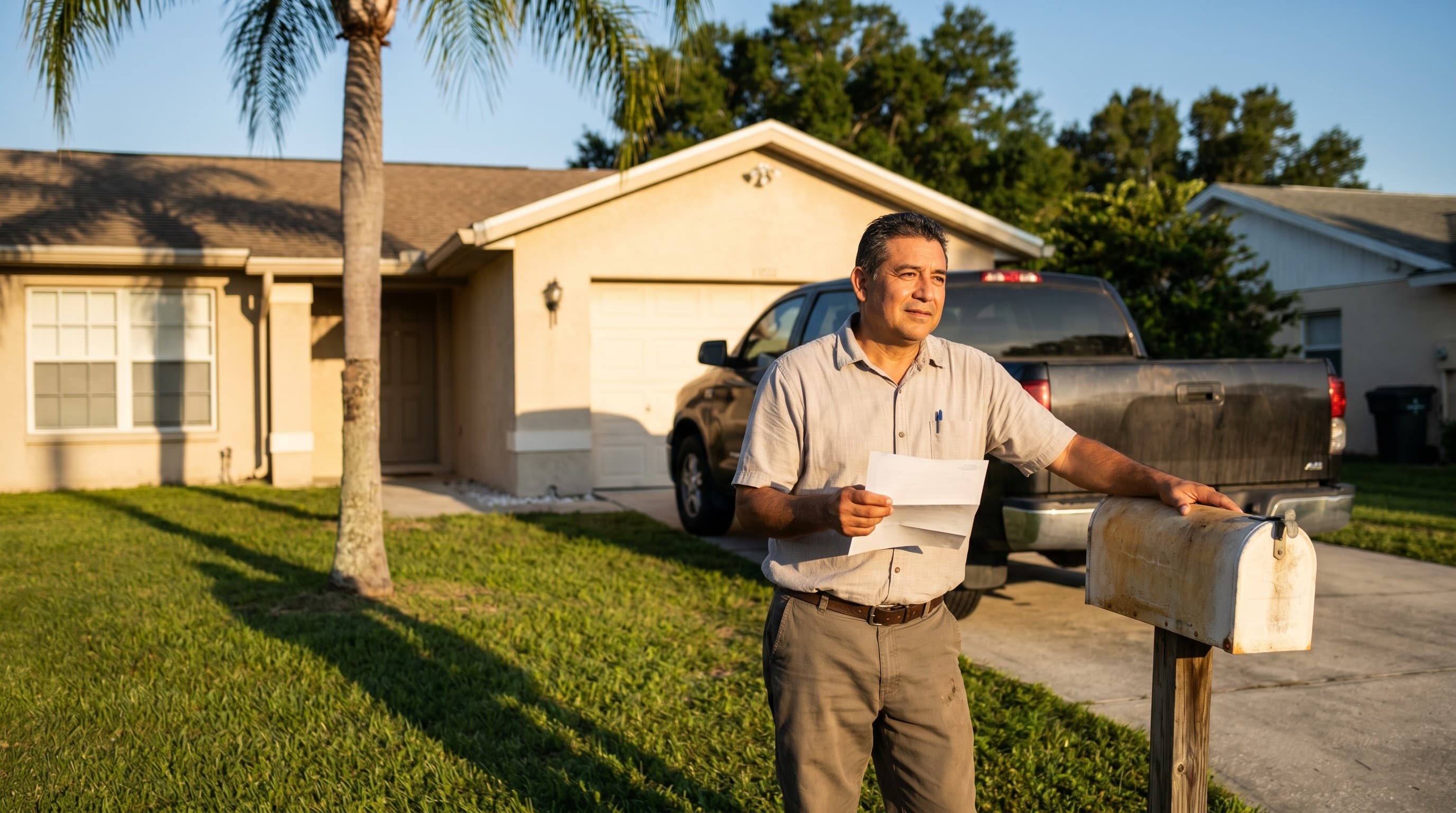
That pending move you're excited about? The one in that new complex off 434 or over near Colonial TownPark in Lake Mary? It's about to get denied. Not because you can't afford it. Because some property-management collection agency reported a number to Equifax and TransUnion, and the leasing office ran your report and saw "collection account."
Here's the thing most renters don't realize. When you break a lease early — or even when you move out on time but the landlord claims you owe cleaning, carpet, or "loss of rent" — that balance doesn't just sit with the apartment complex. They hand it (or sell it) to a debt collector. And that collector reports it as a full-blown collection account.
I've been doing this in Central Florida since 2019, and rental collections are one of the messiest, most-disputable items I see. Why? Because the numbers are almost always sloppy. More on that in a sec.
What Actually Happens If You Ignore It
Real talk — a rental collection doesn't fix itself. It sits there and does damage.
First, the denials. A lot of Oviedo and Lake Mary complexes use tenant-screening services (RealPage, TransUnion SmartMove, that kind of thing). One rental collection and their software auto-flags you. Some places auto-deny anyone with a landlord collection, period. Others approve you but hit you with a double deposit — meaning you're now writing a $3,000 check instead of $1,500 just to move in.
Second, the balance grows. Collectors add interest and fees where Florida law and your lease allow. A $1,800 "broken lease" balance can creep past $2,400.
Third — and this one drives me crazy — they can sue. In Florida, a debt collector can file suit in county court to get a judgment. If they win and you ignore it, they can pursue wage garnishment. Now, Florida's got strong protections here — if you qualify as "head of household" under Florida Statute § 222.11, most of your wages are protected. But you don't want to bet your paycheck on that. You want the collection GONE off your report if it's inaccurate or they can't prove it.
And here's what stings the most: the score damage from a collection is worst in the first two years. Which is exactly when you're trying to rent your next place.

Your Legal Leverage: They Have to PROVE It
OK so here's where it gets interesting. A debt collector can't just SAY you owe money. Under federal law, they have to be able to prove it.
When a collection first shows up, you have the right to demand validation. This comes from the Fair Debt Collection Practices Act — specifically FDCPA Section 809, 15 U.S.C. § 1692g. Send a written validation request within 30 days of their first contact, and the collector must stop collection activity until they mail you proof of the debt.
With a rental collection, "proof" means something specific. I want to see:
- The signed lease agreement (with YOUR signature)
- A full ledger — every charge, every payment, every credit
- The move-out accounting: exactly what they claim you owe and why
- Proof this collector actually has the right to collect it (the chain of ownership)
You'd be shocked how often they can't produce a clean ledger. Property managers churn staff, switch software, and lose paperwork. When they can't validate, that account is unverifiable — and unverifiable items don't belong on your report.
Separately, you've got the Fair Credit Reporting Act. Under FCRA Section 611, 15 U.S.C. § 1681i, the bureaus have to investigate anything you dispute as inaccurate — usually within 30 days. If the furnisher (the collector) can't verify it, it comes off.
And yes — you can do this yourself for free. The CFPB walks you right through it. I'll never pretend otherwise. What we do is handle the technical fight when the accounting gets complicated and your move-in clock is ticking.
Why the FCRA fight works — a Millenia story
Let me show you how powerful clean disputes are, because it's not just rental stuff.
I had a client last year who bought a car near the Millenia Mall. The dealership ran his credit at SEVEN different banks in one day — seven hard inquiries — without clear authorization to shotgun it everywhere. His score dropped and he was furious.
We filed disputes under FCRA Section 604, 15 U.S.C. § 1681b, which governs who's actually got "permissible purpose" to pull your report. Five of the seven inquiries came off within 45 days. The remaining two got consolidated into one under the 14-day auto-shopping window rule.
Why does that matter for your rental collection? Same principle. When someone reports something to your credit file that they can't properly justify or verify, the law gives you a lever. You just have to pull it correctly. That's what we do at Freedom Credit Repair.

The Action Plan: Fight the Rental Collection Step by Step
Here's your battle plan. Do it in order.
Step 1: Pull all three reports
Get your reports from all three bureaus at AnnualCreditReport.com — it's free and it's the real deal. Rental collections don't always report to all three, so check each one. Write down the collector's name, the balance, the date reported, and the "original creditor" (your old complex).
Step 2: Do NOT call the collector and pay
I can't stress this enough. Do not call and say "OK I'll pay it." In Florida, acknowledging a debt or making a payment can restart the statute-of-limitations clock. You verify FIRST, pay (or settle) LAST — and only if it's actually valid.
Step 3: Send the validation letter
Mail the collector a written debt-validation request. Certified mail, return receipt — you want a paper trail. Demand the lease, the full ledger, the move-out accounting, and proof of their right to collect. This triggers your FDCPA Section 809 rights.
Step 4: Audit the move-out math
When (if) they send the ledger, go line by line. This is where broken-lease collections fall apart. Did they charge you "loss of rent" AFTER they re-rented the unit to someone else? In Florida, a landlord has a duty to mitigate — they can't double-dip by collecting rent from you AND a new tenant for the same month. Did they keep your deposit AND bill you for the same damages? Did they charge an early-termination fee your lease didn't actually spell out? Every one of those is a dispute point.
Step 5: Dispute the inaccuracies with the bureaus
If the account is inaccurate, unverifiable, or the numbers don't add up, file an FCRA dispute with each bureau reporting it. Be specific. "This balance is inaccurate — the landlord re-rented the unit on X date and cannot claim loss of rent" beats a vague "not mine." The bureaus have ~30 days to investigate.
Step 6: Keep every receipt and letter
Move-out photos, your forwarding-address confirmation, the certified-mail receipts, screenshots of the ledger. If this ever heads to county court in Seminole County, this file is your defense.
If you're dealing with the collection side of this specifically, that's our lane — see our collections removal work and our statewide Florida credit repair approach. We handle Seminole County renters in Oviedo, Lake Mary, Winter Springs, and Longwood all the time.
Timing Matters When You've Got a Move-In Date
Here's the part that makes rental collections urgent. The dispute clock is roughly 30 days per bureau. Validation adds its own timeline. If your lease application is due in three weeks, you need to start TODAY, not after you get denied.
I had a renter come to us from the Lake Mary area who'd already been denied twice because a $2,100 property-management collection was blocking every application. We audited the ledger, found the old complex had re-rented the unit and still billed her for two months of "lost" rent, and disputed it as inaccurate. Results always vary — nothing in credit repair is guaranteed, and anybody promising you a specific outcome or timeline is lying to you. But when the numbers are wrong or the collector can't verify, the law is on your side.
We get questions like this constantly — check out our FAQ for the full breakdown.
Ready to fight that collection? Call or text us at (407) 606-7117. We'll pull your reports, audit the ledger, and tell you straight whether you've got a case — before your move-in date blows up.
Talk to a Real Credit Specialist — Free
The fastest way to get straight answers about your situation in Orlando and across Florida.
4.9 · 89 Google reviews · No upfront fee
Call (407) 606-7117Individual results vary. We help you dispute inaccurate, unverifiable, or outdated items — no one can remove accurate, current information from your credit report, and you can dispute it yourself for free with the bureaus.
Frequently Asked Questions
Can a property management company put a collection on my credit report in Florida?
Yes. If you owe a balance after moving out — unpaid rent, an early-termination fee, or damages beyond your deposit — the property manager can send or sell that debt to a collection agency, which can then report it to the credit bureaus. But they must report it accurately, and if you dispute it, the collector has to be able to verify it under the FDCPA and FCRA. Inaccurate or unverifiable rental collections can be disputed and removed.
How do I dispute a landlord collection on my credit report?
Start by sending the collector a written debt-validation request within 30 days of their first contact, demanding the signed lease, the full ledger, and the move-out accounting. If the account is inaccurate or they can't verify it, file a dispute with each credit bureau reporting it under FCRA Section 611. You can do this yourself for free through the bureaus or the CFPB, or have a service handle the technical accounting fight for you.
Will a broken lease collection stop me from renting a new apartment in Oviedo or Lake Mary?
Often, yes. Many Oviedo and Lake Mary complexes use tenant-screening software that auto-flags or auto-denies applicants with a rental collection, or approves them with a doubled security deposit. That's why it's smart to address the collection before you apply — disputing an inaccurate or unverifiable one can clear the flag, but the dispute process takes about 30 days per bureau, so start early.
How long does a rental collection stay on my credit report?
A collection account can legally remain on your credit report for up to seven years from the date of first delinquency, per the Fair Credit Reporting Act. The score damage is heaviest in the first two years, which is usually right when you're trying to rent again. If the collection is inaccurate, unverifiable, or outdated, you have the right to dispute it and have it corrected or removed.
Can a debt collector garnish my wages in Florida for unpaid rent?
Only after suing you and winning a court judgment — and even then, Florida law strongly protects wages. Under Florida Statute § 222.11, if you qualify as "head of household," most or all of your earnings are exempt from garnishment. But you should never rely on that as a plan; verify and dispute the debt properly instead of letting it go to judgment.
Questions about your specific situation? Call or text (407) 606-7117.
Talk to a Real Credit Specialist — Free
The fastest way to get straight answers about your situation in Orlando and across Florida.
4.9 · 89 Google reviews · No upfront fee
Call (407) 606-7117Individual results vary. We help you dispute inaccurate, unverifiable, or outdated items — no one can remove accurate, current information from your credit report, and you can dispute it yourself for free with the bureaus.

Matt Brody
Founder, Freedom Credit Repair
Matt is the founder of Freedom Credit Repair based in Orlando, FL. Since 2019, Matt has helped clients remove negative items from their credit reports and take control of their financial future. Call (407) 606-7117 for a free consultation. More about Matt →