Denied an Apartment Because of Bad Credit? Do This Now

You got the email. "We're unable to approve your application at this time." Move-in was supposed to be in three weeks. Now you're staring at a denial letter and a countdown clock.
Breathe. You've got more options than that leasing agent made it sound like.
Here's the thing most renters don't realize: a rental credit denial isn't the final word. It's the start of a process — one with actual federal rules the property manager has to follow, and one where a wrong item on your screening report can flip a "no" into a "yes" faster than you think. I've walked clients through this exact fight with a hard lease deadline breathing down their neck. Let's get you a plan.
What You'll Learn
- The one document the property manager is legally required to give you after a denial — and why it's your fastest path to fixing this
- The federal law that lets you get a free copy of the exact report they used to reject you (not your regular credit report — a different one)
- How a single inaccurate item on a tenant screening report can tank your application, and the move to challenge it before move-in
- What "second chance leasing" actually means and how to negotiate your way into an apartment even with rough credit
- The exact steps to take in the next 48 hours when the clock is running
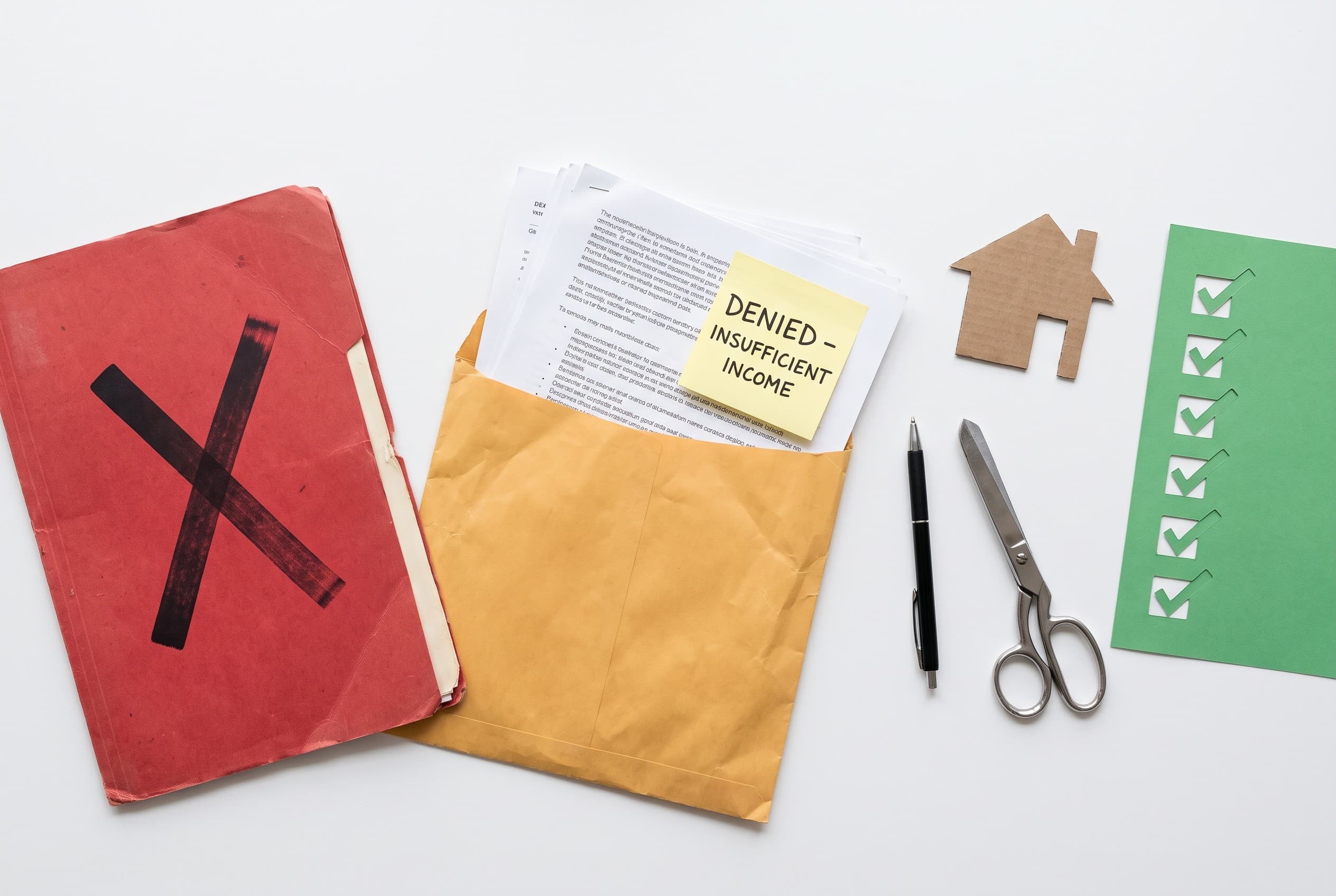
First, The Blunt Truth About Renting With Bad Credit
Landlords pull credit for one reason: to guess whether you'll pay. That's the whole game. They're not judging your character — they're managing risk.
So what credit score do you need to rent an apartment? There's no magic number, but here's the real range I see: most conventional apartment complexes want a 620 to 650 minimum, luxury buildings push for 700+, and independent landlords (the person who owns one duplex) are all over the map. Some don't pull credit at all.
But here's what drives me crazy about how people react to a denial. They assume the score is accurate. They assume the report is theirs. They assume there's nothing to fight.
Often? There's plenty.
The "Do Nothing" Scenario — And Why It Costs You
Let's say you get denied and you just... give up. You start scrambling for any place that'll take you, or you move back in with family, or you sign a lease somewhere worse at a higher rate.
Here's what that actually costs:
- Higher deposits everywhere. Once you're in "bad credit renter" mode, the next places want double or triple deposit. That's real cash out of pocket.
- A worse apartment. Second-choice buildings in worse locations with worse management.
- The problem follows you. If a wrong item on your report got you denied here, it's going to get you denied at the next place too. And the place after that.
The renters who get burned are the ones who treat the denial as a verdict instead of a first round. Don't be that guy.
Your Legal Leverage: The Adverse Action Notice
Here's the part the leasing office won't advertise.
Look, here's what the leasing office won't tell you — when a landlord or property manager denies you based on info in a credit or tenant screening report, federal law (the Fair Credit Reporting Act) forces them to hand you an adverse action notice. This isn't optional. It's the law.
That notice has to tell you:
- Which company provided the report they used (the credit bureau or the tenant screening company — often it's a screening company you've never heard of, like RealPage, TransUnion SmartMove, or CoreLogic)
- Your right to a free copy of that report if you request it within 60 days
- Your right to dispute anything inaccurate in it
Read that line again. You're entitled to a free copy of the exact report that got you denied. Not your annual credit report — the specific screening report the landlord looked at. And you have the right to dispute what's on it under FCRA Section 611 (15 U.S.C. § 1681i).
One thing to be clear about: the law doesn't promise the notice gets hand-delivered the second you ask. Landlords send it different ways — email, tenant portal, snail mail. If you didn't get one after a denial, request it immediately and document that you asked (email is best — it timestamps everything). The CFPB breaks down these adverse action rights in plain English right on their site. Bookmark it.
Why does this matter with a move-in date looming? Because tenant screening reports are notorious for errors. Mixed files (someone else's debt attached to your name), old items that should've aged off, and — this is the big one — collections accounts that were never even valid.

The Kind of Error That Kills Rental Applications
Let me tell you about a client of mine down here in Florida — a guy over in Ocoee, just outside Orlando.
He'd had a medical procedure. Insurance paid it. Done deal, right? Except an Orlando Health facility double-billed him — $1,800 for a balance insurance had already covered. And he never caught it. The bill went unpaid (because it wasn't a real bill), got sold to a collections agency, and that agency reported the phantom $1,800 to the credit bureaus.
He found out when he got denied. Not for an apartment in his case, but the mechanism is identical: a garbage collection account he didn't owe was sitting on his report, dragging his score down and flagging him as a risk.
This happens constantly with rental applications. A medical collection you didn't owe. A utility bill from an old roommate. A debt that's past the reporting window. And that one item is the difference between approved and denied.
Here's how we handled his: we sent a debt validation letter under FDCPA Section 809 (15 U.S.C. § 1692g). This is the federal rule that forces a debt collector to actually prove you owe what they say you owe. Not just claim it — prove it, with documentation.
The collector couldn't produce an itemized statement matching Orlando Health's original records. Because it never existed. The balance was already paid.
Deleted within 22 days.
That's the leverage. When a collector can't validate, that item has no business on your report. And challenging inaccurate items like that is exactly the kind of collections removal work we handle every week.
The Action Plan: What To Do Before Move-In
OK, so the clock's running. Here's your move-by-move.
Step 1 — Get the Adverse Action Notice in Writing (Today)
If they denied you verbally or by a vague email, call or email back and ask for the adverse action notice in writing. Ask specifically: which reporting company provided the report you used? Get the name and contact info. You're entitled to this notice when they deny you based on a consumer report — so if you didn't get one, request it now and document the request (email beats a phone call because it leaves a paper trail). Don't let them stall you.
Step 2 — Request Your Free Screening Report (This Week)
Once you know which company provided the report, request your free copy. Sure, you've got 60 days on paper — but you don't really, because your move-in date's the real clock here. Do it today. Once it lands, go through it line by line — every single one.
Look for:
- Accounts that aren't yours
- Collections you already paid
- Debts you don't recognize
- Anything older than 7 years (most negatives should fall off)
- Wrong balances or duplicate entries
Step 3 — Dispute Anything Inaccurate (Immediately)
Found an error? Dispute it. You can do this yourself for free directly with the bureau or screening company under the FCRA — I'll always tell you that straight up. Honestly, the CFPB lays out step-by-step dispute instructions for free.
Here's the operator detail most people miss: when you dispute, be specific and include documentation. A dispute that just says "this is wrong" often bounces through the automated system and comes back "verified" in seconds. A dispute that says "this $1,800 balance was paid by [insurer] on [date], see attached EOB" gives the reviewer something concrete to work with. Once you file, the bureau or screening company generally has about 30 days to investigate (sometimes up to 45), and they'll contact the furnisher or collector to verify it. Can't verify it? Then they've got to correct it or delete it. Period.
Step 4 — Go Back to the Landlord With a Counter-Offer
While the dispute is working, don't just wait. Go back to the property manager and negotiate. Bad credit doesn't automatically mean no. Options that work:
- Offer a larger deposit or a few months' rent up front
- Provide a co-signer or guarantor with strong credit
- Show proof of income — many places will approve you if you make 3x the rent, credit be damned
- Bring pay stubs, bank statements, and reference letters from past landlords
- Ask about their exception process — most large management companies have one, they just don't offer it unless you push
Step 5 — Look Into Second Chance Leasing
If this specific apartment falls through, "second chance leasing" is a real thing. These are properties and management companies that specifically work with renters who have evictions, broken leases, or low credit. You'll usually pay a higher deposit, but it gets you housed while you fix the underlying report.
Search "second chance apartments" plus your city. Independent landlords on smaller platforms are also more flexible than big corporate complexes.
Step 6 — Fix the Root Cause So This Doesn't Happen Again
Getting into this apartment is round one. Round two is making sure the next lease, the next car loan, the next mortgage doesn't hit the same wall.
If your report has inaccurate collections, charge-offs, or outdated items dragging your score down, those need to go — legitimately, by forcing the reporting companies to verify or delete. That's exactly the work we do at Freedom Credit Repair. We work with clients nationwide by phone, and when someone calls with a hard move-in date, we know how to move.
Talk to a Real Credit Specialist — Free
The fastest way to get straight answers about your situation in Orlando and across Florida.
4.9 · 89 Google reviews · No upfront fee
Call (407) 606-7117Individual results vary. We help you dispute inaccurate, unverifiable, or outdated items — no one can remove accurate, current information from your credit report, and you can dispute it yourself for free with the bureaus.
When To Call For Help vs. DIY
Real talk — if you've got weeks and a clean, simple error, you can absolutely dispute it yourself for free. I'd never tell you otherwise.
But here's when people call us: when the clock is tight, when there are multiple items, when a collector is playing games and won't validate, or when they've already disputed once and got a lazy "verified" response. Knowing which letters to send, which statute to cite, and how to document a dispute so it doesn't bounce — that's the difference between deleted-in-22-days and stuck-for-six-months.
We get questions about this constantly — check out our FAQ for the full breakdown on how the process works.
FAQ
Can a landlord deny me an apartment just because of bad credit?
Yes, a landlord can legally deny you based on credit — but they must follow the Fair Credit Reporting Act and give you an adverse action notice telling you which reporting company they used and that you have the right to dispute inaccurate information. Credit isn't a protected class, so a low score alone is a legal reason to deny. But if the denial was based on a report with errors, you have the right to challenge those errors and potentially get the decision reversed.
What credit score do you need to rent an apartment?
Most conventional apartment complexes look for a minimum credit score around 620 to 650, luxury buildings often want 700 or higher, and independent landlords vary widely — some don't check credit at all. There's no universal cutoff. Many landlords will also approve applicants below their stated minimum if you offer a larger deposit, a co-signer, or proof of income at 3x the rent.
How do I get a free copy of the report that got me denied?
Request it directly from the reporting company named in your adverse action notice within 60 days of the denial — the FCRA entitles you to a free copy. The report the landlord used is often from a tenant screening company (like RealPage, TransUnion SmartMove, or CoreLogic), not your standard credit report, so make sure you're requesting the specific report used in the decision. The adverse action notice is legally required to include that company's name and contact info.
How fast can an inaccurate item be removed from my report?
Under the FCRA, the bureau or reporting company generally has about 30 days to investigate a dispute (sometimes up to 45), during which they'll contact the furnisher to verify the item. If nobody can verify it, it gets corrected or deleted. Simple as that. Sometimes it moves faster — I had a client whose invalid $1,800 medical collection was deleted within 22 days after the collector couldn't produce validation under FDCPA Section 809. There's no guaranteed timeline, and results depend on the facts, but a well-documented dispute on a genuinely inaccurate item tends to move quickest.
What is second chance leasing?
Second chance leasing refers to apartments and property managers who specifically work with renters who have low credit, past evictions, or broken leases. These properties usually require a higher deposit or additional documentation, but they'll approve you when a standard complex won't. Search "second chance apartments" plus your city, and look at independent landlords who tend to be more flexible than large corporate management companies.
Bottom Line
A denial with a move-in date bearing down feels like a dead end. It isn't. You've got legal rights the leasing office glossed over, a free report you're entitled to see, and real leverage to challenge anything inaccurate that's costing you the apartment.
Move fast. Get the adverse action notice. Pull the report. Dispute the errors. Negotiate with the landlord. And if the clock's tight and you need someone who does this every day, call us at (407) 606-7117 — we work with renters nationwide, and we know how to fight with a deadline on the line.

Matt Brody
Founder, Freedom Credit Repair
Matt is the founder of Freedom Credit Repair based in Orlando, FL. Since 2019, Matt has helped clients remove negative items from their credit reports and take control of their financial future. Call (407) 606-7117 for a free consultation. More about Matt →