Denied a Car Loan Over Bad Credit? Do This Before You Reapply

Denied for a car loan? Don't reapply yet. I mean it.
I've watched people walk out of one dealership, drive straight to the next, and rack up five hard inquiries in a weekend — all while the actual problem (a $4,500 collection that isn't even theirs) sits untouched on their report. That's how you turn one "no" into six "no's."
Here's the thing. That denial handed you something valuable, even if it stings. The lender is legally required to tell you why they said no. That letter is your roadmap. And the couple of weeks after a denial? That's your window to fix what's fixable before you go back in.
Let's get to work.
What You'll Learn
- The federal law that forces every lender to tell you exactly why you got denied — and where to find the real reason buried in the letter
- Why reapplying at three dealerships in one week can quietly sink your score even lower
- The one document you're entitled to for free after a denial (and how to use it as ammunition)
- How a client of mine got a $4,500 collection knocked off her report — and how the same move could clear the way for your approval
- The minimum credit score most lenders actually want to see for an auto loan (the real number, not the myth)
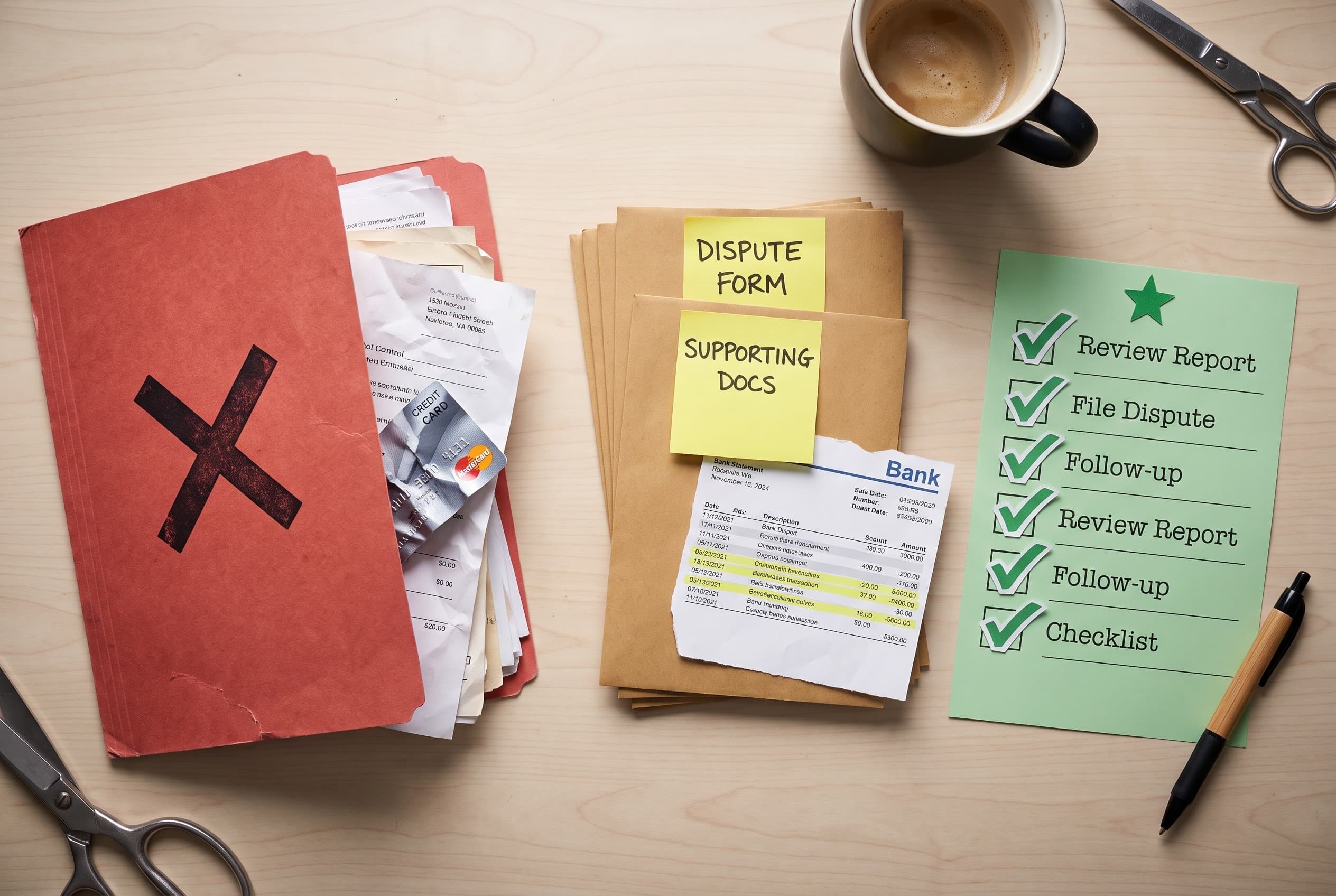
First, Read the Letter. Don't Just Toss It.
When a lender turns you down because of your credit, they can't just say "no" and ghost you. Under the Equal Credit Opportunity Act (ECOA), they're required to send you what's called an adverse action notice — usually within 30 days.
This is the single most useful piece of mail you'll get in this whole process, and most people file it in the trash next to the pizza coupons.
Don't do that.
That notice has to tell you:
- The specific reasons you were denied — OR how to request them (the law gives lenders that option, so if the reasons aren't printed on the letter, ask)
- Which credit bureau they pulled — Equifax, Experian, or TransUnion
- Your credit score they used, and the key factors that hurt it
- Your right to a free copy of your credit report from that bureau within 60 days
The CFPB breaks down exactly what an adverse action notice must contain. Read it. The reasons are usually plain-English things like "serious delinquency," "amount owed on accounts too high," or "too many recent inquiries."
Why does this matter so much? Because it tells you what to attack. If the letter says "derogatory public record" and you know you don't have one, you just found an error worth fighting.
The Scare: What Happens If You Just Keep Reapplying
Real talk — the worst move right now is to shrug and keep filling out applications hoping one sticks.
Here's what actually happens when you do that.
Every application is a hard inquiry. A hard pull can ding your score a few points each. One or two won't wreck you. But six in three weeks? Now your report screams "this person is desperate for credit and getting rejected everywhere" — and lenders read that loud and clear.
You get funneled into worse loans. Subprime dealers love a panicked buyer. I've seen people who could've qualified for a 9% rate get talked into a 24% buy-here-pay-here deal on a car worth half what they financed. Then the repo happens 14 months later and now we're dealing with repossession damage on their credit instead of a fixable denial.
You leave money on the table. If your denial was partly caused by a reporting error — and honestly, it often is — reapplying without fixing it means you're getting judged on numbers that aren't even accurate.
A 2021 study by the Consumer Financial Protection Bureau and repeated FTC findings have shown a meaningful chunk of credit reports contain errors serious enough to affect the terms you're offered. The FTC's own study found one in five consumers had an error on at least one of their reports. One in five. That could be you.
Your Legal Leverage: The Two Laws Working For You
You've got two federal laws in your corner here, and they stack.
1. ECOA — forces the lender to explain the denial. We covered this. The adverse action notice is a legal requirement, not a courtesy. Use it.
2. FCRA — gives you the right to dispute anything inaccurate. This is the big one. The Fair Credit Reporting Act (15 U.S.C. § 1681i) says you can dispute any item on your report that's inaccurate, incomplete, or unverifiable. And there are actually two players with duties here. The bureau (under §611) has to reinvestigate — generally within 30 days. The furnisher (the company that reported the item, under §623) has to investigate what you're disputing and report back accurate results.
And here's the part most people don't realize: if the bureau can't verify the info during that reinvestigation, it has to be deleted or corrected. Not "should." Has to.
Let me show you what that looks like in the real world.

The Winter Garden Roommate Nightmare
I had a client — I'll call her a client of mine down in Winter Garden, Florida — who got denied for a car loan and couldn't figure out why. Her score had cratered.
We pulled her report. There it was: a $4,500 collection from an apartment complex.
Here's what happened. Her former roommate was on the lease with her, and when the guy skipped out, he left three months of rent unpaid. The complex reported the entire $4,500 balance against both tenants — including my client, who had paid her half every single month.
So now she's carrying a $4,500 hit for money she doesn't owe, and it's the thing tanking her auto loan applications.
What did we do? We disputed it — with proof. Bank records showing her half of the rent was paid, every month, on time. The collection agency couldn't verify that the full $4,500 was owed by her alone. Under the FCRA, that's the ballgame. They reduced the balance, and then the entire tradeline got deleted for inaccuracy.
That's not magic. That's the law doing what it's supposed to do when you push the right button with the right evidence.
And that's exactly the kind of unverifiable, inaccurate junk we hunt for at Freedom Credit Repair — the stuff standing between you and an approval.
The Action Plan: What To Do Before You Reapply
OK, here's your fight plan. Work it in order.
Step 1: Get your adverse action notice and read every reason
Don't reapply anywhere until you've got this letter in hand and you understand why you were denied. Note which bureau they pulled. That's the report you attack first.
Step 2: Pull all three reports — free
You're entitled to a free report from the bureau that denied you within 60 days. But get all three at AnnualCreditReport.com, the only federally authorized free source. Errors don't always show up on all three bureaus, so you check all three.
Step 3: Hunt for the errors
Go line by line. Look for:
- Accounts that aren't yours (like my Winter Garden client's roommate debt)
- Wrong balances — collections showing more than you actually owe
- Duplicate collections — same debt sold and reported twice
- Old stuff that should've aged off — most negatives run about 7 years from the date of first delinquency (a few items, like a bankruptcy, can hang around longer)
- Accounts marked open that you closed, or paid debts still showing a balance
Every one of these is a legitimate dispute.
Step 4: Dispute the inaccuracies — with proof
This is where people go wrong. Don't just click "this is wrong" on the bureau's website and hope. Send a written dispute. Attach your evidence — bank statements, payment records, a copy of the lease, whatever proves your case. Certified mail with return receipt isn't required — the clock starts whenever the bureau gets your dispute — but it's a smart way to document delivery and protect your paper trail.
Remember: the bureau has 30 days to reinvestigate. If it can't verify the info, it has to be deleted or corrected.
Just so we're clear — you have every right to do this yourself, for free, directly with the bureaus. Some people do, and they get results. Where we come in is when the errors are tangled (multiple furnishers, re-aged debts, mixed files) or when your reapply clock is short and you need somebody who does this every day to move fast. If you've got a specific type of item weighing you down — a stubborn collection account is the most common one I see behind auto denials — that's the thread we pull first.
Step 5: Knock down your utilization before you reapply
While disputes are pending, do the free thing that moves the needle fastest: pay down your credit card balances. "Amount owed too high" is one of the most common denial reasons on adverse action notices, and it's usually the quickest to improve. Getting your reported balances under 30% of your limits — under 10% is even better — can lift your score in a single billing cycle.
Step 6: When you DO reapply, batch it
When your report's cleaned up and you're ready, do your rate shopping inside a 14-day window. The scoring models treat multiple auto-loan inquiries in a short period as one shopping event, so you're not punished for comparing lenders. Apply at a credit union too — they often approve people the big banks won't.
What Credit Score Do You Actually Need for a Car Loan?
Straight answer: there's no hard cutoff, but most lenders start offering solid rates around a 660-670 FICO, and the best deals go to folks above 720.
Can you get approved below that? Absolutely — people get auto loans with scores in the 500s every day. The problem isn't approval, it's the price. A subprime borrower can pay double-digit interest that adds thousands over the life of the loan. So the goal isn't just "get approved" — it's "get approved without getting robbed."
That's why the two weeks after a denial matter. Bumping your score even 30-40 points by clearing an error and dropping your utilization can move you into a whole different rate tier.
We get questions like this constantly — check out our FAQ for the full breakdown on scores, timelines, and what we can and can't do.
Don't Fight This With a Deadline Breathing Down Your Neck
Here's my honest take. If you've got months to spare, you can absolutely do all of this yourself. Pull your reports, dispute the errors, pay down your cards, wait it out.
But most people who just got denied don't have months. They need a car now — for work, for the kids, for life. And when the clock's ticking, guessing at which item to dispute and hoping the bureau responds isn't a plan.
That's what we do. We read your adverse action notice, find the inaccurate and unverifiable items that are actually costing you the approval, and dispute them the right way — fast. No promises on scores or timelines (anyone who guarantees you a number is lying, and it's against the law to promise it). Just the law, applied hard, on your behalf.
Talk to a Real Credit Specialist — Free
The fastest way to get straight answers about your situation in Orlando and across Florida.
4.9 · 89 Google reviews · No upfront fee
Call (407) 606-7117Individual results vary. We help you dispute inaccurate, unverifiable, or outdated items — no one can remove accurate, current information from your credit report, and you can dispute it yourself for free with the bureaus.
Call us at (407) 606-7117. We work with clients nationwide by phone. Bring your denial letter. Let's find what's dragging you down before you walk back into that dealership.
Frequently Asked Questions
How long should I wait to reapply for a car loan after being denied?
Wait until you've reviewed your credit report and disputed any errors — usually 30 to 45 days is enough to see dispute results and pay down balances. Reapplying the same week without fixing anything just adds hard inquiries and risks another denial. Use the adverse action notice to identify the exact problem first, fix it, then reapply.
Does getting denied for a car loan hurt my credit score?
The denial itself doesn't hurt your score — but the hard inquiry from the application does, usually by a few points. The real damage comes from applying at multiple lenders over several weeks. To avoid that, once you're ready to reapply, do all your rate shopping within a 14-day window so the scoring models count it as a single inquiry.
What credit score do I need to get approved for a car loan?
There's no universal minimum, but most lenders offer competitive rates starting around 660-670, with the best rates reserved for scores above 720. You can get approved with a score in the 500s, but you'll likely face very high interest. Improving your score even 30-40 points before reapplying can move you into a better rate tier and save you thousands.
Can I dispute credit report errors myself, or do I need help?
You can absolutely dispute errors yourself for free, directly with Equifax, Experian, and TransUnion under the Fair Credit Reporting Act. It works well for simple, clear-cut mistakes. Professional help makes sense when the errors are complicated, spread across multiple furnishers, or when you're on a tight deadline to get approved and need them found and challenged quickly.
What is an adverse action notice and why does it matter?
An adverse action notice is the letter a lender must send you under the Equal Credit Opportunity Act when they deny you credit, telling you the specific reasons why (or how to request them). It matters because it names the exact factors that killed your application — like a collection, high balances, or too many inquiries — so you know precisely what to fix before reapplying. It also entitles you to a free credit report from the bureau the lender used.

Matt Brody
Founder, Freedom Credit Repair
Matt is the founder of Freedom Credit Repair based in Orlando, FL. Since 2019, Matt has helped clients remove negative items from their credit reports and take control of their financial future. Call (407) 606-7117 for a free consultation. More about Matt →