Credit Repair After Bankruptcy in Florida: Rebuild Your Score Fast

What You'll Learn
- The exact window after discharge when credit repair is most effective — and why waiting even 6 months costs you points
- How to use FCRA Section 611 to force bureaus to remove accounts that should've been wiped clean by your bankruptcy
- The 2-1 credit rebuilding formula (2 cards + 1 loan account) that accelerates your score recovery faster than anything else
- A real Orlando-area client story where 5 accounts belonging to someone else got removed — and a 112-point score jump followed
Your Bankruptcy Is Discharged. Now What?
Let's cut to it. You went through the worst financial experience of your life. You filed. You waited. The court discharged your Chapter 7 or Chapter 13. And now you're staring at a credit score that makes you want to throw your phone across the room.
I get it. I've sat across from hundreds of people in my Orlando office who felt the exact same way.
But here's what nobody tells you: the day your bankruptcy is discharged is the single best day to start credit repair after bankruptcy. Not next month. Not "when things settle down." Right now. That discharge order is your reset button — and if you don't press it hard and fast, you're leaving points on the table.
![[IMAGE:2] Instructional Visual — Top-down overhead shot of a light wood desk with three distinct zones arranged left to right](/_next/image?url=https%3A%2F%2Ftyyvgkzyojviljefkhzv.supabase.co%2Fstorage%2Fv1%2Fobject%2Fpublic%2Fimages%2Fblog%2Fcredit-repair-after-bankruptcy-in-florida-rebuild-your-score-fast%2Fbody-1.jpg&w=3840&q=75)
I've been doing this since 2019 in Central Florida. I've watched people go from a 480 to a 720 in under 18 months after bankruptcy. I've also watched people sit on a discharged bankruptcy for three years, do nothing, and wonder why their score barely moved. The difference isn't luck. It's strategy.
The "Do Nothing" Disaster
Let me paint you a picture of what happens if you ignore your credit report after discharge.
Your bankruptcy wipes out the debt. Great. But the creditors who reported those accounts? They don't always update your file correctly. I'd say about 60-70% of the post-bankruptcy credit reports I review in my office have at least one error. Sometimes it's way worse than that.
Here's what I commonly see:
- Accounts that were included in the bankruptcy still showing an open balance
- Accounts reporting as "charged off" instead of "included in bankruptcy — zero balance"
- Collection agencies that bought the old debt and are re-reporting it as new activity
- Late payment history continuing to report after the discharge date
Every single one of those errors is dragging your score down — on top of the bankruptcy itself already sitting there.
And here's the kicker: if you don't dispute these errors, the credit bureaus assume everything is accurate. They have zero incentive to fix your file on their own. Zero.
So you're walking around Orlando trying to rent an apartment in Lake Nona, trying to finance a car on OBT, trying to get a secured credit card — and you're getting denied not because of the bankruptcy itself, but because of reporting errors that shouldn't even be there.
That's the "do nothing" tax. And it's brutal.
How Long Does Bankruptcy Actually Stay on Your Credit?
Let's get the timeline straight because I hear bad information about this constantly.
- Chapter 7 bankruptcy stays on your credit report for 10 years from the filing date
- Chapter 13 bankruptcy stays for 7 years from the filing date
Those are the maximums under FCRA Section 605. But — and this is a big "but" — the impact on your score decreases every single year. A 3-year-old bankruptcy hurts way less than a 3-month-old one. And if you've been building positive credit in the meantime? The algorithm starts caring a lot less about that old filing.
Now here's something most people don't realize, and honestly, this is the part that fires me up: a credit repair company may be able to get the bankruptcy removed from your report before that 7- or 10-year mark. I'm not going to promise you it'll happen — anyone who guarantees bankruptcy removal is lying to you. But I've seen it happen. If there's any procedural error in how the bankruptcy was reported — wrong filing date, wrong case number, wrong status — that's a legitimate basis for dispute under FCRA Section 611.
Here's the thing though — we dispute only inaccuracies. If the bankruptcy is accurately reported, it typically stays for the full reporting period. The goal is accuracy, not magic tricks. But when there is an error? That's when the door opens.
The point is: don't just accept that your credit is trashed for a decade. That's defeatist thinking and it's usually wrong.
The Discharge Day Playbook: Why This Is the Best Time to Hire a Credit Repair Company
Real talk — once your bankruptcy is discharged, that is hands-down the best time to hire a credit repair company.
Why? Because the discharge just changed the status of every account that was included. Every one of those old debts should now show as "included in bankruptcy" with a zero balance. If they don't — and trust me, many won't — that's a dispute-ready error.
![[IMAGE:3] Local Proof — A quiet stretch of Conway Road in the Conway neighborhood south of Orlando, shot at golden hour from](/_next/image?url=https%3A%2F%2Ftyyvgkzyojviljefkhzv.supabase.co%2Fstorage%2Fv1%2Fobject%2Fpublic%2Fimages%2Fblog%2Fcredit-repair-after-bankruptcy-in-florida-rebuild-your-score-fast%2Fbody-2.jpg&w=3840&q=75)
Here's what a good credit repair company does right after discharge:
1. Pull your reports from all three bureaus (Equifax, Experian, TransUnion)
You need to see what's actually being reported. Not what you think is there. What's actually there. I've had clients in Kissimmee who assumed their file was clean after discharge and it looked like a bomb went off.
2. Identify every account that's reporting incorrectly
This includes balances that should be zero, statuses that should say "included in bankruptcy," and any collections that popped up after the discharge date on accounts that were part of the filing. All of these are disputable.
3. File disputes under FCRA Section 611
This is the law that gives you the right to dispute any information on your credit report that you believe is inaccurate or incomplete. The bureaus then generally have 30 days (up to 45 in some cases) to investigate. If the creditor can't verify the account as accurate, it has to be deleted or corrected.
4. Target the bankruptcy filing itself
Like I said, no guarantees. But if any detail of the public record is off — the trustee's name, the case number, the discharge date — we can challenge it. I've seen Chapter 7 filings come off reports 4+ years early this way. Again — this only works when there's an actual reporting error. If everything's accurate, it stays put.
The bottom line: your credit repair company should be going after every single negative account that was paid off or discharged through the bankruptcy. Those accounts are dead. They should look dead on your report. And if they don't, someone needs to fight to fix that.
That's exactly what we do at Freedom Credit Repair. If you just got your discharge and you're staring at a mess of a credit report, call us at (407) 606-7117 before you do anything else.
The Jose Rodriguez Problem: When Your File Isn't Even Yours
OK so let me tell you about something that happened to a client of mine in Conway — because it shows just how badly the credit bureaus can screw things up, especially around a bankruptcy.
I had a client — I'll call him Jose Rodriguez, though that's not exactly his name for privacy reasons — who came to me after his Chapter 7 was discharged. His score was in the low 400s. Which seemed too low, even for a fresh bankruptcy.
When I pulled his reports, I found a mortgage, an auto loan, and 3 credit cards that didn't belong to him. Five accounts. None of them his. Turns out, another person with a similar name and the same last 4 digits of their Social Security number had their entire credit history merged into Jose's file.
This is called a "mixed file" — and it happens way more often than the credit bureaus want to admit. Especially with common names in Central Florida's Hispanic community. The bureaus' matching algorithms are lazy. They see a name match and a partial SSN match and they just smash the files together.
So Jose is walking around Conway with someone else's mortgage showing as delinquent on his report, someone else's maxed-out credit cards — on top of his own bankruptcy. No wonder he couldn't rent, couldn't finance, couldn't do anything.
The Legal Weapon: FCRA Section 611 Disputes
Here's where credit repair after bankruptcy gets tactical.
FCRA Section 611 is your right to dispute any item on your credit report. But it's more powerful than most people realize. The burden of proof isn't on you — it's on the credit bureau and the furnisher (the creditor who reported the info). They generally have 30 days (up to 45 in some cases) to investigate. If they can't verify the account as accurate, they have to delete it or correct it.
For Jose in Conway, we filed mixed file disputes with all three bureaus. We submitted his identity documentation — his actual SSN card, his Florida driver's license, proof of address — and we laid out exactly which accounts belonged to someone else.
All 5 of the other person's accounts were separated out within 45 days.
Jose's score jumped 112 points.
Now, Jose's situation wasn't just about bankruptcy — it was a mixed file on top of bankruptcy. But here's why I'm telling you this story: you have no idea what's on your credit report until you look. And after a bankruptcy, when your file is already a mess, errors and mixed data are even more common because so many accounts are changing status at the same time.
We get questions about situations like this all the time — check out our FAQ for more on disputes and mixed files.
The 2-1 Rebuilding Formula
OK, so we've talked about cleaning up the mess. Now let's talk about building something new.
After your bankruptcy is discharged and you've hired a credit repair company to dispute the errors, you need to start building positive credit. And I have a specific formula I give every single client:
You need at least 2 open credit cards and 1 loan-type account.
That's it. That's the formula. Two revolving accounts and one installment account. Let me break down why.
Why 2 Credit Cards?
The credit scoring algorithm (FICO and VantageScore both) loves to see active revolving credit that you're managing responsibly. One card isn't enough — the algorithm wants to see you handling multiple accounts. Two is the sweet spot for rebuilding.
Here's what I recommend for post-bankruptcy clients in Orlando:
- Secured credit card #1: OpenSky or Discover Secured. Put down $200-$500. Use it for gas only. Pay it off every month.
- Secured credit card #2: Capital One Platinum Secured or a local credit union card. Use it for one subscription (Netflix, Spotify, whatever). Set up autopay. Forget it exists.
Keep utilization under 10% on each card. Not 30% — I know you've heard 30%. That's outdated advice. Under 10% is where the real score gains happen.
Why 1 Loan-Type Account?
This is where a credit builder loan comes in, and honestly, this is the secret weapon most people skip.
A credit builder loan isn't really a loan in the traditional sense. You "borrow" a small amount ($300-$1,000) that the lender holds in a savings account. You make monthly payments on it. Once it's paid off, you get the money. The entire point is to create a positive installment account on your credit report.
Self (formerly Self Lender) is the one I recommend most. Credit unions in Orlando — like Fairwinds or Addition Financial — sometimes offer them too.
This loan-type account diversifies your credit mix, which is 10% of your FICO score. Sounds small, but when you're rebuilding from scratch, every category matters.
The Timeline
Here's what a realistic credit repair after bankruptcy timeline looks like with this formula:
- Months 1-3: Discharge happens. Hire credit repair company. Dispute all errors. Open 2 secured cards and 1 credit builder loan.
- Months 3-6: First disputes resolved. Some accounts removed. Score starts climbing. Keep cards under 10% utilization.
- Months 6-12: More disputes completed. Positive payment history building. Score typically in the 580-640 range.
- Months 12-18: Established positive credit history. Score often hits 650-700. You're now in mortgage-qualifying territory depending on the program.
- Months 18-24: If aggressive, 700+ is realistic. I've seen it. Multiple times.
I can't guarantee these numbers — your starting point and the specific errors on your report matter a lot. But I've watched this play out over and over with Orlando clients.
The Mistakes That Kill Your Recovery
Let me save you from the traps I see people fall into:
Don't apply for everything at once. I know you're excited to rebuild. But every application is a hard inquiry, and hard inquiries drop your score 5-10 points each. Space your applications out. Open the two secured cards within the same 14-day window (FICO groups these), then wait 3-6 months before the credit builder loan.
Don't fall for predatory auto loans. This one drives me crazy. You get your discharge and suddenly every buy-here-pay-here lot on OBT is sending you mailers. "Bankruptcy OK! Everyone approved!" Yeah — at 24% interest on a 2016 Nissan Altima with 140k miles. That's not rebuilding credit. That's a trap.
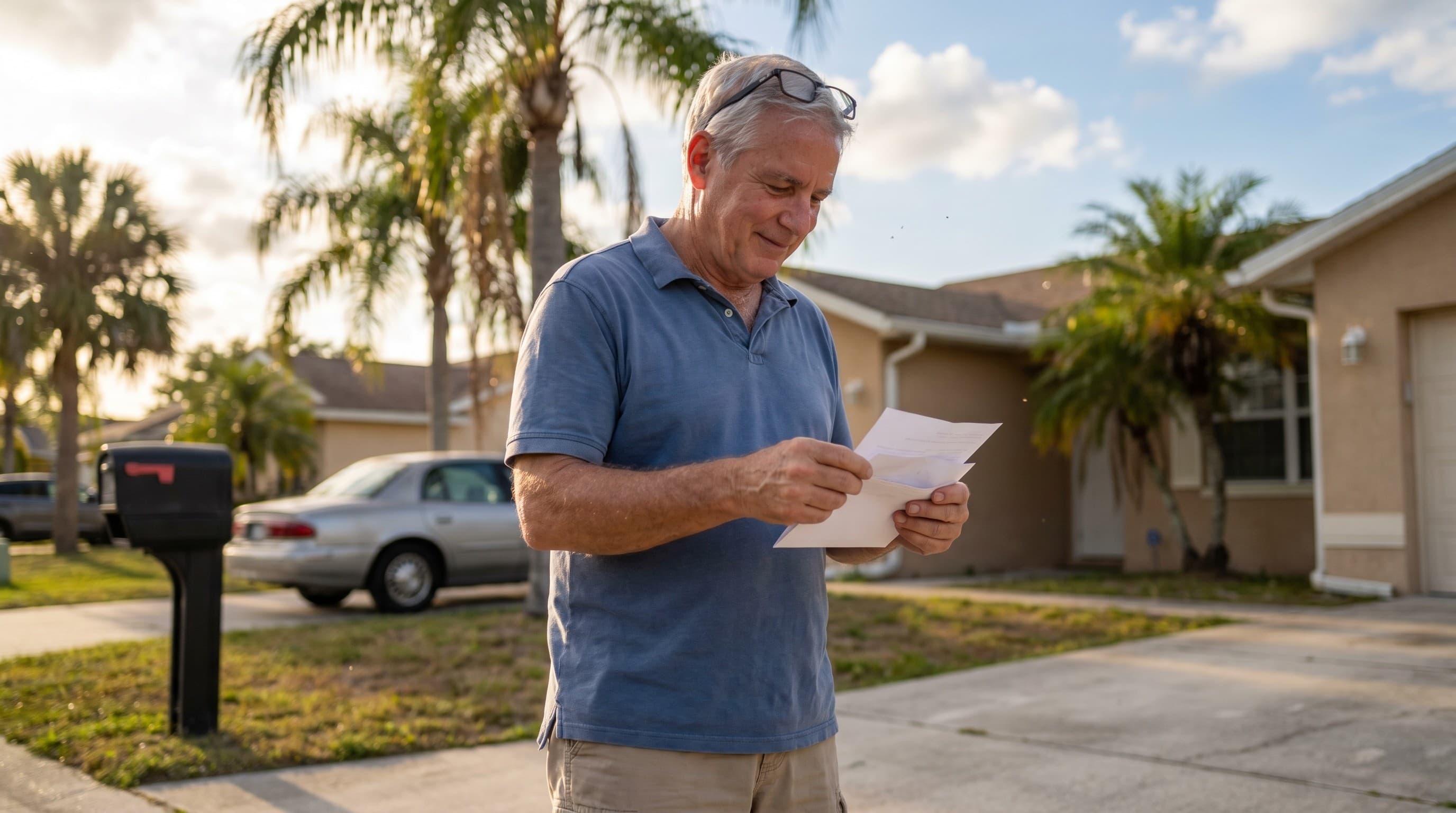
Don't ignore your mail. After bankruptcy, you might get letters from creditors, collection agencies, even the trustee's office. Open everything. If a debt collector contacts you about a debt that was included in your bankruptcy, that can violate the bankruptcy discharge injunction (11 U.S.C. § 524) and may also trigger FDCPA violations — often under Section 807 or 808 depending on what they say and do. Document everything and talk to a bankruptcy attorney if it keeps happening.
Don't close your secured cards when they convert to unsecured. After 6-12 months of good behavior, most secured cards will upgrade you to an unsecured card and refund your deposit. Keep the account open. The age of that account is building your credit history length — closing it resets the clock.
Florida-Specific Angles You Should Know
Florida's homestead exemption is one of the most generous in the country, which is why a lot of people file here. But after discharge, the Florida market has some quirks:
- FHA loans are available 2 years after Chapter 7 discharge and 1 year into a Chapter 13 repayment plan (with court approval). That 2-year clock is why aggressive credit repair right after discharge matters so much — you want your score ready when that FHA window opens.
- Orlando rent-to-own programs in areas like Poinciana and Meadow Woods sometimes don't hard-pull your credit. If you need housing now while you rebuild, these can bridge the gap.
- Florida has no state income tax, which means your disposable income after bankruptcy is higher than in most states. Use that extra money for on-time payments on your rebuilding accounts. Don't blow it.
Your Step-by-Step Action Plan
Here's exactly what to do, in order:
- Get your discharge order and make copies. You'll need this for disputes and applications.
- Pull your free credit reports from AnnualCreditReport.com — all three bureaus.
- Call a credit repair company (like us — (407) 606-7117) and have them review your reports for errors, mixed files, and incorrectly reporting accounts.
- Dispute every error under FCRA Section 611. This includes balances that should be zero, wrong statuses, and accounts that aren't yours.
- Open 2 secured credit cards within the same 2-week window. Fund them with minimum deposits.
- Open 1 credit builder loan through Self or a local credit union. Start making payments immediately.
- Set up autopay on everything. Do not trust yourself to remember. One missed payment after bankruptcy is devastating.
- Monitor your score monthly through Credit Karma or your card's free FICO score. Watch for new errors popping up.
- At the 12-month mark, reassess. Your credit repair company should have cleared most disputable items by now. Your positive accounts should be reporting 12 months of on-time payments.
- At the 24-month mark, talk to a mortgage lender about FHA pre-qualification. If your score is 620+, you're in the game.
Talk to a Real Credit Specialist — Free
The fastest way to get straight answers about your situation in Orlando and across Florida.
4.9 · 89 Google reviews · No upfront fee
Call (407) 606-7117Individual results vary. We help you dispute inaccurate, unverifiable, or outdated items — no one can remove accurate, current information from your credit report, and you can dispute it yourself for free with the bureaus.
Frequently Asked Questions
How long does bankruptcy stay on your credit report in Florida?
Chapter 7 stays for 10 years from the filing date. Chapter 13 stays for 7 years. But the impact on your score decreases over time — especially if you're actively rebuilding with positive accounts. And in some cases, a credit repair company can get the bankruptcy removed early if there are reporting errors.
Can I get a credit card after bankruptcy?
Yes — immediately after discharge. Secured credit cards are the way to go. You put down a deposit ($200-$500) that becomes your credit limit. I recommend having 2 secured cards as part of your rebuilding strategy. Discover Secured and OpenSky are the two I see work most consistently for post-bankruptcy clients in Orlando.
Will credit repair after bankruptcy actually improve my score?
Absolutely — if it's done right. The biggest score gains come from removing accounts that are reporting incorrectly after discharge. I've seen clients gain 50-100+ points just from dispute work in the first few months. Combine that with new positive accounts and you're looking at real momentum. We break down more of how this works on our FAQ page.
Should I hire a credit repair company or do it myself?
You can do it yourself. FCRA Section 611 gives you the right to dispute directly. But here's the reality: most people don't know what to look for, don't write effective dispute letters, and give up after the first round of pushback from the bureaus. A credit repair company knows how to escalate, which laws to cite, and when to involve the CFPB. After a bankruptcy — when your report is at its messiest — professional help pays for itself.
What credit score do I need to buy a house after bankruptcy in Florida?
For an FHA loan (the most common path after bankruptcy), you need a minimum 580 score for the 3.5% down payment option. Some lenders want 620+. You also need to wait 2 years after Chapter 7 discharge or 1 year into Chapter 13 (with court approval). The key is starting your credit repair and rebuilding on day one of your discharge so you're ready when that window opens.
Look — bankruptcy doesn't define your credit future. It defines your credit past. What you do in the 6-12 months after discharge determines everything. If you're in Orlando, Kissimmee, Conway, Winter Park, or anywhere in Central Florida and you just got your bankruptcy discharged, call me at Freedom Credit Repair — (407) 606-7117. Let's clean up your report, build your file the right way, and get you where you're trying to go.

Matt Brody
Founder, Freedom Credit Repair
Matt is the founder of Freedom Credit Repair based in Orlando, FL. Since 2019, Matt has helped clients remove negative items from their credit reports and take control of their financial future. Call (407) 606-7117 for a free consultation. More about Matt →