UCF Student Loan Default? How to Fix It and Build Credit Fast
What You'll Learn
- The exact point where a late student loan becomes a default — and why that distinction changes everything for your credit score
- A federal program that can literally erase the default notation from your credit report (yes, really)
- How student loan debt interacts with every other financial move you'll make in Orlando — from renting near UCF to buying your first car
- The step-by-step action plan I give every recent graduate who walks into my office in Orlando with a defaulted loan and a 480 credit score
Your Student Loan Is in Default. Now What?
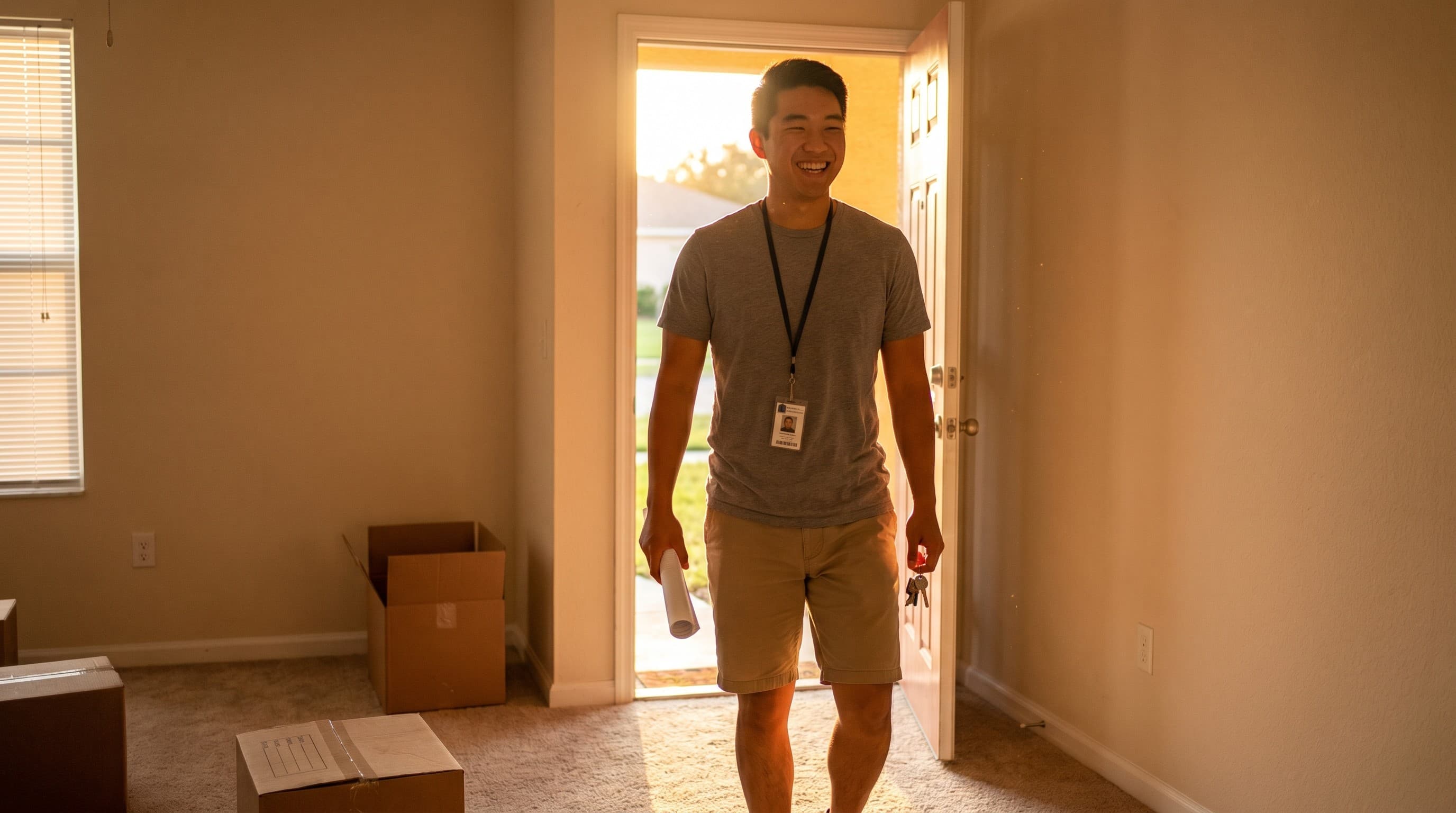
Let me guess. You graduated from UCF — or maybe you didn't finish, which is even more common — and somewhere between job hunting and figuring out Orlando rent prices, you stopped opening the mail from your loan servicer. Maybe you did the income-driven repayment application but never sent it in. Maybe you moved from a place near campus to somewhere off Alafaya and your forwarding address didn't stick.
Doesn't matter how it happened. What matters is this: if you haven't made a payment in 270 days, your federal student loan is now in default. Not delinquent. Not "behind." Default. That's a completely different animal.
I've been doing credit repair in Orlando since 2019, and I can tell you — student loan default credit repair is one of the most common issues I see with clients under 30. UCF pumps out tens of thousands of graduates every year into an Orlando job market that's heavy on hospitality, tourism, and entry-level tech. Most of those jobs don't pay enough to cover rent in a decent part of town AND a $400/month loan payment. So people punt. They ignore it. And then they're sitting in my office two years later wondering why they can't get approved for an apartment in Baldwin Park.
![[IMAGE:2] Instructional Visual — Overhead flat-lay shot of a light wooden desk with a visual timeline laid out from left to r](/_next/image?url=https%3A%2F%2Ftyyvgkzyojviljefkhzv.supabase.co%2Fstorage%2Fv1%2Fobject%2Fpublic%2Fimages%2Fblog%2Fucf-student-loan-default-how-to-fix-it-and-build-credit-fast%2Fbody-1.jpg&w=3840&q=75)
Here's what I tell every single one of them: student loan debt is forever. I'm not being dramatic. Discharging federal student loans in bankruptcy is difficult — it usually requires proving "undue hardship," and while recent DOJ guidance has made it more achievable for some borrowers, it's still a steep hill to climb. Talk to a bankruptcy attorney if that's something you're considering, but don't count on it as a way out. And unlike a regular collections account that drops off your credit report after about 7 years, the underlying student loan debt itself doesn't disappear on a timer — the government can still collect on it, garnish your wages, seize your tax refund, and even dock your Social Security benefits decades from now.
So the best thing you can do — the absolute best move — is pay it off as fast as humanly possible. Before you finance a car. Before you think about a mortgage. Before you stack any other debt on top of it. The faster you eliminate this, the better every other financial decision in your life becomes.
I know that's not what you want to hear. But I'm your coach, not your cheerleader.
The "Do Nothing" Disaster: What Happens If You Ignore Student Loan Default
Let me paint this picture real quick because I need you to feel the urgency.
Month 1-9 of missed payments: Your loan servicer reports you as 30, 60, 90 days late. Each one is a separate negative mark. Your credit score drops 50-100 points in this window alone.
Day 270: Your loan officially enters default. The entire balance becomes due immediately (this is called "acceleration"). The default gets reported to all three credit bureaus.
After default:
- The Department of Education can garnish up to 15% of your disposable pay — no lawsuit needed. They just do it through what's called an Administrative Wage Garnishment.
- Your federal and state tax refunds get intercepted. That $2,800 refund you were counting on? Gone.
- You lose eligibility for future federal student aid. So if you were thinking about going back to Valencia or UCF for another degree — nope.
- Collection fees get tacked onto your balance. We're talking up to 25% of your loan amount.
I had a client last year — 26 years old, UCF grad, working in digital marketing near the SoDo district — who owed $34,000 in federal loans. After default and collection fees, that number ballooned to over $42,000. Eight thousand dollars in fees. For doing nothing.
And here's the part that connects to everything else in your financial life. That same client came to me because he couldn't get an apartment. He'd applied to three different complexes near Downtown Orlando and got denied every time. His credit score was 510, and he had the default plus a separate issue I see constantly — an eviction filing that shouldn't have been there.
He'd actually moved out of a Downtown Orlando apartment voluntarily, paid every dollar of rent he owed, but the complex had filed an eviction proceeding as a pressure tactic before he left. They never followed through with it. Never went to court. But the filing itself showed up on his tenant screening report through LexisNexis. Landlords in Orlando pull those reports, see the word "eviction," and it's an automatic rejection. They don't read the details.
So now he had a defaulted student loan AND a phantom eviction on his record. Both fixable. But he'd been ignoring both for over a year while the damage compounded.
Don't be that guy.
The "Loophole" That Can Erase Default From Your Credit Report
OK so here's the part people don't know about, and honestly, it drives me crazy that loan servicers don't explain this better.
There's a federal program called Student Loan Rehabilitation — and it's one of the most powerful credit repair tools that exists. I'm not exaggerating.
Here's how it works under the Higher Education Act, Section 428F:
You make 9 voluntary, on-time, "reasonable and affordable" monthly payments within a 10-month window. That's it. The payments are based on your income — for a lot of my UCF grad clients making $35,000-$45,000 in Orlando, the rehabilitation payment ends up being somewhere between $100-$200 a month. Sometimes less.
The kicker? Once you complete rehabilitation, the default notation is permanently removed from your credit report. Not settled. Not updated. Removed. As if it never happened.
The late payment marks (30, 60, 90 days) will still show, but the default itself — the nuclear bomb on your report — disappears.
You can only use rehabilitation once per loan. So don't blow it by starting and then quitting halfway through.
There's also loan consolidation through a Direct Consolidation Loan, which gets you out of default faster (sometimes within 30 days) but does NOT remove the default from your credit report. It just updates the status. That's a meaningful difference, and I've seen other credit repair companies in Orlando give bad advice on this.
So which one should you do? In my experience, rehabilitation is almost always the better play if you can handle the 9-month timeline. The credit report cleanup is worth the wait.
![[IMAGE:3] Local Proof — A wide shot of the UCF campus area along University Boulevard at golden hour, taken from a strip mall](/_next/image?url=https%3A%2F%2Ftyyvgkzyojviljefkhzv.supabase.co%2Fstorage%2Fv1%2Fobject%2Fpublic%2Fimages%2Fblog%2Fucf-student-loan-default-how-to-fix-it-and-build-credit-fast%2Fbody-2.jpg&w=3840&q=75)
What About the Fresh Start Program in 2025?
Real talk — if you've been paying attention to student loan news, you've heard about the Fresh Start initiative. This program was supposed to automatically pull borrowers out of default and restore them to good standing after the pandemic payment pause ended.
And it did, temporarily. Millions of borrowers got a fresh status on their loans in 2023-2024. But here's what most people missed: Fresh Start doesn't permanently fix your credit report the way rehabilitation does. It moves your loan back to current status, but the historical default can still linger depending on how the servicer reports it.
Also — and this is the part I keep hammering — being out of default doesn't mean your debt is gone. Your balance is still sitting there. Interest is still running. The clock on your financial future is still ticking.
I'll say it again because it's the most important thing in this entire article: the best strategy is to pay off your student loans as fast as possible, before you take on any other debt. Before the car loan. Before the credit cards. Before the mortgage. Every dollar you throw at this now saves you from years of compounding interest and credit damage later.
A UCF grad making $42,000 at a tech company off University Boulevard can realistically throw $500-$700 a month at a $30,000 loan balance if they're living with roommates and keeping expenses tight. That's paid off in under 5 years. Five years from now you're 27 or 28 with zero student debt and a clean credit history. You're in a completely different position than the person who did income-driven repayment minimums since 2019.
The Action Plan: Fix the Default, Build the Credit, Stack the Future
Here's exactly what I tell every UCF student or recent grad who walks into [INTERNAL_LINK:1] with this problem.
Step 1: Pull All Three Credit Reports and Your Loan Records
Go to AnnualCreditReport.com (the real free one — not the scammy sites with "free" in the URL). Pull Equifax, Experian, and TransUnion. Then log into StudentAid.gov to see your exact loan status, servicer info, and balances.
Write down:
- Which loans are in default vs. delinquent vs. current
- Who your servicer or collection agency is
- Total balance including fees
- Every negative mark on your credit report related to student loans
Step 2: Contact Your Servicer and Request Rehabilitation
Call the number listed on StudentAid.gov for your loan holder. Tell them you want to enter the loan rehabilitation program. They'll calculate your payment based on income.
Get everything in writing. I cannot stress this enough. Do not trust a verbal agreement from a loan servicer phone rep. Get the payment amount, due dates, and terms in a letter or email.
Step 3: Make Every Single Payment On Time for 9 Months
Set up autopay. Set phone reminders. Tattoo the due date on your arm if you have to. Missing even one payment resets the clock. You do NOT get credit for months you already paid.
During this period, do not take on new debt. No car loans. No store credit cards. I know that Honda on Colonial is calling your name — it can wait.
Step 4: Dispute Inaccurate Information Under the FCRA
While you're in rehabilitation, pull your credit reports again and look for errors. Common ones I see with student loans:
- Wrong balance amounts (especially after fees get added)
- Duplicate accounts (the same loan reported by both the original servicer and the collection agency)
- Wrong dates (date of first delinquency is wrong, which affects how long the mark stays)
- Failure to update status (you're in rehabilitation but the report still says "default")
You can file disputes with each credit bureau under FCRA Section 611 — online, by phone, or by mail. I personally recommend sending disputes via certified mail with return receipt requested. It's old-school, but it creates a paper trail that's hard to argue with if things go sideways. If you go the online route, screenshot everything and save confirmation numbers. Either way, the bureaus have 30 days to investigate.
And look at everything else on your report while you're at it. Remember that client I mentioned with the phantom eviction in Downtown Orlando? Here's how we resolved it: I contacted the apartment complex directly and got the property manager to confirm in writing that all rent had been paid in full and the tenant left voluntarily. The eviction filing had never been adjudicated — meaning no court ever ruled on it. Armed with that documentation, we disputed the record with LexisNexis and the tenant screening companies.
Now, I want to be straight with you — removal isn't automatic just because a case was never adjudicated. It depends on whether the record is inaccurate, incomplete, outdated, or improperly matched to you. In this client's case, we had solid documentation showing the filing was misleading and the tenant screening report was incomplete. Removed. Completely gone from his screening reports.
That's the FCRA at work. Under the law, consumer reporting agencies — including specialty CRAs that handle tenant screening — must investigate disputes and correct or delete information that's inaccurate or can't be verified. It applies broadly, but the dispute process and who you dispute with varies depending on the type of report. Credit bureaus handle credit reports, specialty CRAs like LexisNexis handle tenant screening, and sometimes you need to go directly to the company that furnished the data.
We get questions about this kind of thing all the time — check out our [INTERNAL_LINK:2] for more on how disputes work and what your rights actually are.
Step 5: Build Positive Credit History While Rehabilitation Is in Progress
Secured credit card. This is a no-brainer for anyone starting from scratch or rebuilding. You put down a $200-$500 deposit, the bank gives you a card with that as your limit, and you use it for one small recurring charge — like your Spotify subscription. Pay the full balance every month. Don't carry a balance. Don't use it for groceries or gas.
Discover It Secured and Capital One Platinum Secured are the two I recommend most. Both report to all three bureaus.
Authorized user. If you have a parent, sibling, or partner with a credit card that has a long history and low utilization, ask them to add you as an authorized user. Their account history gets added to your report. You don't even need to touch the card.
Credit builder loans. Self Financial and a few local Orlando credit unions offer these. You "borrow" $500-$1,000 that goes into a locked savings account, make monthly payments, and at the end of the term you get the money. It builds payment history from scratch.
Step 6: After Rehabilitation Completes — Verify the Default Is Removed
Once you've made all 9 payments, your servicer should report the rehabilitation to all three bureaus and request removal of the default notation. This doesn't always happen automatically. Follow up.
Pull your reports 30-60 days after your final rehabilitation payment. If the default is still showing, file a dispute and include your rehabilitation completion documentation.
Step 7: Attack the Remaining Balance With Everything You've Got
This is the step most people skip, and it's the one I care about most.
Rehabilitation doesn't reduce your balance. It doesn't forgive anything. It just gets you out of default status and cleans up your credit report. You still owe the money.
So now you're back in repayment, and you have a choice: do the income-driven repayment minimum and drag this out for 20-25 years, or attack it.
Attack it.
Live lean for 2-3 years. Keep the roommates. Drive the beater. Skip the vacation. Every extra dollar goes toward the loan principal. I've watched clients in their mid-20s working in Orlando's tech corridor — Lake Nona, Central Florida Research Park, Downtown Orlando — wipe out $40K in student loans in under 4 years by being aggressive about it.
And then they walk into a mortgage lender's office with zero debt and a 720 score. That's the payoff.
Why This Matters More in Orlando Than Other Cities
Let me be specific about why student loan default credit repair hits different in Central Florida.
Orlando's average rent has jumped over 30% since 2020. A one-bedroom near UCF or in the Mills 50 area runs $1,500-$1,800. Most apartment complexes in Orange and Seminole County run credit checks AND tenant screening reports. Below a 580? You're looking at second-chance apartments in less desirable areas, or you're paying double security deposits.
The I-Drive hospitality economy — hotels, restaurants, theme parks — employs a huge chunk of UCF grads. Those jobs often have variable hours, seasonal dips, and tip-based income. That makes consistent loan payments harder. But it also means your tax refund might be your biggest lump sum all year — and if your loans are in default, the government intercepts that refund before you even see it.
Disney, Universal, and SeaWorld all run background checks that can include credit for certain management-track positions. I had a client in 2023 — UCF hospitality management grad — who got passed over for a supervisory role at a resort property because her background check flagged financial distress. Could they have fought that? Maybe. But the job was gone by then.
The point is: in Orlando specifically, bad credit doesn't just mean higher interest rates. It means fewer apartments, fewer job opportunities, and more financial stress in a city that's already expensive.
The "Pay It Off First" Rule — My Strongest Advice
I'm going to repeat this because it's the single most important piece of advice in this article and I want it to stick.
Pay off your student loans before you take on any other debt.
I know a 26-year-old making $45K in Orlando looks at a $28K student loan balance and thinks, "I'll just make minimums and also finance a car, because I need a car to get to work." I get the logic. But here's what actually happens:
Now you've got a $350/month car payment, $250/month in student loan payments, $1,600/month rent, and you're paycheck-to-paycheck. One bad month — your hours get cut, your car needs a transmission, you get sick — and you miss a payment on something. The cycle starts again.
But if you'd spent those first 2-3 years post-graduation living cheap, driving a $4,000 cash car, and throwing $600-$800/month at the loan? You'd be debt-free by 28. And THEN you finance the car, because now your debt-to-income ratio is beautiful and your credit score reflects years of on-time payments.
Student loan debt is the only debt that follows you literally forever. It doesn't expire. You can't escape it. So treat it like the emergency it is and kill it first.
Frequently Asked Questions
How long does student loan default stay on my credit report?
The default notation stays on your credit report for up to 7 years from the date of first delinquency — UNLESS you complete the federal loan rehabilitation program, which removes the default entirely. The underlying late payments (30, 60, 90 days) will still show for 7 years, but removing the default itself is a massive credit score improvement. I've seen clients jump 80-120 points after rehabilitation completion.
Can I get an apartment in Orlando with a defaulted student loan?
It's tough. Most apartment complexes in Orange County pull your credit through services like RentGrow or TransUnion SmartMove. A defaulted student loan drops your score into the 400s-500s, and many complexes have hard minimums at 580 or 620. Some second-chance apartments in areas like Pine Hills or parts of Kissimmee are more flexible, but you'll usually pay a higher deposit. Your best move is to start rehabilitation immediately and build positive credit history while you're in it.
What's the difference between student loan rehabilitation and consolidation?
Rehabilitation requires 9 on-time payments over 10 months and removes the default from your credit report. Consolidation through a Direct Consolidation Loan gets you out of default faster (sometimes within weeks) but does NOT remove the default — it just shows the old loan as paid and the new consolidated loan as current. If your main goal is credit repair, rehabilitation wins hands down. If you need to stop a wage garnishment immediately, consolidation might be the faster emergency fix.
Does Freedom Credit Repair work with UCF students and recent graduates?
Absolutely. A big chunk of our client base at [INTERNAL_LINK:3] is UCF students and recent graduates dealing with student loan issues, collections from medical bills, and credit report errors. We handle the dispute process, communicate with servicers and bureaus on your behalf, and build a personalized plan to get your score where it needs to be.
Should I use income-driven repayment or pay extra on my student loans?
Income-driven repayment is useful as a safety net to keep you from defaulting again — but it's not a strategy, it's a life raft. If you stay on IDR minimums, you'll pay significantly more in total interest over 20-25 years and you'll carry that debt-to-income ratio into every future financial decision. My advice: enroll in IDR to keep payments manageable, then pay as much extra as you possibly can toward the principal every single month. Kill the debt fast.
Ready to Fix This? Let's Talk.
If you're a UCF student or recent grad sitting in Orlando with a defaulted student loan, a credit score in the tank, and no idea where to start — that's exactly what I do.
I've spent over six years helping people in Central Florida fight back against credit damage they didn't fully understand. Student loan default credit repair isn't a mystery — it's a process. And it works.
Call me at (407) 606-7117 or visit [INTERNAL_LINK:4] to set up a consultation. We'll pull your reports, identify every issue, and build a plan that gets you from where you are to where you need to be — whether that's a 700 score, an apartment approval, or a clean slate before your career takes off.
Stop hiding from the mail. Start fighting back.
Talk to a Real Credit Specialist — Free
The fastest way to get straight answers about your situation in Orlando and across Florida.
4.9 · 89 Google reviews · No upfront fee
Call (407) 606-7117Individual results vary. We help you dispute inaccurate, unverifiable, or outdated items — no one can remove accurate, current information from your credit report, and you can dispute it yourself for free with the bureaus.

Matt Brody
Founder, Freedom Credit Repair
Matt is the founder of Freedom Credit Repair based in Orlando, FL. Since 2019, Matt has helped clients remove negative items from their credit reports and take control of their financial future. Call (407) 606-7117 for a free consultation. More about Matt →