Florida Statute of Limitations on Debt: When Creditors Can't Sue You
What You'll Learn
- The exact number of years Florida gives creditors to sue you — and why different debt types have different clocks
- The one action that can restart the statute of limitations back to zero (most people have no idea they're doing this)
- A specific Florida law that killed a $2,800 apartment damage charge for one of my Orlando clients
- What to do — step by step — when a collector calls about a debt that's past the deadline
That Old Debt Sitting in Your Mailbox? It Might Be Dead.
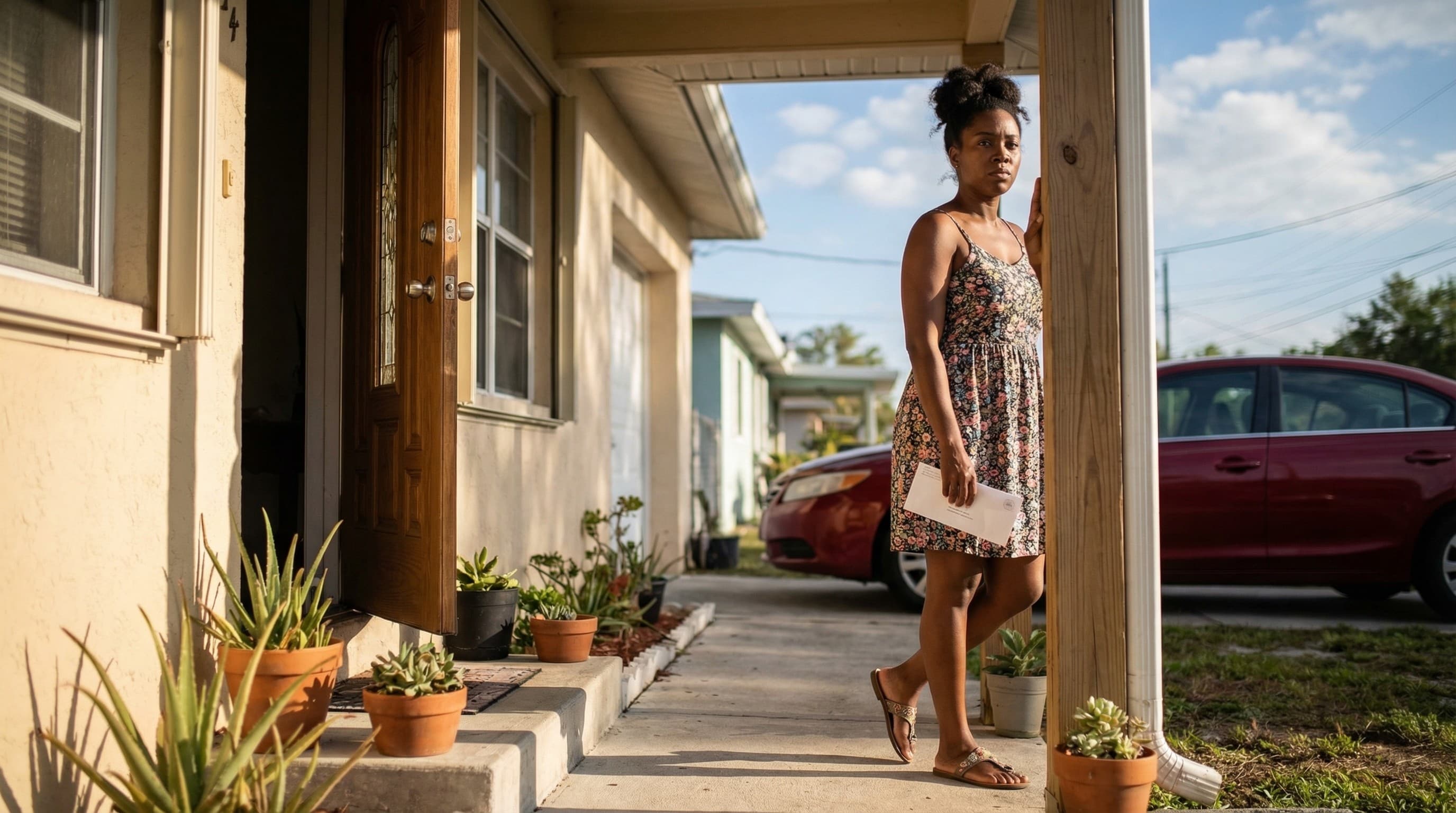
You get a letter from a collection agency you've never heard of. They want $4,200 for a credit card you stopped paying in 2018. Your stomach drops. You think about calling them, maybe setting up a payment plan, maybe just throwing the letter away and hoping it disappears.
Stop. Before you do anything — before you pick up the phone, before you log into some payment portal, before you even acknowledge this debt exists — you need to know one thing.
That debt might be legally uncollectable.
Florida has a statute of limitations on debt. Once that clock runs out, creditors and debt collectors lose the legal ability to win a lawsuit against you for the balance. They can still call. They can still send letters. Some shady outfits might even try to file suit. But if you show up and assert your rights, they can't get a judgment against you in an Orange County courtroom.
And that changes everything about how you handle it.
![[IMAGE:2] Instructional Visual — Overhead flat-lay photo of a light oak desk with two columns of items. On the left: a red pa](/_next/image?url=https%3A%2F%2Ftyyvgkzyojviljefkhzv.supabase.co%2Fstorage%2Fv1%2Fobject%2Fpublic%2Fimages%2Fblog%2Fflorida-statute-of-limitations-on-debt-when-creditors-can-t-sue-you%2Fbody-1.jpg&w=3840&q=75)
What Happens If You Ignore This (The Worst-Case Scenario)
Here's what I see happen at least twice a month at my office in Orlando.
Someone gets a call from a collector about a debt that's 6, 7, even 10 years old. The collector is aggressive. They throw around words like "legal action" and "wage garnishment." The person panics. They say something like, "OK, I can send you $50 this Friday."
That kind of payment or written acknowledgment can restart the statute of limitations.
I'm not exaggerating. In Florida, making a partial payment — or acknowledging the debt in certain ways, particularly in writing — can give collectors new arguments to reset the clock to day one. That dead debt? You might've just brought it back to life. Collectors know this. It's the whole reason they're calling.
I had a client in Kissimmee last year who made a $25 "good faith" payment on an old medical bill from 2017. The collector immediately filed suit. The debt was past the statute of limitations before that payment. After the payment? The collector argued renewed enforceability — and won. She ended up with a judgment and a wage garnishment that took $300 out of every paycheck for eight months.
That's the trap. And it's completely legal.
The kicker is that debt collectors buy old debt portfolios for pennies on the dollar. A company pays maybe $200 for a bundle that includes your $4,000 balance. If they can trick you into restarting the clock — even with a tiny payment — that $200 investment turns into a lawsuit they'll win.
This is what people call zombie debt in Florida. It's dead. But one wrong move brings it back. [INTERNAL_LINK:statute-of-limitations-florida]
The Florida Statute of Limitations on Debt — Broken Down by Type
OK so here's where it gets specific. Florida doesn't have one blanket deadline for all debts. The Florida debt statute of limitations varies depending on the type of debt:
Written Contracts — 5 Years
This covers most personal loans, medical debt with a signed agreement, and auto loans. If you signed a contract promising to pay, the creditor has 5 years from when the cause of action accrued — typically the date of breach, charge-off, or acceleration depending on the contract terms — to file a lawsuit.
Oral Agreements — 4 Years
Any deal made on a handshake or verbal promise. Less common, but it comes up with personal loans between friends or family that go sideways and end up in collections.
Open-Ended Accounts — 5 Years
Credit cards fall here. This is the big one. How long can a creditor collect a debt in Florida on a credit card? Five years from the date of last activity. After that, they can't win a suit if you raise the defense.
Promissory Notes — 5 Years
Formal IOUs and signed payment promises. Some private student loans and business debts fall into this category.
Important: As a practical estimate, the clock usually starts ticking from your last payment or the date you first missed a payment. But legally, accrual depends on when the breach occurred — which can involve acceleration clauses and specific contract terms. Credit report dates (like "date of first delinquency") are useful clues, but they're not always the definitive legal start date. When in doubt, talk to a Florida consumer attorney before making assumptions.
![[IMAGE:3] Local Proof — A wide establishing shot of the MetroWest area in Orlando on a hazy late afternoon, capturing a row o](/_next/image?url=https%3A%2F%2Ftyyvgkzyojviljefkhzv.supabase.co%2Fstorage%2Fv1%2Fobject%2Fpublic%2Fimages%2Fblog%2Fflorida-statute-of-limitations-on-debt-when-creditors-can-t-sue-you%2Fbody-2.jpg&w=3840&q=75)
The "Loophole" — Florida Law Is Actually On Your Side
Look, I put "loophole" in quotes because it's not really a loophole. It's your legal right. But most people don't know it exists, so it feels like one.
Here's the deal: under the Fair Debt Collection Practices Act (FDCPA), Section 809, you have the right to dispute a debt in writing within 30 days of a collector's first contact. If you do, the collector must cease collection activity until they provide verification. They need to show:
- Documentation sufficient to verify the debt is yours (this varies by debt type — it doesn't always mean the original signed contract)
- A full accounting of the balance (original amount, interest, fees)
- Proof that the collecting agency owns or is authorized to collect the debt
If they can't provide adequate verification? They have to stop collecting until they do. Period.
But here's where it gets really interesting for time-barred debt in Florida. Even if the debt IS yours, if the statute of limitations has expired, a collector who threatens to sue you is violating the FDCPA. That's not just a technicality — that's a federal violation you can sue THEM for. And under Florida's own Consumer Collection Practices Act (FCCPA, Chapter 559), you've got state-level protections on top of the federal ones. Between the two, you've got real teeth to bite back.
I've seen collectors back off in 48 hours when they realize the debtor knows the statute has expired. They're betting you don't know. That bet usually pays off for them. Not today.
The Florida Depreciation Angle Nobody Talks About
Let me tell you about a client I had in MetroWest. She lived in her apartment for 5 years. Good tenant. Paid rent on time. When she moved out, the complex hit her with a $2,800 bill for "carpet damages."
$2,800. For carpet. In an apartment she lived in for five years.
She came to me after the balance had already gone to collections and was sitting on her credit report. Her score had dropped 80 points. She was trying to buy a house near Windermere and the collection was killing her mortgage pre-approval.
Now, here's what the apartment complex didn't count on: Florida Statute 83.49 governs security deposit claims and the process landlords must follow when withholding deposits or charging for damages. On top of that, Florida's normal wear-and-tear standards — combined with the widely accepted industry guideline that carpet has a useful life of about 7 years — gave us serious ammunition. After 5 years of normal use, that carpet had already lost the vast majority of its value. The remaining value? Maybe a couple hundred bucks at most — and that's being generous.
We disputed the charge using Florida's deposit rules and the industry depreciation standard. The complex couldn't justify $2,800 when the carpet they installed was already near the end of its useful life. Normal wear and tear isn't "damage" — it's just living in the apartment.
I'll tell you the outcome in a minute. But first, let me give you the full action plan.
The Action Plan: What to Do Right Now
Whether you're dealing with an old credit card debt, a zombie debt from a Florida collection agency, or a bogus apartment charge like my MetroWest client, here's exactly what I tell my clients to do. [INTERNAL_LINK:debt-validation-letter]
Step 1: Figure Out If the Debt Is Time-Barred
Pull your credit reports from all three bureaus at AnnualCreditReport.com. Find the account in question and look for:
- Date of first delinquency (when you first missed a payment)
- Date of last activity (your last payment)
- Current balance listed by the collector
Count forward from the date of last activity. For most debts in Florida, if it's been more than 5 years — the statute of limitations on debt collection Florida has likely expired. Keep in mind: credit report dates are helpful guideposts, but the legal accrual date can depend on your specific contract terms. They're a starting point, not gospel.
Step 2: Do NOT Contact the Collector Yet
I can't stress this enough. Don't call them. Don't email them. Don't send a payment. Don't even send a letter acknowledging the debt exists until you've confirmed the timeline.
Any payment or written acknowledgment can create arguments for restarting the clock. That includes saying things like "I know I owe this, but I can't pay right now" on a recorded call. Even if a verbal statement alone might not legally reset the SOL in every case, why give them ammunition? Assume any contact is risky until you've confirmed where you stand — ideally with a Florida consumer attorney if the amount is significant.
Step 3: Send a Debt Validation Letter (Via Certified Mail)
Once you've confirmed the debt is past the statute of limitations — or if you're not sure and want to force the collector to prove their case — send a formal debt validation request under FDCPA Section 809.
Your letter should demand:
- Documentation sufficient to verify the debt is yours
- A full accounting of the balance (original amount, interest, fees)
- Proof that the collecting agency owns or is authorized to collect the debt
- The date of last payment or activity
Do NOT include any language acknowledging the debt. Don't write "I know I owe this" or "I'm not disputing that I had this account." Keep it clinical. You're requesting information. That's it.
Send it certified mail with return receipt. You want proof they received it.
Step 4: Dispute on Your Credit Reports
File disputes with Equifax, Experian, and TransUnion under FCRA Section 611. The credit bureaus have 30 days (sometimes 45) to investigate. If the collector can't verify the debt — or if the information on your report is inaccurate — the entry gets removed. [INTERNAL_LINK:credit-report-disputes]
For my MetroWest client, this is exactly what happened. We disputed the $2,800 carpet charge using Florida's deposit rules and industry depreciation guidelines as supporting evidence. The collection agency couldn't justify the amount beyond normal wear and tear. The collection was deleted from all three bureaus. She closed on her house two months later.
That right there is why I do this work.
Step 5: Document Everything
Keep copies of every letter you send and receive. Save every voicemail. Log every phone call with the date, time, and what was said. If the collector violates the FDCPA or Florida's FCCPA — calls you before 8 AM, threatens to sue on a time-barred debt, contacts your employer without permission — you'll need that documentation.
Real talk — most people skip this step and regret it later.
Step 6: Know When to Get Help
If the debt is large (over $5,000), if you've been served with a lawsuit, or if the collector is playing hardball, don't go it alone. This is where working with a professional credit repair company makes the difference between a deleted collection and a judgment on your record.
That's exactly what we do at Freedom Credit Repair. I've been fighting these battles in Orlando since 2019, and the playbook changes every year as collectors get more creative. credit repair in Orlando
The Part That Confuses Everyone: Statute of Limitations vs. Credit Reporting
This is the single most misunderstood thing about can old debt be collected in Florida. So pay attention.
The statute of limitations and the credit reporting time limit are two completely different clocks.
- Statute of limitations (Florida): 4-5 years depending on debt type. After this, they can't win a lawsuit against you if you assert the defense.
- Credit reporting limit (federal, FCRA): 7 years from the date of first delinquency. After this, the debt must fall off your credit report.
They don't start at the same time. They don't end at the same time. A debt can be past the statute of limitations (meaning they can't successfully sue you) but still legally sitting on your credit report for another 2-3 years.
And the reverse happens too. A debt can fall off your credit report after 7 years, but if it's a promissory note or certain contract types, the statute of limitations might still technically allow a lawsuit. (Though honestly, most collectors don't bother at that point.)
Bottom line: just because a debt dropped off your credit report doesn't mean you're immune from being sued. And just because the statute of limitations expired doesn't mean it'll disappear from your report.
You have to fight both battles separately. We get this question all the time — check out our FAQ for the full breakdown on how these timelines work.
What About Federal Debts and Student Loans?
Bad news here. Federal student loans have no statute of limitations. The federal government can collect on those forever — garnish your wages, take your tax refund, offset your Social Security. State statute of limitations doesn't apply.
Some private student loans, however, DO fall under Florida's 5-year statute for written contracts. If your private student loan is in default and it's been more than 5 years since your last payment, you might have options. But you need to verify whether the loan is truly private and not federally backed.
Also exempt from state statute of limitations:
- Federal tax debt (IRS has its own 10-year collection statute)
- Child support
- Most government-backed obligations
The Florida statute of limitations on debt mainly protects you from private creditors — credit card companies, medical providers, landlords, auto lenders, and the third-party collection agencies that buy those debts.
When Collectors Cross the Line
I had a client in Pine Hills getting called 8 times a day by a collector trying to recover a medical debt from 2016. The debt was past the 5-year mark. The collector told her — on a recorded line, thank God — that they were "preparing to file a lawsuit next week" if she didn't pay.
That's an FDCPA violation — and a FCCPA violation under Florida Chapter 559. You cannot threaten legal action on a time-barred debt in Florida that you have no intention (or legal ability) to follow through on. We reported the violation, filed a complaint with the CFPB, and the collector not only stopped calling — they deleted the tradeline.
Collectors count on fear. They count on people not knowing the law. They count on that 2 AM panic when you're staring at the ceiling wondering if they can take your house. (They can't take your Florida homestead, by the way — that's a whole other article.)
But when you know the rules? The fear disappears. And you start fighting back.
Frequently Asked Questions
How long can a creditor collect a debt in Florida?
In Florida, the statute of limitations for most debts is 5 years (written contracts, credit cards, promissory notes) or 4 years (oral agreements). After this period expires — generally measured from the date of breach or last payment, depending on the contract — a creditor can no longer successfully sue you to collect, as long as you raise the defense. They can still contact you and ask for payment, but they have no legal enforcement power if you assert your rights.
Can old debt be collected in Florida after the statute of limitations expires?
Technically, yes — collectors can still contact you and request payment even after the statute of limitations expires. What they CANNOT do is sue you, threaten to sue you, or imply legal action is coming. If they do, that's a violation of the FDCPA (and Florida's FCCPA), and you may be entitled to damages. The key is knowing the difference between a request and a threat.
Does making a small payment restart the statute of limitations in Florida?
It can — and that's reason enough to treat it as the biggest trap out there. Making a payment or providing a written acknowledgment of the debt can give collectors new arguments to reset the statute of limitations clock. Never make a payment on old debt without first confirming whether it's time-barred. Never say "I know I owe this" to a collector on the phone. And if you're dealing with a significant balance, talk to a Florida consumer attorney before doing anything.
What's the difference between the statute of limitations and credit reporting?
The statute of limitations (4-5 years in Florida) determines how long a creditor can successfully sue you. The credit reporting limit (7 years under federal FCRA law) determines how long the debt appears on your credit report. These are separate timelines that don't affect each other. A debt can be past the statute of limitations but still show on your credit report, and vice versa.
Can a debt collector sue me in Florida for a time-barred debt?
They can TRY to file suit, and some shady outfits do. But if the debt is truly past the statute of limitations, you can raise it as an affirmative defense in court — and the case gets thrown out. The important part: you have to show up and assert this defense. If you ignore the lawsuit and don't respond, the court can enter a default judgment against you even on time-barred debt. Never ignore a court summons.
Ready to Fight Back?
If you've got old debt collectors calling, mystery collections showing up on your credit report, or you're not sure whether that balance from 2019 is still legally enforceable — don't guess. And definitely don't make a payment until you know where you stand.
I've spent over six years helping people in Orlando figure this stuff out. Whether it's a zombie debt that won't die, a bogus apartment charge like my MetroWest client's $2,800 carpet scam, or a credit card balance from a decade ago — there's always a plan.
Call me at (407) 606-7117 or visit Freedom Credit Repair to set up a consultation. We'll pull your reports, identify every time-barred debt, and build a dispute strategy that actually works.
Stop letting dead debt run your life.
Talk to a Real Credit Specialist — Free
The fastest way to get straight answers about your situation in Orlando and across Florida.
4.9 · 89 Google reviews · No upfront fee
Call (407) 606-7117Individual results vary. We help you dispute inaccurate, unverifiable, or outdated items — no one can remove accurate, current information from your credit report, and you can dispute it yourself for free with the bureaus.

Matt Brody
Founder, Freedom Credit Repair
Matt is the founder of Freedom Credit Repair based in Orlando, FL. Since 2019, Matt has helped clients remove negative items from their credit reports and take control of their financial future. Call (407) 606-7117 for a free consultation. More about Matt →