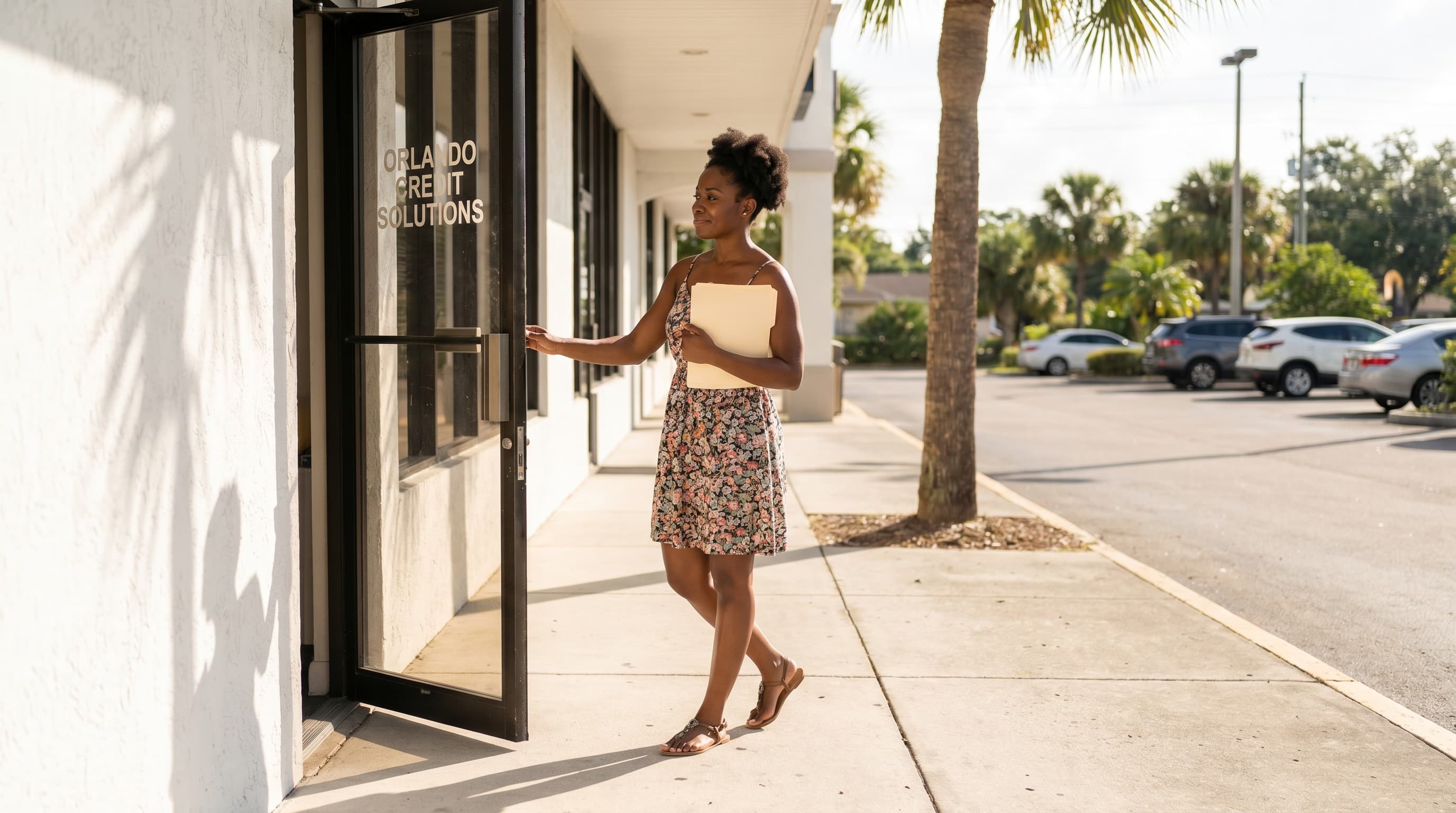
Dispute a Debt That Isn't Yours: Fix Mixed Credit Files in FL

What You'll Learn
- The exact federal law that forces credit bureaus to separate your file from someone else's (and what happens when they refuse)
- Why "mixed credit files" are the most underreported credit disaster in Florida — and how to tell if you're a victim
- The step-by-step dispute process I use with my own clients to get someone else's debt wiped from their report
- A real Winter Garden case study where a former roommate's unpaid rent nearly destroyed my client's credit — and how we got the entire tradeline deleted
![[IMAGE:2] Instructional Visual — Overhead flat-lay shot of a light birch wood desk with two distinct zones divided by a brigh](/_next/image?url=https%3A%2F%2Ftyyvgkzyojviljefkhzv.supabase.co%2Fstorage%2Fv1%2Fobject%2Fpublic%2Fimages%2Fblog%2Fdispute-a-debt-that-isn-t-yours-fix-mixed-credit-files-in-fl%2Fbody-1.jpg&w=3840&q=75)
You're Paying for Someone Else's Mistakes. Literally.
You pull your credit report and there it is — a $4,500 collection you've never seen before. Some credit card from a bank you've never even heard of. Maybe a car loan from a state you've never lived in.
Your stomach drops.
This isn't hypothetical. I get calls about this at my Orlando office at least twice a week. Someone checks their report before applying for a mortgage or a car loan, and they find accounts that belong to a completely different human being sitting on their credit file like a grenade.
Here's the thing — this isn't always identity theft. A lot of the time it's something called a mixed credit file, and it's way more common than most people realize (yes, really). The credit bureaus use automated matching systems to sort billions of records, and those systems screw up constantly. If you share a similar name, address, or Social Security Number with someone else, their debts can end up on YOUR report. [INTERNAL_LINK:mixed-credit-file]
I had a client in Winter Garden last year — let's call her "Ashley." She and her roommate were both listed on an apartment lease. The roommate skipped town, stopped paying rent, and left Ashley holding the bag. The apartment complex reported a $4,500 balance to collections against both tenants — even though Ashley had paid every dollar of her half. That collection hit Ashley's credit report like a freight train right before she was trying to get pre-approved for a house.
Sound familiar? Maybe it's not a roommate situation for you. Could be a parent. Could be an ex. Could be some total stranger who shares your name, or just a fat-fingered data entry mistake over at Equifax. The reason? Irrelevant. Your credit score is getting absolutely wrecked — for something you didn't do.
I'm gonna walk you through exactly how to throw punches back.
What Happens If You Do Nothing
I need to be blunt here because I see this all the time: people spot the error, feel overwhelmed, and do absolutely nothing.
That's the worst possible move.
You wanna know what actually happens when someone else's debt just squats on your credit report and nobody does a damn thing about it?
- Your score craters. A single collection account can drop your score 50-100 points depending on your profile and scoring model. If you were sitting at 680, you could fall below 580 overnight. That's the difference between a 6% mortgage rate and getting flat-out denied.
- You get rejected for housing. I know exactly which apartment complexes in Orlando auto-deny anyone under 620. If you're applying in Lake Nona or Winter Park, they're pulling your report before you finish the tour. Someone else's $4,500 collection? Application denied.
- Debt collectors come after you. Once a debt is reported under your name, collectors will start calling. They don't care that it's not yours — they're working off the data they have, and right now that data says YOU owe money.
- It gets harder to fix the longer you wait. The longer that debt sits unchallenged, the more it spreads — it gets rescored, resold to new collectors, and reinserted across bureaus. Documentation fades, creditors change hands, and untangling the mess gets exponentially harder. Don't sit on this and give it time to spread.
Real talk — the credit bureaus are not looking out for you. Their whole operation? Grab your data, bundle it up, sell it off to lenders. Full stop. That's their whole business model. They have zero financial incentive to fix your file. That's on you to fix. Or mine, if you hire someone like me at Freedom Credit Repair. credit repair in Orlando
![[IMAGE:3] Local Proof — A quiet residential cul-de-sac in Winter Garden, Florida on an early weekend morning. Modest stucco h](/_next/image?url=https%3A%2F%2Ftyyvgkzyojviljefkhzv.supabase.co%2Fstorage%2Fv1%2Fobject%2Fpublic%2Fimages%2Fblog%2Fdispute-a-debt-that-isn-t-yours-fix-mixed-credit-files-in-fl%2Fbody-2.jpg&w=3840&q=75)
The Legal Weapon Most People Don't Know They Have
OK so here's where it gets good.
The Fair Credit Reporting Act — the FCRA — is a federal law, and it basically hands you a loaded weapon when someone else's debt lands on your credit report. And honestly? I'd bet money you have no clue how much power you're actually holding in your hands right now. Several sections are your best friends right now.
FCRA Section 611: Your Right to Dispute (and Your Primary Mixed File Weapon)
Section 611 says you have the right to dispute any information on your credit report that you believe is inaccurate. When you file a dispute, the credit bureau has 30 days to investigate — and up to 45 days if you send additional information during the investigation window. If they can't verify the account actually belongs to you? They gotta take it off. Gone. Period.
That clock is set by statute. I've seen bureaus try to stall — they'll send you a letter saying they need "more time" or ask for information they already have. Nope. Don't buy it. Not for a second. Once that 30-to-45-day window closes, they're done — clock's run out, game over. [INTERNAL_LINK:dispute-letter-template]
For mixed file situations specifically, this is your go-to section. You're disputing the accuracy of the information — those accounts aren't yours, period. When you dispute, make it crystal clear that the accounts belong to a different person and that the bureau's matching system merged two separate files.
FCRA Section 607(b): The Bureau's Duty of Maximum Possible Accuracy
Here's one most people miss entirely. Section 607(b) requires credit bureaus to "follow reasonable procedures to assure maximum possible accuracy" of the information in your file. When a bureau's automated system merges your file with a stranger's, they've failed this duty — full stop.
This matters because it means the bureau isn't just doing you a favor by fixing a mixed file. They were legally required to stop this from happening before it ever hit your file. So when they "fix" it? That's not generosity. That's them doing the bare minimum they already owed you. If they keep screwing it up after you've told them about the problem, that failure becomes evidence that their procedures aren't reasonable — and that opens the door to damages.
You can also use Section 609 to request a full disclosure of your file, which helps you see exactly what data the bureau has tied to your identity — including any aliases, addresses, or SSN variations that shouldn't be there. That disclosure is your roadmap for proving the mix-up.
FCRA Section 605B: Identity Theft Blocking
If your situation crosses the line from a bureau mix-up into actual identity theft — someone intentionally used your information to open accounts — Section 605B is a separate tool. It lets you block fraudulent information from your report, but it requires an identity theft report (an FTC affidavit filed at IdentityTheft.gov, and usually a police report). This isn't the right tool for a standard mixed file, but if theft IS involved, it gives you a powerful blocking mechanism. Once blocked, if the bureau re-inserts the information, they have to notify you within 5 business days and tell you exactly who re-reported it. That gives you a trail to follow — and a potential lawsuit.
FDCPA Section 809: Debt Validation
Now listen up — when a debt collector comes swinging at you over someone else's debt, the Fair Debt Collection Practices Act is a weapon you can swing right back with. And it hits hard. Section 809 gives you the right to demand debt validation within 30 days of receiving their initial validation notice. If you send it within that 30-day window, they must pause collection activity until they mail you verification. Past the 30 days? Send it anyway — many collectors will still respond, but that automatic "pause" protection may not apply. [INTERNAL_LINK:debt-validation-letter]
Either way, the collector needs to show you:
- An itemized statement of the debt and the name/address of the original creditor
- Documentation of their authority to collect (assignment records, chain of ownership)
- Evidence tying the debt to YOU specifically — matching identifiers that prove you're the person who owes it, not a roommate, not a namesake, not an ex
If they can't connect the debt to you? They've got nothing.
Remember Ashley in Winter Garden? That's exactly what we did for her — same playbook, step by step. We sent a debt validation letter to the collection agency demanding they prove Ashley owed the full $4,500 — not just that the debt existed, but that SHE owed all of it. We included copies of her canceled checks showing she'd paid her half of the rent. The collection agency couldn't verify the full balance was Ashley's responsibility. They first reduced the balance, and then — because the original reporting was inaccurate — the entire tradeline got deleted.
That's not magic. That's knowing the law.
How to Tell If You Have a Mixed Credit File
Before you start firing off dispute letters, slow down. Breathe for a second. Get clear on what you're actually up against here. A mixed credit file is different from identity theft, and the approach is slightly different for each.
Signs of a mixed credit file:
- Accounts from someone with a similar name (especially common with Jr./Sr. situations or common Hispanic surnames where patronymic naming creates matches)
- Addresses you've never lived at appearing in your "address history"
- An employer listed that you've never worked for
- A Social Security Number that's one or two digits off from yours showing up as an alias
- Accounts from a family member or former spouse you shared an address with
Signs of identity theft:
- Accounts opened at addresses you've never been associated with
- Credit inquiries from companies you never contacted
- Completely unfamiliar names or aliases on your report
- New accounts opened after you lost your wallet or had data exposed in a breach
The distinction matters because your dispute strategy changes. Mixed files are a bureau error — you're fighting Equifax, Experian, and TransUnion under Sections 607(b) and 611. Identity theft involves filing a police report and an FTC identity theft affidavit, which triggers the blocking protections under Section 605B and adds steps.
For most of my clients in Orlando, it's a mixed file situation. Especially in Central Florida, where you've got massive apartment complexes with thousands of tenants cycling through — address-based matching errors are rampant. I've seen two people in the same Kissimmee complex end up with merged credit files because they had similar names and the same zip code. Wild, right? That's literally all it took.
Your Step-by-Step Action Plan to Dispute a Debt That Isn't Yours
Pull up a chair. Here's the exact game plan I'd lay out for you if we were sitting face to face in my Orlando office right now.
Step 1: Pull All Three Credit Reports
Head to AnnualCreditReport.com — it's the only legit free source — and pull your reports from Equifax, Experian, and TransUnion. Don't just check one — a mixed file error might appear on one bureau but not the others.
Print everything. Highlight every account, address, and personal detail that isn't yours.
Step 2: Freeze Your Credit (If You Suspect Theft)
If there's any chance someone is actively using your identity, freeze your credit at all three bureaus immediately. This is free under federal law and takes about 10 minutes per bureau. A freeze won't touch your existing accounts — it just stops new ones from getting opened in your name.
If you're dealing with a pure mixed file (bureau error, not theft), you can skip the freeze. But I'd honestly do it anyway. No downside.
Step 3: File Disputes with the Credit Bureaus
Send a dispute letter to each bureau that's showing the incorrect information. This is your FCRA Section 611 dispute. [INTERNAL_LINK:dispute-letter-template]
Your letter should include:
- Your full legal name, current address, date of birth, and last four of your SSN
- A clear statement that the account does not belong to you
- The specific account number, creditor name, and balance you're disputing
- WHY it's not yours (e.g., "I have never had an account with [creditor]. This account appears to belong to a different individual with a similar name.")
- Copies (never originals) of your government-issued ID and a utility bill proving your current address
Send it certified mail with return receipt requested. I'm dead serious about this one — do not skip this step. Online disputes through the bureau websites are convenient, but they limit the amount of documentation you can attach, and they give you less legal protection if you need to escalate later. Paper trail wins cases.
Step 4: Send a Debt Validation Letter to the Collector
If a collection agency is involved, send a separate letter under FDCPA Section 809 demanding they validate the debt. You've got 30 days from receiving their initial validation notice to send this — and if you do, they must stop collection activity until they mail verification. Past the 30 days? Send it anyway. Many collectors can't produce proper validation regardless of timing, and you lose nothing by asking.
Demand they provide:
- An itemized statement of the debt amount and how it was calculated
- The name and address of the original creditor
- Documentation showing the collector's authority to collect (assignment/purchase records)
- Evidence tying the debt to YOU — matching identifiers that show you're the person who owes it, not a roommate, not a namesake, not an ex
Step 5: Gather Your Evidence
This is where you build your case — and trust me, this part matters. It depends on your situation:
- Mixed file with a family member: Copies of both your IDs showing different dates of birth, different SSNs, different middle names
- Former roommate/joint lease situation: Copies of your payment records, canceled checks, bank statements showing you paid your portion (this is exactly what won Ashley's case in Winter Garden)
- Complete stranger: An affidavit stating you have no connection to the account, plus any documentation showing the account holder's information doesn't match yours
Step 6: Follow Up — Aggressively
The bureau has 30 days (up to 45 if you sent additional info during the investigation). Mark your calendar. If that window closes and you haven't heard a thing back, fire off a follow-up letter citing FCRA Section 611(a)(5) — that's the section that says they've got to notify you of results within 5 business days of wrapping up their investigation.
If they verify the debt as yours and you KNOW it's not? That's when you escalate.
When They Won't Budge: Escalation Tactics
Look, I won't lie to you — some disputes get resolved on the first round. Others turn into a bare-knuckle fight. Here's what happens when the bureaus push back.
File a CFPB Complaint
The Consumer Financial Protection Bureau runs a complaint portal over at consumerfinance.gov — and honestly, it's one of your best weapons here. When you file a complaint there, the CFPB forwards it to the bureau and expects a response through their system — usually within 15 days, with an extension to 60. In my experience, complaints that get stuck at the bureau level suddenly get unstuck the second a CFPB complaint goes in. It's like the bureaus don't take you seriously until a federal agency is watching.
Request the Method of Verification
Under FCRA Section 611(a)(7), you can demand that the bureau tell you exactly how they verified the disputed account. The law says — right there in black and white — they have to hand over the name, address, and phone number of whatever source they leaned on to verify that account. I've had cases where the bureau "verified" a mixed file debt by calling the same collection agency that reported it wrong in the first place. See the problem? That's circular reasoning. And I've watched it crumble the second someone actually calls them on it.
Consult an FCRA Attorney
If the bureaus keep re-inserting incorrect information after your disputes, you may have grounds for a lawsuit. The FCRA lets you go after statutory damages — we're talking $100 to $1,000 for every willful violation. On top of that? Actual damages, which cover a wider net including negligent violations. Throw in attorney's fees. And in the really bad cases — the ones where the bureau just kept ignoring you? Punitive damages piled on top of everything else.
I'm not an attorney — I'm a credit repair specialist. But I work with FCRA attorneys in the Orlando area, and I've seen consumers win settlements against bureaus that refuse to fix mixed file errors. The amounts vary widely based on the facts and the harm you can show — but they're real, and the bureaus know it. Sometimes just having an attorney send a letter on letterhead changes the entire dynamic.
We get asked about escalation steps all the time — check out our FAQ for more details on when to escalate and when professional help makes sense.
Why Mixed Files Hit Central Florida Consumers So Hard
I've been doing this in Orlando since 2019, and I can tell you — mixed credit files are disproportionately common here. There are specific reasons.
High population density in apartment complexes. From MetroWest to Hunters Creek to the I-Drive corridor, you've got thousands of people cycling through the same addresses. The bureaus match by address. More people at one address = more potential for mix-ups.
Seasonal and hospitality workers. Disney cast members, Universal team members, I-Drive hotel staff — many of these workers move frequently between shared housing. Short tenures at multiple addresses create a messy address history that confuses the matching algorithms.
Joint leases and roommate situations. OK so this is the big one — I see this constantly. In a city where median rent has been climbing past $1,800 for a one-bedroom, people share housing. When a roommate bails on a lease (like Ashley's situation in Winter Garden), the entire balance can end up on your report — even if you paid every cent of your share.
Common name overlaps. Orlando's got one of the most diverse populations in the country, and honestly? And that's exactly what makes this area a hotspot for these screw-ups. Name-based matching errors are more frequent in communities where common surnames are shared by thousands of people in the same metro area.
Hey — I need you to hear me on this. None of this is something you caused. But all of it is your problem until you fix it.
Don't Let This Happen Again: Protection Going Forward
Alright, so you've scrubbed your report clean. Good. Now you gotta build a fence around it — because I've watched this exact same garbage creep back onto people's files when they let their guard down.
- Monitor your credit monthly. Use Credit Karma, your bank's free monitoring tool, or sign up for alerts through each bureau. You want to catch new errors within days, not months.
- Keep your own records of every lease, utility, and shared account. If you have a roommate, document who's paying what. Screenshots of Venmo payments, copies of money orders — anything that proves your share was paid.
- Consider a credit freeze if you're not actively applying for credit. It costs nothing and blocks new accounts from being opened using your info.
- Opt out of prescreened offers. Call 1-888-5-OPT-OUT. Fewer offers = fewer data points floating around that could contribute to matching errors.
Bottom line: the credit bureaus won't protect your file proactively. No one's riding in on a white horse to save your credit file — that's on you, and you gotta own it.
When to Call a Professional
Can you dispute a debt that isn't yours on your own? Absolutely. I just gave you the full playbook.
But here's when it makes sense to get help:
- Multiple accounts are affected. If three or four tradelines from a different person are on your file, that's a systematic mixed file issue, not a one-off error. Cleaning that up requires coordinated disputes across all three bureaus simultaneously. [INTERNAL_LINK:mixed-credit-file]
- The bureaus verified the debt as yours. If you've already disputed and they came back saying the debt is valid — when you know it's not — you need someone who knows how to escalate properly.
- You're on a timeline. If you need to close on a house in 60 days or your lease is up and you need an apartment now, you can't afford to spend 90 days learning the dispute process by trial and error.
- You're exhausted. I've had clients come to me in tears because they've been fighting a mixed file for six months and it keeps coming back. That's literally what I do every day at Freedom Credit Repair. I've seen every version of this mess you can imagine — mixed files, identity theft, data entry disasters, all of it — and I know how to get it cleaned up.
Grab your phone right now and dial (407) 606-7117. Walk us through your situation — nothing fancy, just the facts. We'll tell you straight up whether you actually need us or whether you can knock this out on your own.
Talk to a Real Credit Specialist — Free
The fastest way to get straight answers about your situation in Orlando and across Florida.
4.9 · 89 Google reviews · No upfront fee
Call (407) 606-7117Individual results vary. We help you dispute inaccurate, unverifiable, or outdated items — no one can remove accurate, current information from your credit report, and you can dispute it yourself for free with the bureaus.
Frequently Asked Questions
How long does it take to get someone else's debt removed from my credit report?
The bureaus have 30 days to investigate your dispute under the FCRA (up to 45 days if you submit additional information during the investigation). In a straightforward case — where the account clearly belongs to a different person — I've seen removals happen in as little as 2-3 weeks. But if the bureau pushes back, escalation through the CFPB or an attorney can stretch it to 60-90 days. The key is sending a detailed, well-documented dispute the first time so you don't waste a cycle.
Can I dispute online or do I have to send a letter?
You CAN dispute online through each bureau's website, and for simple errors it sometimes works fine. But I always recommend certified mail for mixed file disputes. Online disputes limit the documentation you can upload, and they generate a generic investigation on the bureau's end. A detailed letter with copies of your ID, proof of payments, and a clear explanation of the error carries more weight — and gives you a paper trail if you need to escalate to the CFPB or a court later.
What if the debt keeps reappearing on my report after I dispute it?
This is called "re-insertion" and it's actually a separate FCRA violation. Under Section 611(a)(5)(B), if a bureau deletes information and then sticks it right back on your report, they've got to notify you within 5 business days AND certify that the information's complete and accurate — no exceptions. If they re-insert without notifying you, that's grounds for a lawsuit. Document everything — dates, dispute confirmation numbers, copies of your reports showing the deletion and re-insertion.
Is a mixed credit file the same as identity theft?
No, and the distinction matters for your dispute strategy. A mixed file is a bureau error — their automated system accidentally merged records from two different people. Identity theft is when someone intentionally uses your personal information to open accounts. Mixed files typically involve people with similar names, shared addresses, or similar SSNs. Identity theft requires filing a police report and an FTC Identity Theft Affidavit (at IdentityTheft.gov), which triggers the blocking protections under FCRA Section 605B. Standard mixed file disputes are handled under Sections 611 and 607(b) — different tools for a different problem.
Should I hire a credit repair company or an attorney?
It depends on the severity. A credit repair company like ours handles the dispute process, follows up with the bureaus, and manages the day-to-day fight. That's usually enough for mixed file situations. But if the bureaus are willfully ignoring your disputes, re-inserting deleted information, or if you've suffered significant financial harm (like a denied mortgage), an FCRA attorney can pursue damages on your behalf. Many FCRA attorneys work on contingency, meaning you don't pay unless you win. I sometimes refer clients to attorneys when the case is strong enough for a lawsuit — it's about using the right tool for the job.

Matt Brody
Founder, Freedom Credit Repair
Matt is the founder of Freedom Credit Repair based in Orlando, FL. Since 2019, Matt has helped clients remove negative items from their credit reports and take control of their financial future. Call (407) 606-7117 for a free consultation. More about Matt →